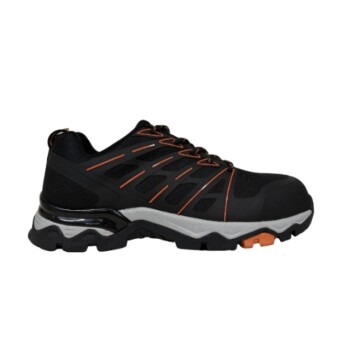
Surface electromyography (EMG) sensors serve as the definitive tool for objectively quantifying the physiological load safety footwear places on the lower limbs. By capturing electrical signals directly from the skin’s surface, these sensors measure the specific activation levels of key leg muscles, providing data that subjective comfort feedback simply cannot offer.
The Core Insight While material properties like hardness and resilience are physical metrics, EMG reveals the biological cost of those materials on the worker. It determines whether a specific shoe design effectively reduces muscle burden to prevent premature fatigue or inadvertently increases strain during long-term use.
The Mechanics of Measurement
Non-Invasive Data Collection
EMG sensors are non-invasive, adhering to the skin to detect electrical activity generated by muscle fibers during contraction.
Modern setups often utilize wireless systems, which are indispensable for monitoring natural walking patterns without the interference of cables.
Targeting Key Muscle Groups
To evaluate safety footwear, researchers focus on specific muscles that bear the brunt of weight-bearing tasks.
The primary targets include the tibialis anterior (shin), gastrocnemius (calf), and soleus.
Supplementary analysis may also extend to the rectus femoris (thigh) to understand how footwear impacts the entire kinetic chain of the leg.
Connecting Materials to Muscle Response
Assessing Midsole Properties
The core function of EMG in this context is to assess how midsole hardness and resilience influence muscle activation patterns.
If a material is too soft or too hard, muscles may have to work harder to maintain stability or absorb shock.
EMG data highlights these spikes in activation, identifying designs that may lead to premature fatigue during long shifts.
Evaluating Rigidity and Stiffness
Sensors are also used to quantify the effects of high-rigidity materials, such as carbon fiber insoles.
By comparing activation data, researchers can see if increased stiffness improves mechanical leverage or simply adds to the muscular workload.
Understanding the Trade-offs
Performance vs. Muscular Burden
EMG data often reveals a critical trade-off between performance and physiological cost.
High-rigidity materials might improve energy transfer or protection, but they can simultaneously increase the burden on specific muscle groups like the tibialis anterior.
The Limits of Optimization
Data-driven design is powerful, but it requires balancing conflicting variables.
A design that successfully offloads the calf muscles might inadvertently shift that strain to the thigh or shin.
EMG ensures these shifts are detected early, preventing the creation of footwear that solves one problem only to create another.
Making the Right Choice for Your Goal
When interpreting EMG data for footwear selection or design, align the metrics with your specific safety objectives:
- If your primary focus is Fatigue Prevention: Prioritize midsole materials that demonstrate lower aggregate activation levels in the gastrocnemius and soleus over long durations.
- If your primary focus is Stability and Support: Look for rigidity data that shows controlled activation in the tibialis anterior, ensuring stiffness does not translate into excessive strain.
EMG transforms footwear evaluation from a subjective guessing game into a precise, data-driven science.
Summary Table:
| Key Metric | EMG Measurement Focus | Impact on Safety Footwear Design |
|---|---|---|
| Muscle Activation | Tibialis anterior, Gastrocnemius, Soleus | Identifies designs that minimize or increase muscle strain. |
| Midsole Influence | Hardness and Resilience response | Determines optimal cushioning to prevent premature fatigue. |
| Material Rigidity | Carbon fiber/Stiff insole effects | Balances energy transfer with the biological cost to the wearer. |
| Kinetic Chain | Whole-leg muscular burden | Ensures stability without shifting strain to other muscle groups. |
Partner with 3515 for Data-Driven Footwear Solutions
As a leading large-scale manufacturer serving global distributors and brand owners, 3515 leverages advanced insights to engineer footwear that balances protection with physiological comfort. Our comprehensive production capabilities cover all footwear types, anchored by our flagship Safety Shoes series.
From tactical boots and outdoor shoes to training sneakers and formal dress shoes, we provide bulk solutions that reduce muscular burden and enhance performance. Contact us today to discuss your custom manufacturing requirements and see how our expertise can add value to your brand.
References
- Judith Osterloh, Rainer Bader. The effect of different midsole materials in safety shoes on perceived comfort, muscle activities, and biomechanical parameters during walking – a musculoskeletal modelling approach. DOI: 10.1080/19424280.2025.2472249
This article is also based on technical information from 3515 Knowledge Base .
Related Products
- Premium Suede Sport Safety Shoes for Wholesale & Bulk Orders
- Premium Lightweight Safety Shoes for Wholesale & Bulk Orders
- Wholesale Anti-Smash & Puncture-Proof Safety Shoes Custom Manufacturing for Brands
- Premium KPU Injection Athletic Style Safety Shoes
- Premium Safety Shoes with Rotating Buckle Safety Sneakers
People Also Ask
- What industries have specific OSHA footwear requirements? Ensure Compliance & Protect Your Workforce
- What are the primary functions of professional safety shoes? Maximize Safety in Water Supply Confined Spaces
- What role do specialized safety shoes play in preventing falls? Engineering Stability in Industrial Environments
- Why is barefoot walking used as a baseline in gait safety research? Unlocking Natural Biomechanics for Shoe Design
- What are the technical advantages of integrating sensors into safety shoes? Achieve Superior Motion Capture Precision