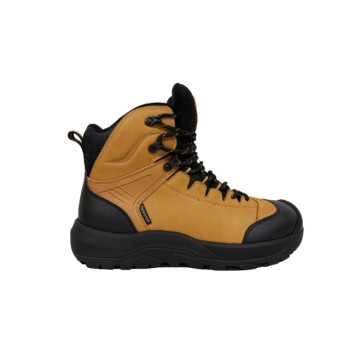
No, winter cycling shoes do not fit the same as standard cycling shoes. They are intentionally designed with a roomier, higher-volume interior. This extra space is crucial for accommodating the thicker thermal socks needed for cold-weather riding and for allowing a layer of warm air to circulate, which is essential for keeping your feet warm.
The fundamental difference in fit is a feature, not a flaw. Winter shoes trade the snug, performance-oriented fit of a summer shoe for the necessary volume required for insulation, thicker socks, and crucial blood circulation in cold conditions.

Why Winter Shoes Have a Fundamentally Different Design
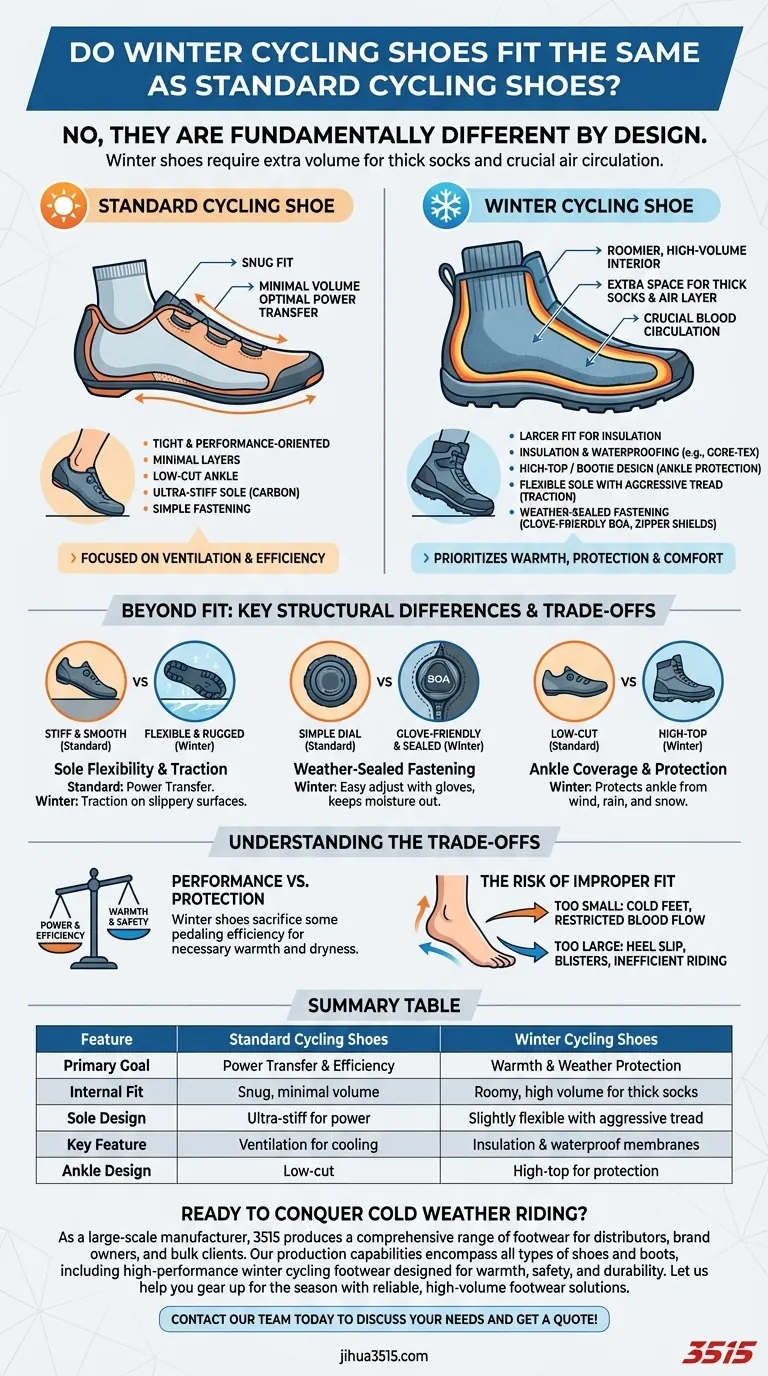
A standard cycling shoe is built for minimal volume, maximum stiffness, and optimal power transfer. A winter cycling shoe is engineered for survival and comfort in harsh conditions, which requires a completely different approach to its construction and fit.
The Critical Role of Extra Volume
The primary reason winter shoes feel larger is the need for space. A tight-fitting shoe, even with a thick sock, will constrict blood flow to your toes. This restriction is the fastest way to get dangerously cold feet, regardless of how much insulation the shoe has. The extra volume allows for proper circulation and traps an insulating layer of air.
Insulation and Waterproofing Layers
Winter shoes incorporate layers of insulation and waterproof membranes like Gore-Tex. These materials, while effective, add bulk to the shoe's interior lining. This inherently reduces the internal space compared to a thin, unlined summer shoe of the same marked size.
Higher Ankle Coverage for Protection
Most winter cycling shoes feature a high-top or bootie design. This provides essential protection against wind, rain, and snow at the ankle—a common point of heat loss. This design also changes the overall feel and requires a different type of fit compared to a low-cut shoe.
Beyond Fit: Key Structural Differences
The variations go well beyond simple sizing. The entire platform is re-engineered for the specific demands of winter riding, where conditions underfoot can be unpredictable.
Sole Flexibility and Traction
While a high-end summer shoe prioritizes an ultra-stiff carbon sole for power transfer, many winter shoes use a slightly more flexible nylon composite. They also feature aggressive, rugged rubber treads. This design provides much better traction for the inevitable moments when you have to walk on icy or slippery surfaces.
Weather-Sealed Fastening Systems
Fastening systems are also adapted for winter. You will often find dials like the BOA system, which are easy to adjust while wearing thick gloves. Laces are typically covered by a zippered, weatherproof shield to keep moisture out and prevent them from freezing.
Cleat Compatibility
Just like standard shoes, it's crucial to match the shoe to your pedal system. Most winter shoes designed for mountain biking, gravel, or commuting use a 2-bolt SPD-style cleat system. Road-specific winter shoes with a 3-bolt pattern are less common but available.
Understanding the Trade-offs
Choosing a winter shoe means accepting a set of deliberate compromises. Understanding them ensures your expectations are aligned with the product's purpose.
Performance vs. Protection
Winter shoes are heavier, bulkier, and less stiff than their summer counterparts. You will sacrifice some degree of pure pedaling efficiency and power transfer. This is the necessary trade-off for achieving warmth, dryness, and safety in cold and wet conditions.
The Risk of an Improper Fit
Sizing a winter shoe incorrectly has significant consequences. If it's too small, you'll compress the insulation, restrict blood flow, and end up with painfully cold feet. If it's too large, your heel will slip with every pedal stroke, causing chafing, blisters, and inefficient riding.
How to Find Your Perfect Winter Fit
Your goal is to find a shoe that is secure but not restrictive, with just enough room for your preferred winter sock and a small amount of air.
- If you are buying online: Start with your standard cycling shoe size as a baseline, but read reviews and manufacturer guides carefully, as many recommend sizing up. Ensure the retailer has a clear and easy return policy.
- If you are trying them on in a store: Always bring the thick, wool-based winter cycling socks you actually plan to wear on your rides to get a true sense of the required volume.
- If your primary focus is maximum warmth: Ensure you can wiggle your toes freely after the shoe is fastened. That small pocket of air is your best defense against the cold.
Selecting the right winter shoe is the foundation for a safe and comfortable cold-weather riding season.
Summary Table:
| Feature | Standard Cycling Shoes | Winter Cycling Shoes |
|---|---|---|
| Primary Goal | Power Transfer & Efficiency | Warmth & Weather Protection |
| Internal Fit | Snug, minimal volume | Roomy, high volume for thick socks |
| Sole Design | Ultra-stiff for power | Slightly flexible with aggressive tread |
| Key Feature | Ventilation for cooling | Insulation & waterproof membranes |
| Ankle Design | Low-cut | High-top for protection |
Ready to Conquer Cold Weather Riding?
As a large-scale manufacturer, 3515 produces a comprehensive range of footwear for distributors, brand owners, and bulk clients. Our production capabilities encompass all types of shoes and boots, including high-performance winter cycling footwear designed for warmth, safety, and durability.
Let us help you gear up for the season with reliable, high-volume footwear solutions. Contact our team today to discuss your needs and get a quote!
Visual Guide
Related Products
- Premium Insulated Safety Boots and Shoes for Wholesale & Bulk Orders
- Wholesale Durable Camouflage Canvas Shoes with High-Traction Cleated Rubber Sole
- Premium Suede Sport Safety Shoes for Wholesale & Bulk Orders
- Advanced KPU Athletic Safety Shoe with Steel Toe Cap Anti-Slip Rotary Lacing System
- Lightweight Breathable Sneakers with Wet-Traction Grip for Wholesale & Private Label
People Also Ask
- What are the recommended insulation ratings for mild winter conditions? A Guide for Active & Stationary Workers
- How does insulation thickness correlate with temperature ranges? A Guide to Choosing the Right Warmth
- What insulation level is needed for severe cold and stationary work? 1200g or Higher is Essential
- What safety advantages do insulated boots offer beyond warmth? Dielectric Protection & Superior Grip
- How does fleece lining contribute to the warmth of insulated boots? Trapping Air for Superior Cold Protection