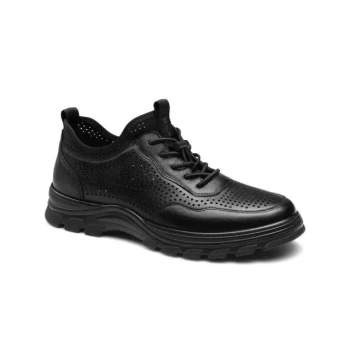
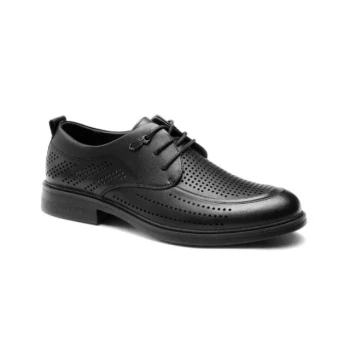
At their core, motorcycle riding shoes offer a critical compromise. They provide foundational, CE-rated protection in a package that looks and feels like a casual sneaker or boot, giving you the comfort and convenience to walk around off the bike without sacrificing essential on-bike safety.
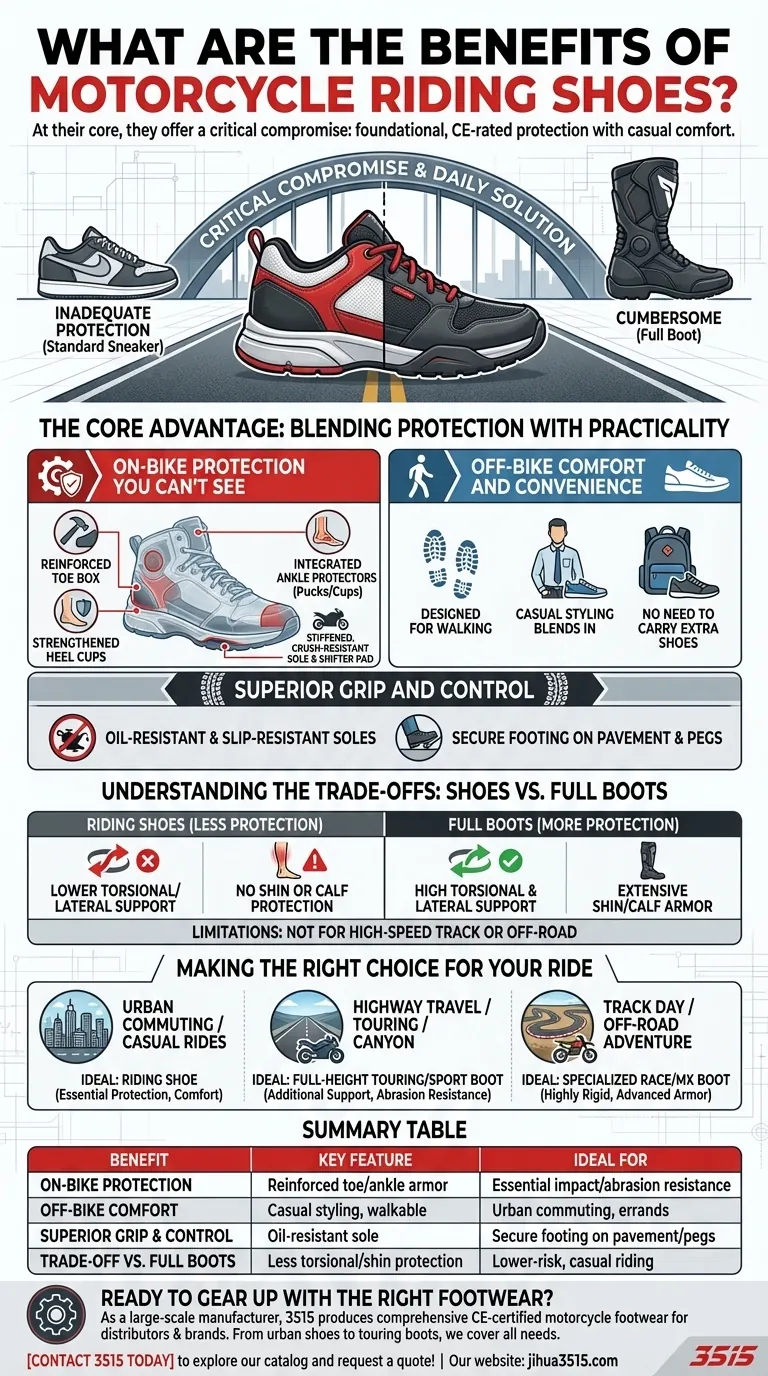
The fundamental benefit of a riding shoe is its ability to bridge the gap between the inadequate protection of a standard sneaker and the cumbersome nature of a full motorcycle boot, making it the ideal solution for the everyday rider.
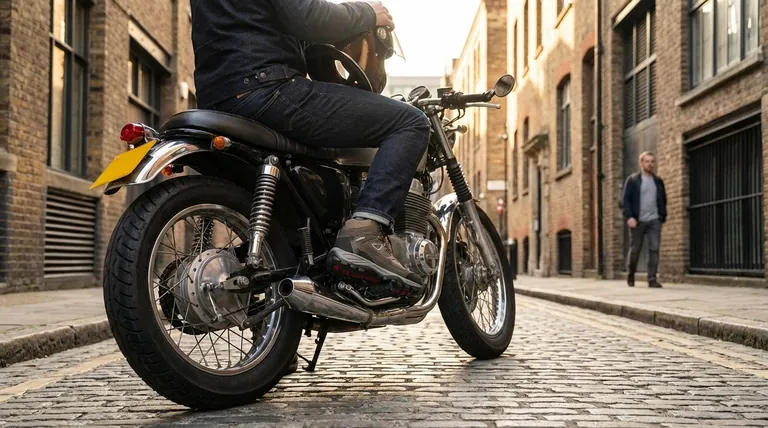
The Core Advantage: Blending Protection with Practicality
Many riders face a daily choice between wearing proper gear and the convenience of everyday footwear. Riding shoes are engineered specifically to solve this problem by integrating safety features into a discreet, comfortable package.
On-Bike Protection You Can't See
Unlike a standard shoe, a true riding shoe contains hidden armor. This typically includes reinforced toe boxes to prevent crushing and assist with shifting, strengthened heel cups, and integrated ankle protectors (often called pucks or cups) designed to absorb impact.
Many also feature a stiffened, crush-resistant sole and a dedicated pad on the toe to prevent wear from the gear shifter.
Off-Bike Comfort and Convenience
This is the most obvious benefit. Riding shoes are designed for walking. After a ride to the office, a cafe, or a store, you can dismount and go about your business without the discomfort of a rigid boot or the need to carry a separate pair of shoes.
Their casual styling allows them to blend in seamlessly with everyday attire, removing a significant barrier to wearing protective gear on every ride.
Superior Grip and Control
The soles of riding shoes are fundamentally different from fashion sneakers. They are made from specific rubber compounds designed to be oil-resistant and slip-resistant, ensuring a secure footing on the pavement at a stop.
This construction also provides a firm, stable platform on the motorcycle's footpegs, improving feedback and control.
Understanding the Trade-offs: Shoes vs. Full Boots
While riding shoes are a massive safety upgrade over regular footwear, it is crucial to understand what you are giving up compared to a full-height motorcycle boot. Trust is built on acknowledging limitations.
Torsional Rigidity: The Key Difference
The single biggest safety advantage of a full boot is its torsional and lateral support. Boots are designed to severely limit the twisting and side-to-side bending forces that can shatter an ankle or leg in a crash.
Riding shoes, by virtue of their low-cut design, offer significantly less protection against these types of injuries.
Shin and Calf Protection
A full boot provides coverage and armor for the shin, a common impact point in many types of accidents. Riding shoes offer no protection above the ankle, leaving your lower leg exposed.
Specialized Use Cases
For high-speed track riding or demanding off-road environments, riding shoes are completely inadequate. These disciplines require the specialized, heavy, and highly-rigid construction of race boots or motocross boots, which often feature advanced hinge systems for articulation and injury prevention.
Making the Right Choice for Your Ride
Choosing the right footwear depends entirely on an honest assessment of your typical riding style and risk exposure.
- If your primary focus is urban commuting and casual rides: A quality riding shoe offers the perfect blend of essential protection, off-bike comfort, and convenience.
- If your primary focus is frequent highway travel, touring, or spirited canyon carving: A full-height touring or sport boot provides the necessary additional support and abrasion resistance for higher speeds and longer durations.
- If your primary focus is any form of track day or off-road adventure: A specialized, highly protective boot designed for that discipline is the only safe and appropriate choice.
Ultimately, choosing dedicated motorcycle footwear is one of the most important gear decisions you can make.
Summary Table:
| Benefit | Key Feature | Ideal For |
|---|---|---|
| On-Bike Protection | Reinforced toe box, ankle armor, crush-resistant sole | Essential impact and abrasion resistance |
| Off-Bike Comfort | Casual sneaker/boot styling, comfortable for walking | Urban commuting, daily errands |
| Superior Grip & Control | Oil-resistant, slip-resistant rubber sole | Secure footing on pavement and pegs |
| Trade-off vs. Full Boots | Less torsional/shin protection, low-cut design | Lower-risk, casual riding environments |
Ready to Gear Up with the Right Footwear?
As a large-scale manufacturer, 3515 produces a comprehensive range of CE-certified motorcycle footwear for distributors, brand owners, and bulk clients. Whether you need reliable riding shoes for urban commuters or high-performance boots for touring, our production capabilities cover all types of protective footwear.
We ensure quality, durability, and style tailored to your market's needs. Let's discuss how we can support your product line and help your customers ride safer.
Contact 3515 today to explore our catalog and request a quote!
Visual Guide
Related Products
- Advanced KPU Athletic Safety Shoe with Steel Toe Cap Anti-Slip Rotary Lacing System
- Wholesale Durable Camouflage Canvas Shoes with High-Traction Cleated Rubber Sole
- Wholesale Durable Camo Canvas Shoes with High-Traction Rubber Soles
- Premium Suede Sport Safety Shoes for Wholesale & Bulk Orders
- Premium KPU Athletic Safety Shoes for Wholesale
People Also Ask
- What are the key differences between steel toe and composite toe caps? Choose the Right Safety for Your Job
- What impact do steel toe caps have on toe skin health? Prevent Friction and Pressure in Your Safety Shoes
- What are the primary protective functions of safety shoes with steel toes in the automotive repair industry?
- What type of safety shoe is recommended for workers exposed to heavy machinery? Steel Toe Boots for Ultimate Protection
- How does defining specific friction interface models in FEA assist in predicting safety shoe toe cap failure modes?