
To put it simply, horse boots are essential protective equipment designed to safeguard a horse's vulnerable lower legs from injury, provide crucial support to tendons and ligaments, and enhance overall safety during various activities. Much like a quality pair of athletic shoes for a human, they are a fundamental component of ensuring a horse's comfort, health, and performance.
A horse's legs are a marvel of biological engineering, but they are also incredibly fragile. Horse boots act as a critical line of defense, mitigating the risks of both external impact and internal strain that are inherent in training and even simple turnout.
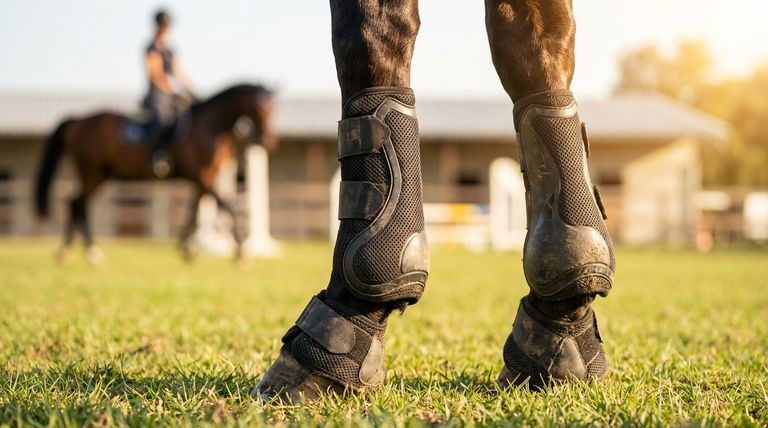
The Core Function: Impact Protection
A horse's lower legs contain no muscle—only bone, tendons, and ligaments. This makes them particularly susceptible to injury from direct impact.
Guarding Against External Trauma
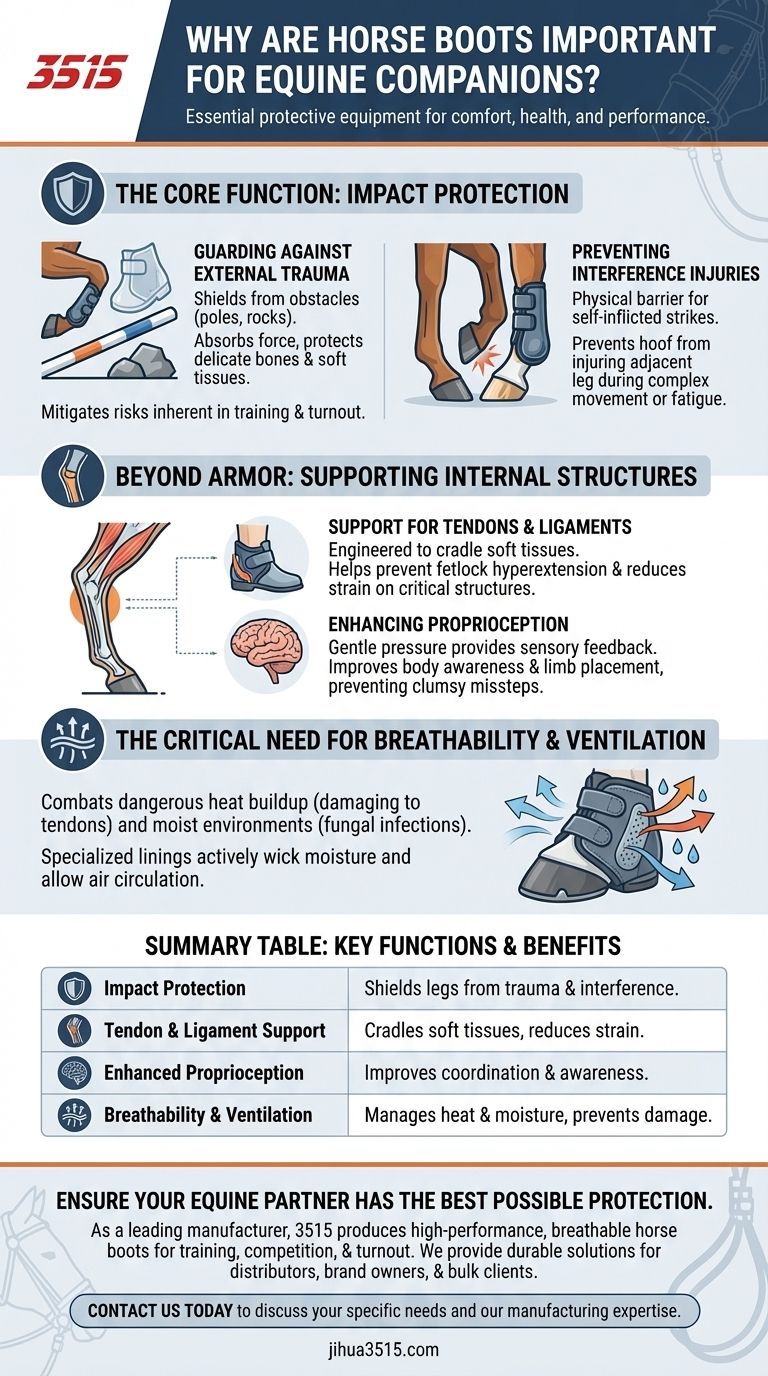
The most straightforward purpose of a horse boot is to act as a shield. During exercise, trail riding, or even play, a horse's legs can easily be struck by obstacles like jump poles, rocks, or branches.
Boots absorb and distribute the force of these impacts, protecting the delicate cannon bone, splint bones, and soft tissues from potentially serious bruising or fractures.
Preventing Interference Injuries
Many injuries are self-inflicted. An "interference" or "overreaching" injury occurs when a horse strikes one leg with the hoof of an opposing leg.
This is common during complex movements, high-speed work, or when a horse is fatigued. Boots provide a physical barrier that prevents a hoof from directly striking and injuring the adjacent leg.
Beyond Armor: Supporting Internal Structures
While impact protection is vital, modern horse boots offer more sophisticated benefits that contribute to the long-term soundness of the animal.
Support for Tendons and Ligaments
Certain styles of boots are engineered to cradle the soft tissues at the back of the leg, including the superficial digital flexor tendon.
This support can help prevent the hyperextension of the fetlock joint (the horse's "ankle") during strenuous exercise, reducing the strain on these critical, slow-healing structures.
Enhancing Proprioception
Proprioception is the body's awareness of its position and movement in space. The light, consistent pressure of a well-fitted boot can provide gentle sensory feedback to the horse.
This enhanced feedback can make the horse more aware of its limb placement, potentially improving coordination and helping to prevent clumsy missteps that can lead to injury.
Understanding the Trade-offs and Key Features
Not all boots are created equal, and choosing the wrong one can create problems. The primary concern is the management of heat and moisture.
The Critical Need for Breathability
Tendons are highly sensitive to heat, and excessive temperature buildup can lead to cellular damage over time. Boots that trap heat and sweat can weaken these structures.
Furthermore, a warm, moist environment against the skin is a perfect breeding ground for fungal and bacterial infections, such as dermatophytes (ringworm).
The Importance of Effective Ventilation
To combat heat buildup, look for boots with effective ventilation. This is achieved through strategically placed vents that allow air to circulate continuously as the horse moves.
Modern boots often feature specialized, breathable linings that actively wick moisture away from the skin and filter out dust and debris while allowing heat to escape.
Making the Right Choice for Your Horse
Selecting the appropriate boot depends entirely on your horse's specific needs and the activities you engage in.
- If your primary focus is high-impact disciplines like jumping or eventing: Prioritize boots that offer maximum shock absorption and robust tendon support.
- If your primary focus is dressage or flatwork: Select a lighter boot that protects against interference without restricting movement.
- If your primary focus is trail riding or general turnout: Choose a durable, breathable, all-purpose boot that guards against minor scrapes and impacts.
Ultimately, choosing the right horse boots is a proactive investment in your horse's immediate safety and long-term soundness.
Summary Table:
| Function | Key Benefit |
|---|---|
| Impact Protection | Shields legs from external trauma and self-inflicted interference injuries. |
| Tendon & Ligament Support | Cradles soft tissues to reduce strain during strenuous exercise. |
| Enhanced Proprioception | Improves coordination and limb awareness to prevent missteps. |
| Breathability & Ventilation | Manages heat and moisture to prevent tendon damage and skin infections. |
Ensure your equine partner has the best possible protection. As a leading manufacturer, 3515 produces a comprehensive range of high-performance, breathable horse boots designed for the rigorous demands of training, competition, and turnout. We provide durable, well-ventilated footwear solutions for distributors, brand owners, and bulk clients seeking to enhance equine safety and performance. Contact us today to discuss your specific needs and discover how our manufacturing expertise can benefit your business.
Visual Guide
Related Products
- Wholesale Tactical Boots High-Traction & Reflective for Bulk & Brand Orders
- Wholesale Lightweight Tactical Boots Custom Manufacturer for Desert & Combat Use
- Durable Goodyear Welt Leather Work Boots for Wholesale & Private Label
- Wholesale High-Traction Camo Boots - Custom Manufacturer for Brands
- Durable Leather Tactical Boots Wholesale & Custom Manufacturing for Brands
People Also Ask
- How do tactical boots protect against injuries? Discover the Integrated Safety System
- What are the key features to look for in the best tactical boots? A Guide to Peak Performance
- What are the consequences of wearing ill-fitting tactical boots? Avoid Injury and Boost Performance
- How do high-performance tactical boots and training shoes support performance? Enhance Safety & Energy for Professionals
- What are the advantages and disadvantages of tactical boots? Lightweight Comfort vs. Rugged Durability

















