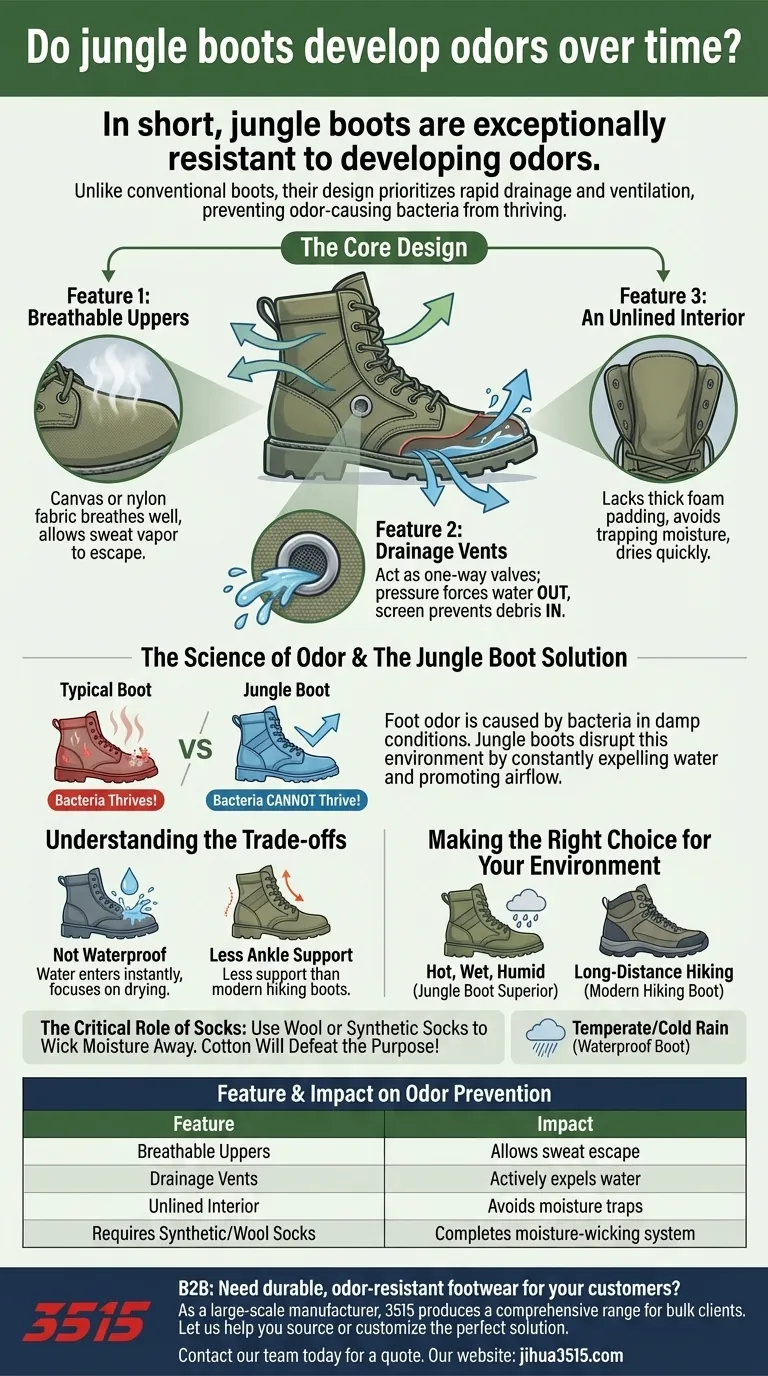
In short, jungle boots are exceptionally resistant to developing odors. Unlike conventional boots that trap moisture, the entire design of a jungle boot is engineered to drain water and dry quickly, creating an environment where odor-causing bacteria cannot thrive. Even after prolonged use in hot, humid conditions, they tend to retain their original material scent.
The key takeaway is that jungle boots don't resist odor through a special material or chemical treatment; they achieve it through a design philosophy that prioritizes rapid drainage and ventilation above all else.
The Core Design: Why Jungle Boots Stay Fresh
The odor resistance of a jungle boot is a direct consequence of its specific, purpose-built features. It was designed to solve the problem of "jungle rot" (a severe skin infection) for soldiers in hot, wet environments by keeping feet as dry as possible.
Feature 1: Breathable Uppers
Most of the boot's upper section is made from canvas or nylon fabric. Unlike the thick, non-porous leather of traditional boots, this material breathes exceptionally well, allowing sweat vapor to escape easily.
Feature 2: Drainage Vents
This is the most critical feature. Jungle boots have small, screened metal eyelets near the instep. These vents act as one-way valves; when you step, the pressure forces water out of the boot, but the screen helps prevent debris from getting in.
Feature 3: An Unlined Interior
Classic jungle boots typically lack the thick foam padding and waterproof liners (like Gore-Tex) found in modern hiking boots. While this padding adds comfort, it also acts like a sponge, trapping sweat and creating a perfect breeding ground for bacteria. The simple, unlined interior of a jungle boot holds very little moisture.
The Science of Odor (And How This Design Defeats It)
Foot odor isn't caused by sweat itself. It's caused by bacteria on your skin that consume the sweat and dead skin cells, producing organic acids as waste.
The Bacterial Environment
These bacteria flourish in warm, dark, and—most importantly—damp conditions. A standard waterproof boot can become a sealed, swampy incubator for this process.
Eliminating the Environment
The jungle boot's design systematically eliminates the dampness. By constantly expelling water and promoting airflow, it disrupts the environment bacteria need to multiply, effectively preventing odor before it can even start.
Understanding the Trade-offs
This remarkable performance in wet heat comes with significant trade-offs. The design that makes jungle boots so effective in one environment makes them a poor choice for others.
They Are Not Waterproof
This is the most important limitation. The drainage vents that let water out also let water in instantly. Walking through a puddle will immediately soak your foot. The design assumes your feet will get wet and focuses only on drying them as fast as possible.
Less Ankle Support
Compared to modern, rigid hiking boots, the canvas uppers on jungle boots offer less ankle support, which can be a concern on uneven, rocky terrain.
The Critical Role of Socks
The jungle boot system is incomplete without the right socks. Wearing cotton socks will completely defeat the purpose, as cotton holds moisture against the skin. Wool or synthetic socks that wick moisture away from the foot are essential for the system to work.
Making the Right Choice for Your Environment
Choosing the right footwear means matching the tool to the specific job and environment.
- If your primary focus is performance in hot, wet, and humid conditions: The jungle boot is the superior choice, as it prioritizes drainage and rapid drying to maintain foot health.
- If your primary focus is keeping feet dry from external sources like rain or puddles in a temperate or cold climate: A waterproof boot with a membrane like Gore-Tex is the correct and necessary tool.
- If your primary focus is long-distance hiking on hard-packed, varied trails: A modern hiking boot often provides better cushioning and support, but you must actively manage internal moisture.
Ultimately, a jungle boot's resistance to odor is a byproduct of its brilliant solution to a much more serious environmental challenge.
Summary Table:
| Feature | Impact on Odor Prevention |
|---|---|
| Breathable Uppers (Canvas/Nylon) | Allows sweat vapor to escape, reducing moisture buildup. |
| Drainage Vents | Actively expels water with each step, preventing a damp environment. |
| Unlined Interior | Avoids moisture-trapping padding, allowing for quick drying. |
| Requires Synthetic/Wool Socks | Completes the moisture-wicking system for maximum effectiveness. |
Need durable, odor-resistant footwear for your customers?
As a large-scale manufacturer, 3515 produces a comprehensive range of footwear for distributors, brand owners, and bulk clients. Our production capabilities encompass all types of shoes and boots, including modern designs that leverage the same principles of breathability and quick-drying performance.
Let us help you source or customize the perfect footwear solution for your market.
Contact our team today for a quote to discuss your specific needs.
Visual Guide
Related Products
- Durable Spiked Camouflage Boots Wholesale & Factory Production
- Wholesale Lightweight Tactical Boots Custom Manufacturer for Desert & Combat Use
- Wholesale High-Traction Camo Boots - Custom Manufacturer for Brands
- Durable Leather High-Ankle Tactical Boots for Wholesale & Custom Manufacturing
- Durable High-Ankle Tactical Boots Wholesale Manufacturer for Custom & Bulk Orders
People Also Ask
- How does boot height affect waterproofing? Choose the Right Height for Ultimate Protection
- What are the best types of shoes for different gardening conditions? Find Your Perfect Match.
- What role does camouflage play in hunting boots? It's More Than Just a Pattern
- What should you look for to ensure boots are fully waterproof? The Essential 2-Part System
- How does boot construction affect waterproofing? The Science Behind Truly Dry Feet