
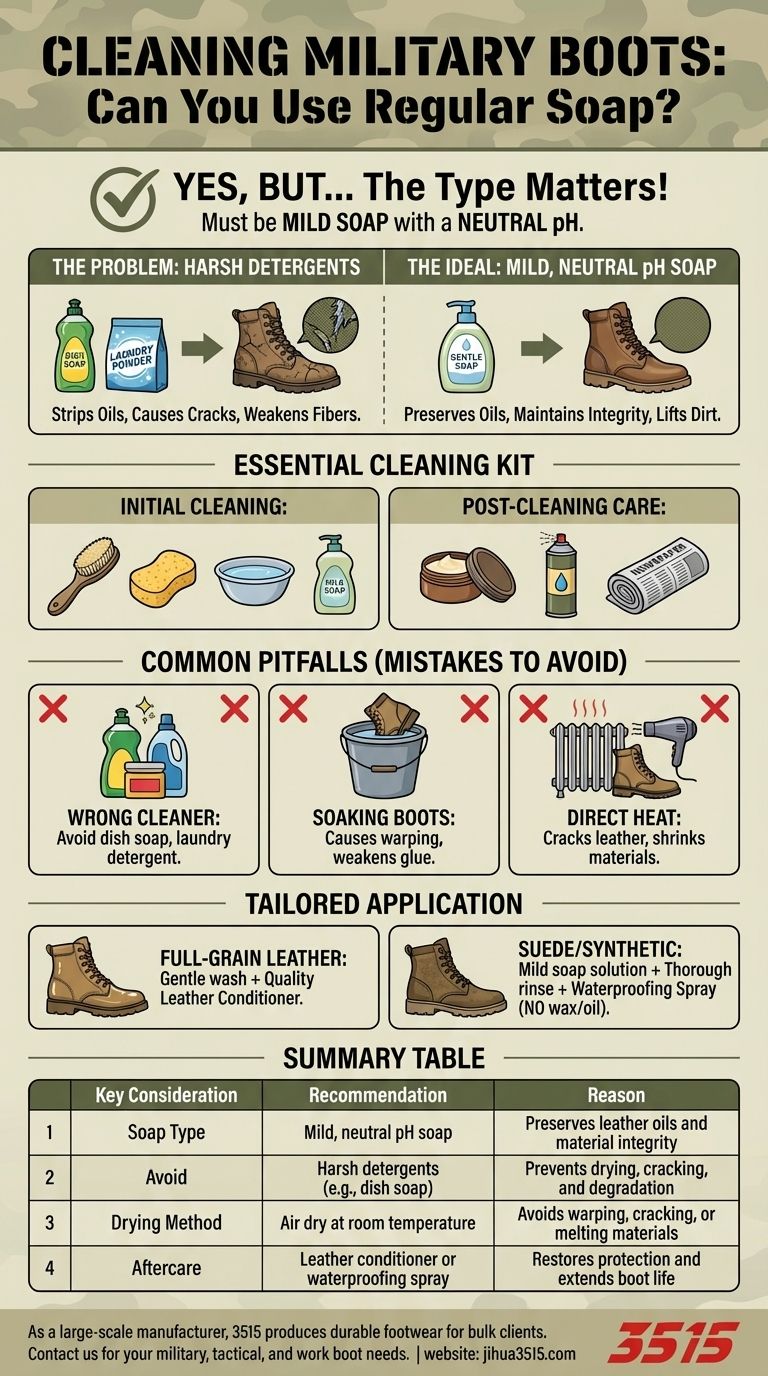
Yes, you can use regular soap to clean military boots, but the specific type of soap is the most important factor. To be safe and effective, you must use a mild soap with a neutral pH. Harsh detergents, like many dish soaps or laundry detergents, can strip essential oils from leather and degrade synthetic materials, ultimately compromising the boot's durability and performance.
The goal of cleaning military boots isn't just to remove dirt, but to preserve their material integrity and performance. Using a mild soap is an acceptable part of this process, but it's the full cycle of gentle cleaning, proper drying, and material conditioning that truly protects your investment.
Why the Right Soap is Non-Negotiable
Choosing the correct cleaning agent is the first and most critical step in maintaining your boots. The wrong choice can cause irreversible damage.
The Problem with Harsh Detergents
Most household cleaners are formulated to be aggressive degreasers. When used on boots, they strip the natural oils from leather, causing it to become dry, brittle, and prone to cracking.
On synthetic fabrics, these harsh chemicals can weaken fibers and damage the glues and adhesives that hold the boot together.
What Makes a "Mild, Neutral pH" Soap Ideal?
A mild, neutral pH soap cleans the surface without altering the material's chemical balance. It effectively lifts away dirt and grime without drawing out the essential oils and protective coatings that keep the boot's materials supple and resilient.
Assembling Your Essential Cleaning Kit
Having the right tools on hand makes the process simple and effective. You can divide your kit into two categories: items for cleaning and items for aftercare.
For the Initial Cleaning
You will need a soft-bristled brush to remove caked-on mud and a softer cloth or sponge for the actual washing. An old toothbrush is perfect for cleaning hard-to-reach areas like eyelets and seams.
The cleaning solution itself is simple: your mild soap and a bowl of lukewarm water.
For Post-Cleaning Care and Preservation
After cleaning, you need to restore and protect the materials. For leather boots, a dedicated leather conditioner or wax is essential.
For all boot types, a waterproofing spray can restore water resistance. Finally, have newspaper on hand to help the boots dry and maintain their shape.
Common Pitfalls That Can Ruin Your Boots
Avoiding a few common mistakes is just as important as the cleaning process itself. These errors can drastically shorten the lifespan of your gear.
Using the Wrong Cleaner
Never grab standard dish soap, laundry detergent, or bar soap without first confirming it is mild and pH-neutral. These are the primary culprits behind dried-out, cracked boots.
Soaking the Boots
Submerging your boots in water is a critical error. This can oversaturate the materials, causing them to warp as they dry. It also weakens the adhesives used in modern boot construction, leading to delamination.
Applying Direct Heat to Dry
Never place your boots near a radiator, campfire, or use a hairdryer to speed up drying. High, direct heat will crack leather and can shrink or melt synthetic materials, permanently ruining the fit and integrity of the boot.
How to Apply This to Your Boots
Your approach should be guided by the material of your boots and your primary goal.
- If your primary focus is cleaning standard-issue full-grain leather boots: Always follow a gentle wash with a quality leather conditioner to restore essential oils and prevent cracking.
- If your primary focus is cleaning suede or synthetic fabric boots: A mild soap solution is perfectly safe, but ensure you rinse thoroughly with a damp cloth and never use a wax or oil-based conditioner meant for smooth leather.
Following a proper cleaning and maintenance routine is the single best way to ensure your boots perform when you need them most.
Summary Table:
| Key Consideration | Recommendation | Reason |
|---|---|---|
| Soap Type | Mild, neutral pH soap | Preserves leather oils and material integrity |
| Avoid | Harsh detergents (e.g., dish soap) | Prevents drying, cracking, and degradation |
| Drying Method | Air dry at room temperature | Avoids warping, cracking, or melting materials |
| Aftercare | Leather conditioner or waterproofing spray | Restores protection and extends boot life |
Ensure your military boots are cleaned and maintained with the right products and expertise. As a large-scale manufacturer, 3515 produces a comprehensive range of durable footwear for distributors, brand owners, and bulk clients. Our production capabilities encompass all types of military, tactical, and work boots designed for performance and longevity. Contact us today to discuss your footwear needs and benefit from our manufacturing excellence.
Visual Guide
Related Products
- Durable Military Combat Boots with Water Drainage for Wholesale & OEM
- High-Traction Suede Tactical Boots Wholesale & Custom Manufacturing
- Durable High-Ankle Tactical Boots for Wholesale & Custom Manufacturing
- Durable Mid-Cut Tactical Boots for Wholesale & Private Label
- Wholesale Waterproof Tactical Boots Custom Suede & High-Traction Soles
People Also Ask
- Why must gait validation for military applications be conducted in combat boots? Ensure Data Accuracy for Soldiers
- What are the common types of combat boots? Find the Right Boot for Your Mission
- What factors should be considered when choosing military boots for hiking? Durability vs. Weight for Your Terrain
- What are the key considerations when choosing military boots? Prioritize Compliance, Environment & Fit
- How should the midfoot and heel fit in military boots? Achieve a Snug, Secure Fit for Blister Prevention



















