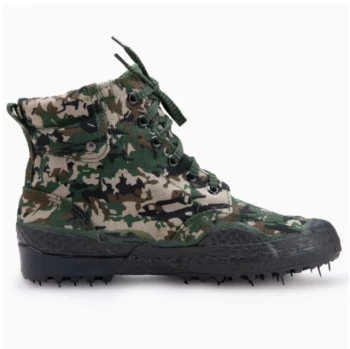
To properly maintain jungle boots, you must adopt a consistent routine of cleaning, drying, and conditioning tailored to their unique construction and harsh operating environment. This involves immediately removing mud after use with a brush and damp cloth, allowing the boots to air dry naturally away from direct heat, and regularly applying a leather conditioner or grease to prevent the leather from cracking.
The fundamental goal of jungle boot maintenance is not just cleanliness, but active moisture management. Your primary objective is to prevent the cycle of saturation and rapid drying that destroys leather and degrades synthetic materials over time.
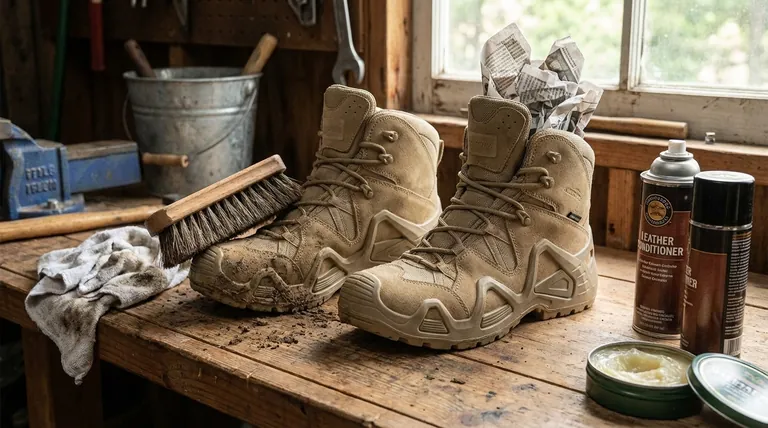
The Core Maintenance Routine: A Step-by-Step Guide
Jungle boots are tools designed for the most demanding environments on earth. Their maintenance must be approached with the same level of discipline to ensure they remain effective and durable.
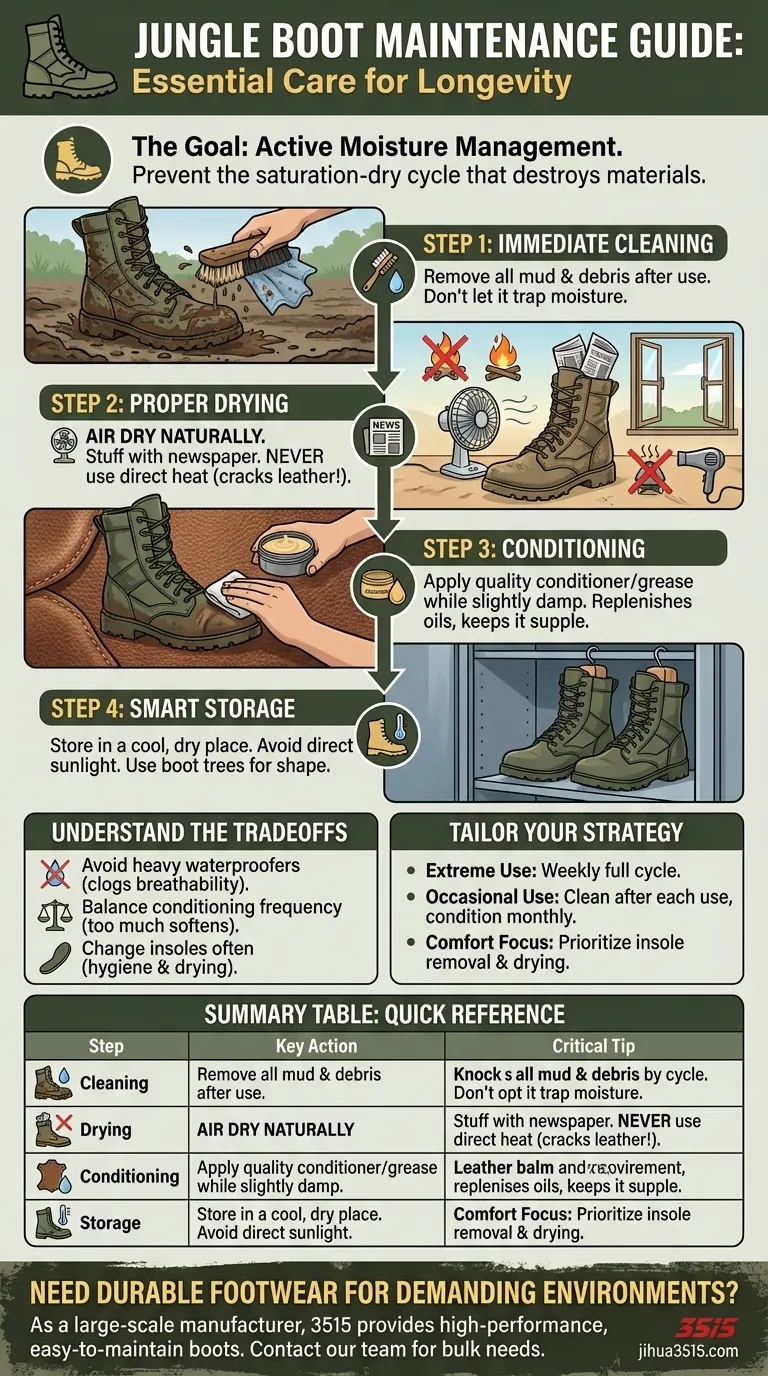
Step 1: Immediate Cleaning After Use
The first step is always to remove contaminants. Caked-on mud and debris trap moisture against the boot's materials, accelerating rot and wear.
Use a soft-bristled brush to knock off all loose dirt and mud. Follow up with a damp cloth to wipe down the entire boot, including the soles and canvas or nylon panels.
Step 2: Proper Drying Techniques
This is the most critical phase where most damage occurs. Never use direct heat—such as a campfire, radiator, or hair dryer—to speed up the process.
Direct heat will crack the leather, weaken adhesives holding the sole, and can even melt synthetic components.
Instead, stuff the boots with crumpled newspaper, which is highly effective at drawing out moisture from the inside. Place them in a cool, dry, well-ventilated area and allow them to air dry naturally.
Step 3: Conditioning the Leather
Leather loses its natural oils when saturated with water and then dried. This process makes it brittle and prone to cracking. Conditioning replenishes these oils.
While the leather is still slightly damp, apply a high-quality leather conditioner, oil, or grease. This helps the conditioner penetrate the pores more effectively, keeping the material supple and water-resistant.
Step 4: Smart Storage
How you store your boots between uses matters. Improper storage can lead to mold, mildew, and material degradation.
Store them in a cool, dry place away from direct sunlight, which can dry out and fade the materials. Using a shoehorn or boot trees can also help the boots retain their proper shape over time.
Understanding the Pitfalls and Trade-offs
Proper care extends a boot's life, but common mistakes can shorten it dramatically. Understanding these trade-offs is key to effective maintenance.
The Myth of "Waterproofing"
Jungle boots, particularly military-style ones with drainage vents, are designed to get wet and dry quickly, not to be impervious.
Applying heavy wax-based waterproofers can clog the leather's pores and any canvas panels, destroying the breathability that is essential for comfort in hot, humid climates. Stick to conditioning oils and greases.
Over-Conditioning vs. Neglect
There is a balance to be struck with conditioning. While neglect leads to cracked leather, over-conditioning can make the leather too soft and unable to provide adequate support.
For boots in frequent, hard use, a weekly conditioning schedule is appropriate. For less frequent use, conditioning them every few months or after a particularly wet outing is sufficient.
Forgetting the Interior
The inside of the boot is just as important as the outside. Bacteria and fungus thrive in dark, damp environments.
Remove and change your insoles frequently. This not only improves hygiene and reduces odor but also allows the footbed of the boot to dry out completely.
How to Apply This to Your Goal
Your maintenance strategy should adapt to how you use your boots.
- If your primary focus is maximum lifespan in extreme, wet conditions: You must perform a full clean, dry, and condition cycle after every significant use, potentially on a weekly basis.
- If your primary focus is occasional use for hiking or work: A thorough cleaning after each use and conditioning the leather every 1-2 months will be sufficient to prevent degradation.
- If your primary focus is preserving comfort and hygiene: Prioritize removing insoles after every use and ensuring the boots are completely dry before wearing them again.
Consistent, thoughtful care is what transforms a good pair of boots into a reliable, long-term investment.
Summary Table:
| Maintenance Step | Key Action | Critical Tip |
|---|---|---|
| Immediate Cleaning | Remove mud with a brush and damp cloth. | Prevents debris from trapping moisture. |
| Proper Drying | Air dry naturally, stuffed with newspaper. | Never use direct heat to avoid cracking. |
| Conditioning | Apply conditioner to slightly damp leather. | Replenishes oils to keep leather supple. |
| Smart Storage | Store in a cool, dry place away from sunlight. | Prevents mold, mildew, and shape loss. |
Need Durable Footwear for Demanding Environments?
As a large-scale manufacturer, 3515 produces a comprehensive range of high-performance footwear built to last. Our expertise ensures your boots, whether for military, work, or extreme outdoor use, are constructed with durability and ease of maintenance in mind.
Let us provide you with reliable footwear solutions. Contact our team today to discuss your bulk needs for distributors, brand owners, and bulk clients.
Visual Guide
Related Products
- Durable Spiked Camouflage Boots Wholesale & Factory Production
- Wholesale Lightweight Tactical Boots Custom Manufacturer for Desert & Combat Use
- Wholesale High-Traction Camo Boots - Custom Manufacturer for Brands
- Durable Leather High-Ankle Tactical Boots for Wholesale & Custom Manufacturing
- Durable High-Ankle Tactical Boots Wholesale Manufacturer for Custom & Bulk Orders
People Also Ask
- How does boot height affect waterproofing? Choose the Right Height for Ultimate Protection
- What are the best types of shoes for different gardening conditions? Find Your Perfect Match.
- What role does camouflage play in hunting boots? It's More Than Just a Pattern
- What should you look for to ensure boots are fully waterproof? The Essential 2-Part System
- How does boot construction affect waterproofing? The Science Behind Truly Dry Feet