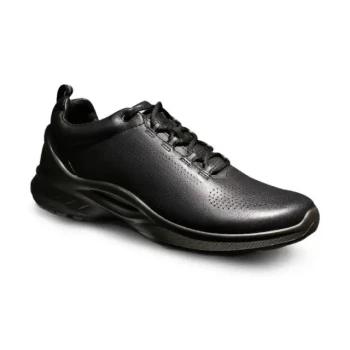
Yes, you can absolutely wear boots with a suit. The key is to choose a pair of dress boots that are as sleek, simple, and formal as the suit itself. When done correctly, this pairing projects confidence and modern style without sacrificing professionalism.
The rule is simple: the formality of the boot must match the formality of the suit. This is determined by the boot's shape, material, and sole. A sleek silhouette, polished leather, and a slim sole are the hallmarks of a suit-worthy boot.

What Makes a Boot "Suit-Worthy"?
Not all boots are created equal. To work with a suit, a boot must echo the clean lines and refined materials of tailored clothing. Think of it as a dress shoe with a higher ankle.
The Importance of a Sleek Shape
The toe box of the boot is critical. It should be tapered and elegant, similar to a high-quality oxford or derby shoe. Avoid boots with bulbous, round, or overly square toes, as these appear clunky and casual.
Material is Non-Negotiable
Polished leather is the gold standard. It's formal, classic, and pairs seamlessly with the wool, linen, or flannel of a suit. While some high-quality suede can work in specific contexts, smooth calfskin leather is always the safest and most versatile choice.
The Sole Test: Slim vs. Chunky
Flip the boot over. A suit-worthy boot will have a slim, low-profile sole, often made of leather or a refined combination of leather and rubber. Thick, heavy, or deeply treaded commando soles belong on work boots, not with tailoring.
Color Coordination is Key
Stick to the classics. Black or dark brown leather boots offer the most versatility. Black boots pair well with black, charcoal, grey, and navy suits. Brown boots introduce a slightly more modern feel and work with navy, grey, and even black suits for a confident look.
A Guide to Common Boot Styles
While the principles above are your guide, knowing the specific styles that work best will simplify your choice.
The Gold Standard: Chelsea & Brogue Boots
Chelsea boots are the quintessential dress boot. Their laceless, elastic-sided design is minimalist and exceptionally sleek, allowing them to slide cleanly under a trouser hem.
Brogue boots, which feature decorative perforations, are another excellent choice. They add a touch of texture and traditional character that complements tweed or flannel suits especially well.
The Modern Choice: Chukka Boots
Chukka boots can be worn with a suit, but with a critical distinction. You must choose a dress chukka made from polished leather with a slim leather sole.
Avoid their more casual cousin, the desert boot, which typically features suede and a thick crepe rubber sole. These are too informal for a suit and are better suited for business casual attire.
The Unconventional Options: Western & Combat Boots
Pairing a suit with Western or combat boots is an advanced style move. A high-quality pair of Western dress boots can work, particularly in certain regions or for specific events, as worn by U.S. presidents and professionals alike.
Similarly, a very minimalist combat boot can be paired with a suit for an edgy, fashion-forward look, but this falls outside the lines of traditional business or formal wear.
Understanding the Trade-offs
Choosing the right boot means understanding the context and avoiding common pitfalls that can undermine your entire look.
The Formality Spectrum
Boots are perfectly appropriate for most business and social settings where a suit is required. However, they are generally not suitable for the most formal dress codes, such as black-tie or white-tie events, where patent leather dress shoes are the only correct option.
The Pant Length Problem
The length of your trousers is crucial. You want a slight break or no break at all, allowing the trousers to fall cleanly over the top of the boot. Trousers that are too long will bunch up unattractively, while trousers that are too short will expose too much of the boot shaft and disrupt the silhouette.
Making the Right Choice for Your Occasion
Ultimately, the right boot depends on your goal and the environment.
- If your primary focus is a conservative business setting: Choose a classic black or dark brown leather Chelsea boot for a look that is polished, professional, and beyond reproach.
- If your primary focus is a modern office or a smart social event: A sleek, leather-soled Chukka boot offers a contemporary twist that is both stylish and appropriate.
- If your primary focus is expressing personal style: Brogue, Western, or even combat boots can be powerful statement pieces when paired with the right suit and a healthy dose of confidence.
Choosing the right boot isn't about following a trend; it's about adding a versatile and sophisticated option to your wardrobe.
Summary Table:
| Key Factor | Suit-Worthy Boot | Avoid |
|---|---|---|
| Shape | Sleek, tapered toe box | Bulbous or square toe |
| Material | Polished leather (black/brown) | Casual suede or rough textures |
| Sole | Slim leather or refined rubber | Thick, chunky commando soles |
| Best Styles | Chelsea, Brogue, Dress Chukka | Work boots, desert boots |
| Pant Length | Slight or no break | Too long or too short |
Ready to elevate your professional footwear collection?
As a large-scale manufacturer, 3515 produces a comprehensive range of sleek, suit-worthy boots for distributors, brand owners, and bulk clients. Our production capabilities encompass all types of formal and fashion boots, ensuring the quality, style, and consistency your customers demand.
Contact us today to discuss your footwear needs and discover how we can help you build a superior product line.
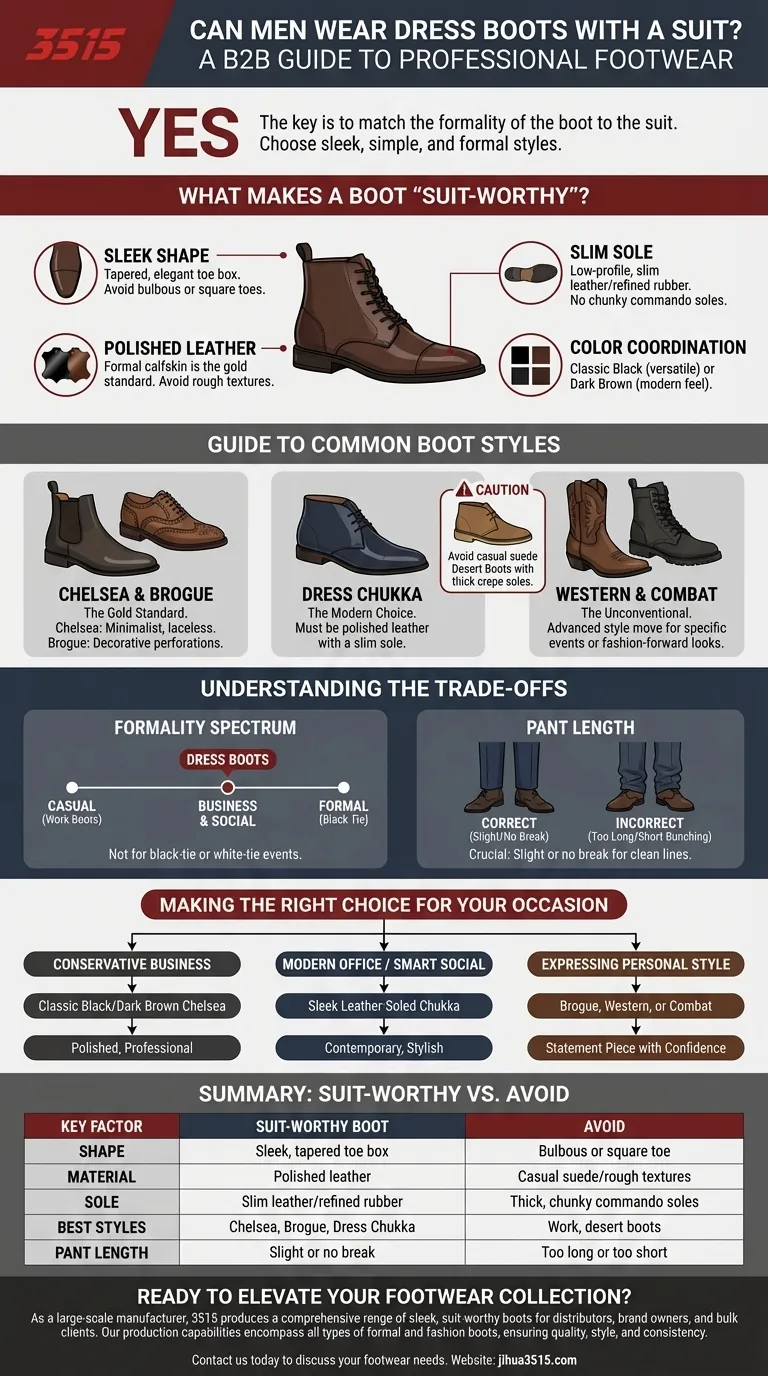
Visual Guide
Related Products
- Wholesale Comfort Dress Shoes with Dial Closure for Custom Manufacturing
- Wholesale Perforated Comfort Dress Shoes | Custom Derby Shoe Manufacturer
- Custom Manufactured Air Cushion Leather Business Shoes for Wholesale
- Wholesale Classic Leather Lace-Up Ankle Boots for Brand Manufacturing
- Wholesale Tactical Boots High-Traction & Reflective for Bulk & Brand Orders
People Also Ask
- How do comfort dress shoes differ from traditional dress shoes? Discover the Ergonomic Advantage
- Which dress shoe styles are suitable for wearing with jeans? A Guide to Smart-Casual Style
- What features make dress shoes suitable for standing all day? Achieve All-Day Comfort with Anatomical Design
- What are the benefits of resoling dress shoes? Extend Life & Boost Comfort
- What recent trends have influenced traditional dress shoe designs? The Shift to Modern Comfort