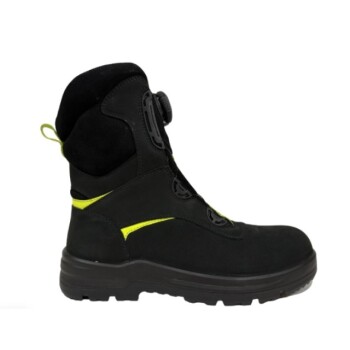
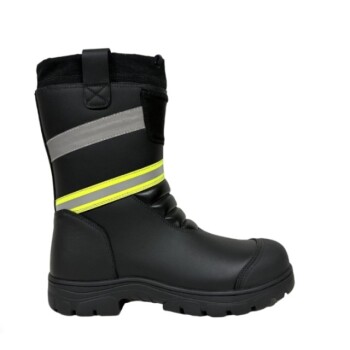
Yes, in certain situations, a sturdy pair of rubber rain boots can provide a meaningful layer of protection against snake bites. The thick, non-porous rubber and high coverage can be sufficient to stop or deflect the fangs of many smaller snake species. However, they are not a substitute for certified snake boots and carry significant limitations, particularly when facing larger venomous snakes or when trekking long distances.
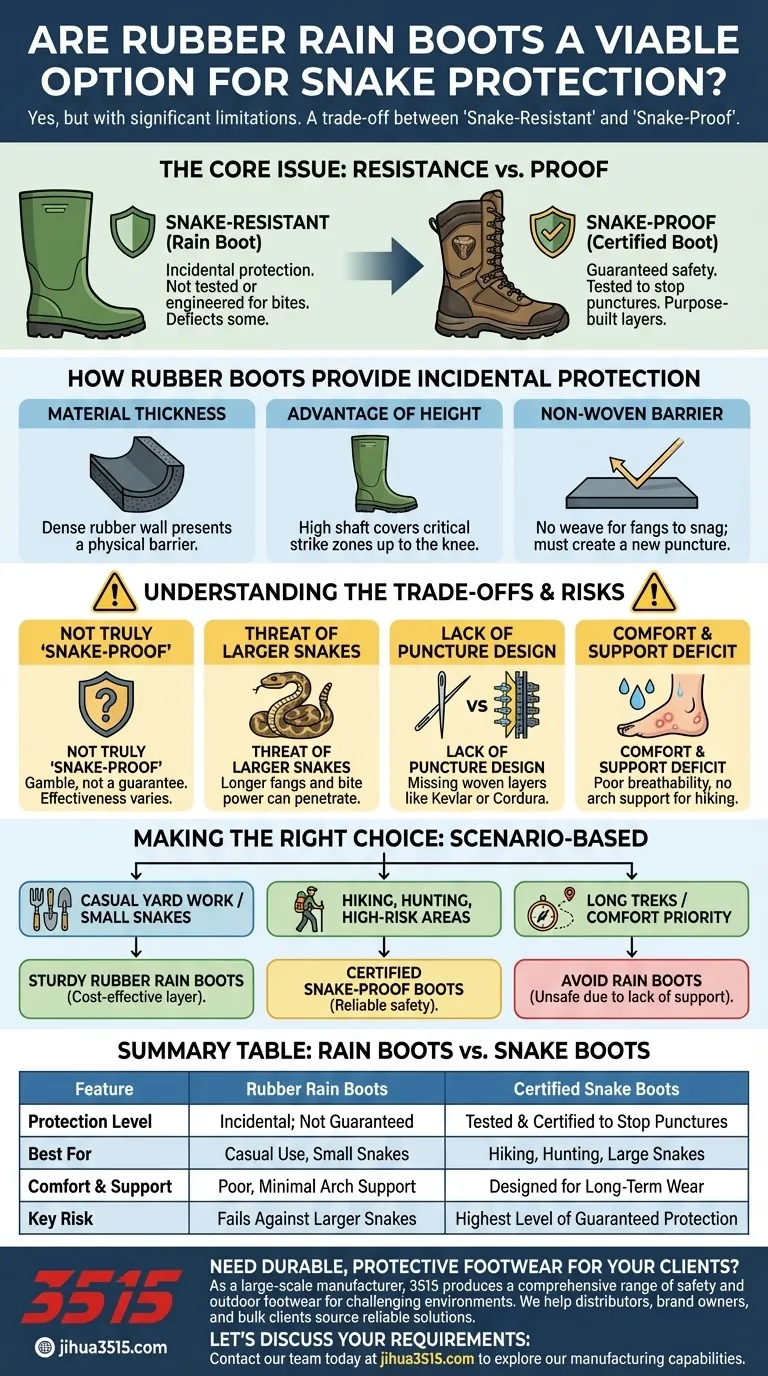
The core issue is one of "snake-resistant" versus "snake-proof." While rubber boots offer incidental resistance, they are not engineered or tested for this purpose. True snake boots are specifically designed to stop a puncture, making your choice a direct trade-off between cost and guaranteed safety.
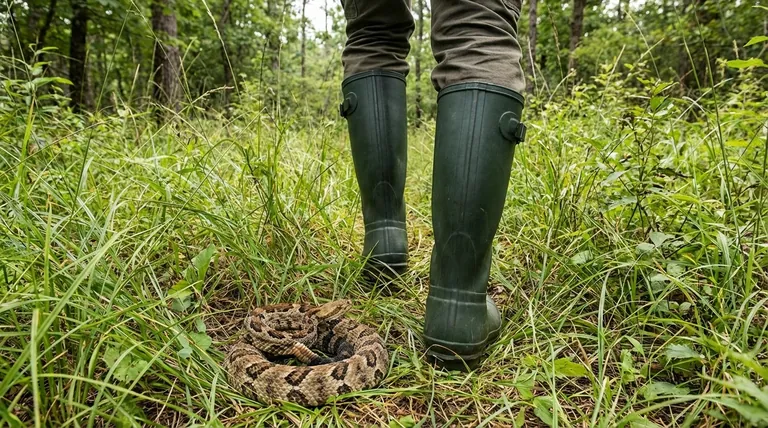
How Rubber Boots Provide Protection
The protective qualities of a standard rubber rain boot are a byproduct of its primary design for waterproofing, not a deliberate defense mechanism.
The Principle of Material Thickness
The most straightforward defensive feature is the sheer thickness of the rubber. For a snake's fangs to deliver venom, they must fully penetrate the material and reach your skin. A thick, dense rubber wall presents a significant physical barrier that can prevent this.
The Advantage of Height
The vast majority of snake bites occur on the feet and lower legs. The high-shaft design of a typical rain boot covers this critical strike zone, offering protection up to the knee, which is often sufficient coverage for an unexpected encounter.
A Non-Woven Barrier
Unlike canvas or fabric, solid rubber has no weave for fangs to snag and work their way through. A fang must create its own puncture hole through pure force, which requires more energy and is more likely to be deflected by the boot's surface.
Understanding the Trade-offs and Risks
Relying on rain boots for snake protection means accepting several critical risks that purpose-built snake boots are designed to eliminate.
Not Truly "Snake-Proof"
Rain boots are not tested or rated to stop snake bites. Their effectiveness is incidental and can vary dramatically between boot brands, material thickness, and the specific snake. This is a gamble, not a guarantee.
The Threat of Larger Snakes
The primary failure point is a bite from a large, mature venomous snake, such as a large Timber Rattlesnake or Eastern Diamondback. These snakes possess longer fangs and generate significantly more biting power, giving them a much higher chance of penetrating the simple rubber of a rain boot.
Lack of Puncture-Specific Design
Specialized snake boots use multiple layers of tightly woven materials like Cordura, Kevlar, or tough leather. This construction is designed to stop a sharp, high-pressure puncture, which is a very different type of force than abrasion or general wear and tear. A rain boot lacks this specialized defense.
The Comfort and Support Deficit
Rubber is not breathable. On long walks or in warm weather, this leads to excessive sweat, discomfort, and a higher risk of blisters. Furthermore, the loose fit and lack of arch support make them unsuitable and unsafe for hiking on uneven terrain, where proper footing is critical for avoiding a fall—or a snake.
Making the Right Choice for Your Situation
Your decision should be based on a clear-eyed assessment of your environment, activity, and acceptable level of risk.
- If your primary focus is casual yard work or short walks in areas with smaller snakes: A sturdy pair of thick rubber rain boots can serve as a reasonable and cost-effective protective layer.
- If your primary focus is hiking, hunting, or working in habitats known for large venomous snakes: Investing in a pair of certified snake-proof boots is the only reliable way to ensure your safety.
- If your primary focus is comfort and stability on long treks: The poor breathability and lack of support in rain boots make them a poor choice for any serious hiking, regardless of their protective qualities.
Ultimately, your footwear should be a deliberate safety choice, not a convenient afterthought.
Summary Table:
| Scenario | Rubber Rain Boots | Certified Snake Boots |
|---|---|---|
| Protection Level | Incidental resistance; not guaranteed | Tested and certified to stop punctures |
| Best For | Casual yard work, areas with smaller snakes | Hiking, hunting, areas with large venomous snakes |
| Comfort & Support | Poor breathability, minimal arch support | Designed for long-term wear and stability |
| Key Risk | May fail against larger snakes with longer fangs | Highest level of guaranteed protection |
Need Durable, Protective Footwear for Your Clients?
As a large-scale manufacturer, 3515 produces a comprehensive range of safety and outdoor footwear, including options designed for challenging environments. We help distributors, brand owners, and bulk clients source reliable footwear that meets specific safety and performance needs.
Let's discuss your requirements: Contact our team today to explore how our manufacturing capabilities can provide the right footwear solutions for your market.
Visual Guide
Related Products
- Wholesale Durable Safety Boots | Custom Steel Toe & Puncture-Resistant Manufacturing
- Premium High-Cut Waterproof Safety Boots Manufacturing & Wholesale Solutions
- Heavy-Duty Waterproof Nubuck Safety Boots Safety Shoes for Bulk Supply
- Durable Goodyear Welt Leather Work Boots for Wholesale & Private Label
- Durable Leather Work Boots Wholesale Manufacturer & Custom Factory
People Also Ask
- What are the risks of using ordinary rubber boots in forest clearing? Why professional safety boots are essential
- How should safety boots be cleaned to avoid damage? A Gentle Guide to Preserve Your Boots
- What are the key features of safety boots? Essential Protection for Hazardous Workplaces
- What makes durable safety boots? The Ultimate Guide to Long-Lasting Work Footwear
- Why is proper storage important for safety boots? Preserve Protection and Extend Lifespan