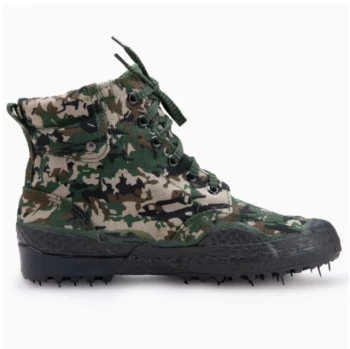
Yes, jungle boots absolutely remain in service. While not a standard-issue item for every soldier, they are actively used and developed by specialized units and entire armies operating in tropical environments, including branches of the U.S. military.
The classic jungle boot has not become obsolete; instead, it has evolved. Modern military forces recognize it as a specialized tool, re-evaluating and issuing new versions specifically designed to master hot, wet environments where traditional combat boots fail.
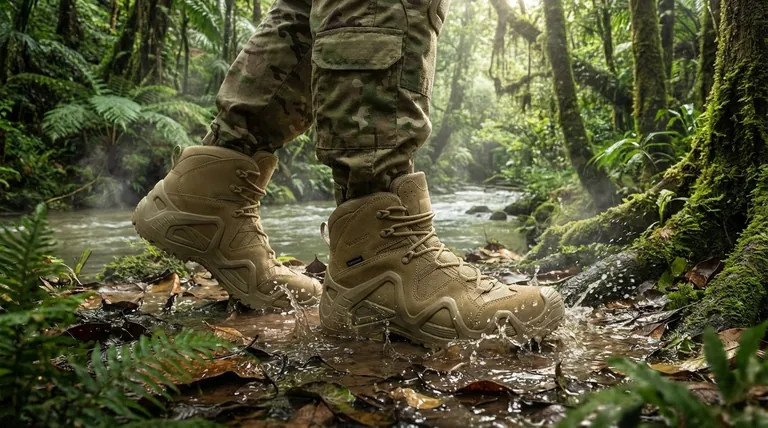
Why Jungle Boots Are Still Necessary
The core challenge of a jungle environment isn't just keeping water out—it's getting it out once it inevitably gets in. Standard waterproof boots can become buckets for sweat and water, leading to severe foot problems.
The Failure of Conventional Boots
In hot, humid climates, even the most "breathable" waterproof boots struggle to vent perspiration.
When fully submerged during river crossings or downpours, they fill with water and take an extremely long time to dry, increasing weight and the risk of blisters, fungal infections, and trench foot.
The Core Design Philosophy: Rapid Drainage
Jungle boots operate on a different principle: accept that feet will get wet, and prioritize drying them as quickly as possible.
They are constructed from quick-drying materials like nylon and canvas and famously feature drainage vents—small, often screened holes near the instep that actively push water out with every step.
Who Still Issues Jungle Boots?
While their use has become more specialized, several military forces continue to produce, issue, and innovate the jungle boot design.
Specialized Global Forces
Manufacturers continue to produce jungle footwear for militaries that operate extensively in jungle terrain. The Brazilian Army is a prime example, utilizing boots with modern features like specialized Vibram outsoles.
Historically, U.S.-made jungle boots were also issued to allied forces, such as the former Afghan National Army.
Re-evaluation by the U.S. Military
The U.S. Army is actively fielding modern jungle boots. Recognizing the unique demands of the Pacific theater, new jungle boots were issued for evaluation to brigade combat teams in Hawaii, specifically within the 25th Infantry Division.
This signals a renewed focus on having the right equipment for specific operational environments rather than a one-size-fits-all approach.
Understanding the Trade-offs
Jungle boots are purpose-built tools, and their specialized design comes with clear advantages and disadvantages.
Unmatched in Hot, Wet Conditions
In their intended environment, they are superior to almost any other military footwear. Their ability to shed water, dry quickly, and promote air circulation is critical for maintaining foot health and mobility.
Not an All-Purpose Solution
These same features make them unsuitable for other climates. The drainage vents offer no protection from cold, and the lightweight materials provide less insulation and support than a standard-issue temperate or cold-weather boot.
The Evolution of Materials
Modern jungle boots are not the same as their Vietnam-era predecessors. They incorporate advanced, lighter materials, more aggressive and durable Vibram or Dobie outsoles for better traction, and improved insoles for comfort and hygiene.
How to Apply This to Your Needs
Choosing the right footwear depends entirely on the intended environment and mission.
- If your primary focus is performance in tropical or swampy climates: A modern jungle boot is the correct choice, as its drainage and quick-dry capabilities are essential.
- If your primary focus is all-around use in varied or cold climates: A traditional leather or waterproof composite combat boot will provide better support, protection, and insulation.
The jungle boot remains a testament to the principle of using the right tool for the job.
Summary Table:
| Feature | Jungle Boots | Standard Combat Boots |
|---|---|---|
| Primary Use | Hot, wet, tropical environments | Varied or cold climates |
| Water Management | Rapid drainage via vents | Waterproofing to keep water out |
| Drying Time | Very fast | Slow |
| Best For | Specialized jungle operations | All-around, general-purpose use |
| Key Trade-off | Less insulation/support | Can trap sweat/water in heat |
Need Specialized Military & Tactical Footwear?
As a large-scale manufacturer, 3515 produces a comprehensive range of footwear for distributors, brand owners, and bulk clients. Our production capabilities encompass all types of shoes and boots, including modern jungle boots designed for peak performance in demanding environments.
We can help you with:
- Custom Designs: Tailored footwear solutions for specific operational needs.
- Bulk Orders: Reliable, high-volume manufacturing to meet your supply chain demands.
- Advanced Materials: Utilizing modern, durable materials for superior traction, comfort, and hygiene.
Let's equip your forces with the right tool for the job. Contact our team today to discuss your project requirements.
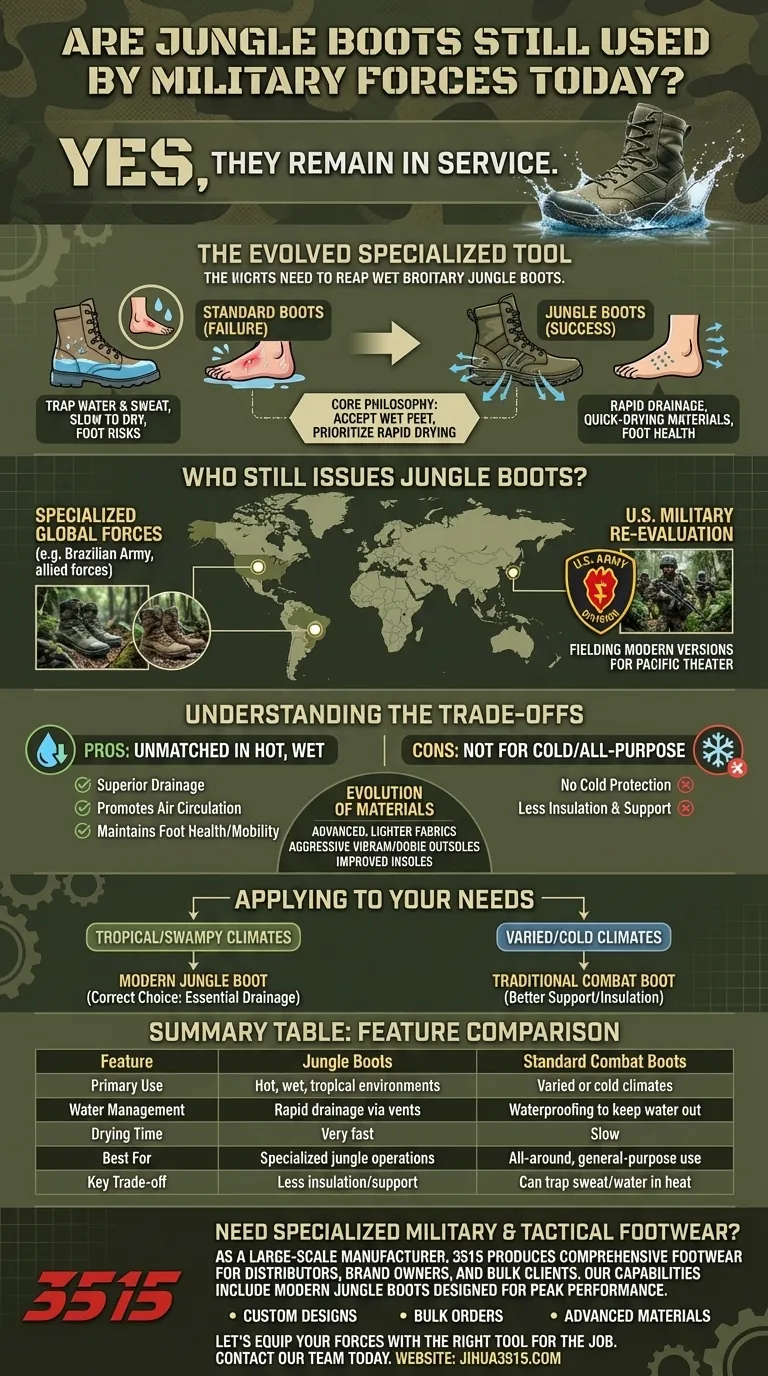
Visual Guide
Related Products
- Durable Spiked Camouflage Boots Wholesale & Factory Production
- Wholesale Lightweight Tactical Boots Custom Manufacturer for Desert & Combat Use
- Wholesale High-Traction Camo Boots - Custom Manufacturer for Brands
- Durable Leather High-Ankle Tactical Boots for Wholesale & Custom Manufacturing
- Durable High-Ankle Tactical Boots Wholesale Manufacturer for Custom & Bulk Orders
People Also Ask
- How does boot height affect waterproofing? Choose the Right Height for Ultimate Protection
- What are the best types of shoes for different gardening conditions? Find Your Perfect Match.
- What role does camouflage play in hunting boots? It's More Than Just a Pattern
- What should you look for to ensure boots are fully waterproof? The Essential 2-Part System
- How does boot construction affect waterproofing? The Science Behind Truly Dry Feet