
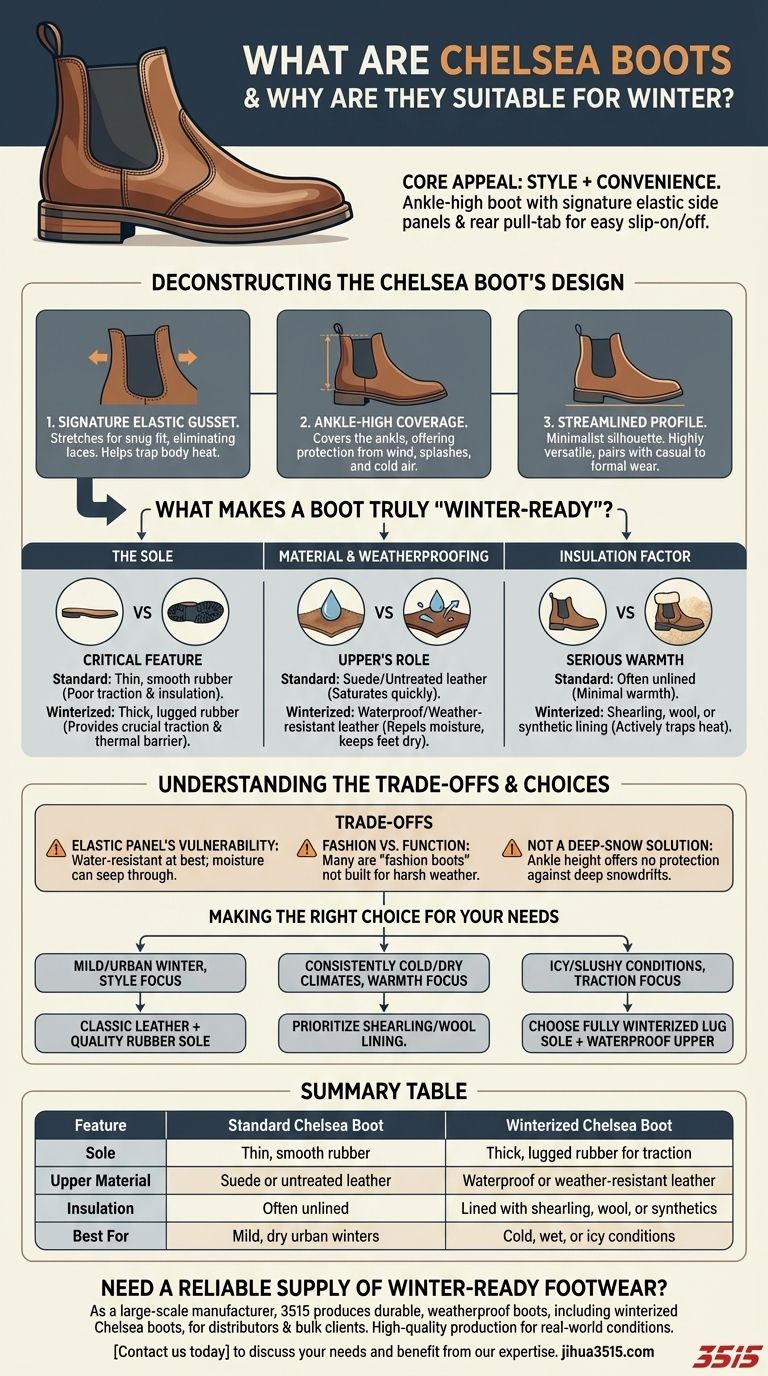
In essence, Chelsea boots are a distinct style of ankle-high boot defined by their signature elastic side panels and a rear pull-tab. This construction makes them exceptionally easy to slip on and off, and while they can be a comfortable and stylish choice for winter, their true suitability for cold weather depends heavily on their specific materials and construction.
The core appeal of a Chelsea boot for winter is its combination of style and convenience. However, a standard fashion-oriented model is not a true winter boot; for genuine warmth and safety, you must seek out versions specifically designed with winter-grade soles, insulation, and weather-resistant materials.
Deconstructing the Chelsea Boot's Design
To understand a Chelsea boot's winter potential, we must first look at its core components. Each element plays a role in its function and comfort.
The Signature Elastic Gusset
The elastic panel on each side is the boot's most recognizable feature. It allows the ankle opening to stretch, eliminating the need for laces or zippers.
This creates a snug fit around the ankle, which helps trap body heat and prevent cold drafts from entering the boot.
Ankle-High Coverage
The boot's profile rises to cover the ankle completely. This offers a fundamental level of protection that low-cut shoes cannot.
It shields the ankle from wind, light splashes, and the general chill of cold air, providing more warmth and coverage for daily wear.
The Streamlined Profile
Chelsea boots are known for their clean, minimalist silhouette. This makes them highly versatile, capable of pairing with everything from casual jeans to more formal trousers.
Their popularity stems from this ability to offer the utility of a boot without the bulk of more rugged footwear.
What Makes a Boot Truly "Winter-Ready"?
A basic Chelsea boot provides minimal winter protection. To handle genuinely cold, wet, or icy conditions, a boot must have specific features that go beyond the standard design.
The Critical Role of the Sole
The sole is arguably the most important winter feature. A traditional thin leather or smooth rubber sole offers poor insulation and becomes dangerously slick on ice or snow.
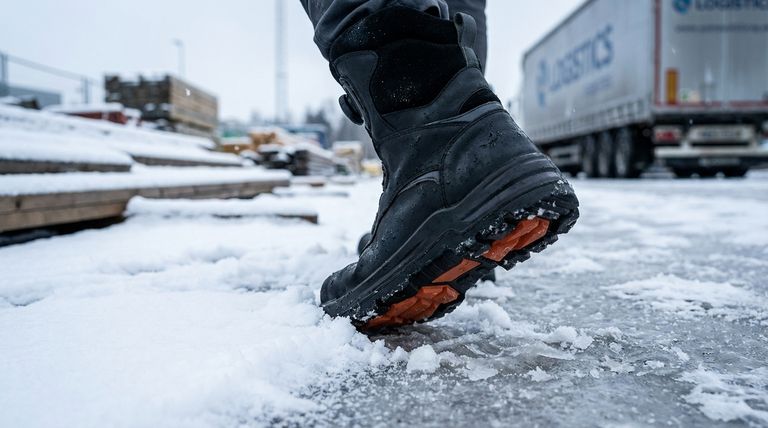
A true winter boot needs a thick, lugged rubber sole. This provides crucial traction to prevent slipping and creates a thermal barrier between your foot and the frozen ground.
Material and Weatherproofing
The upper material dictates the boot's ability to handle moisture. Suede or untreated leather will quickly become stained and saturated in slush or snow.
For winter, look for boots made from waterproofed or weather-resistant leather. These materials will repel moisture, keeping your feet dry and therefore much warmer.
The Insulation Factor
A standard Chelsea boot is often unlined, offering little more warmth than a standard leather shoe. Their snug fit helps, but it's not enough for prolonged exposure to cold.
For serious warmth, you need insulation. Look for linings made from materials like shearling, wool, or modern synthetics, which actively trap heat and keep your feet warm in freezing temperatures.
Understanding the Trade-offs
While winterized Chelsea boots are highly capable, it's important to recognize their inherent limitations.
The Elastic Panel's Vulnerability
The elastic gusset is the boot's primary weakness against deep snow and slush. While the leather may be waterproof, this fabric panel is typically only water-resistant at best.
Prolonged exposure to moisture or stepping in a deep puddle can lead to water seeping through the elastic.
Fashion vs. Function
Many Chelsea boots on the market are designed as "fashion boots." They prioritize a sleek profile with thin soles and delicate materials.
These boots are not intended for harsh weather and will offer poor performance and durability in snow and ice. You must consciously seek out winter-specific models.
Not a Deep-Snow Solution
The ankle-high design is perfect for cleared city streets and light snow. However, it offers no protection for your lower leg.
Chelsea boots are not the right choice for walking through deep snowdrifts, as snow will simply pour over the top.
Making the Right Choice for Your Needs
Selecting the correct Chelsea boot requires you to honestly assess your winter conditions and priorities.
- If your primary focus is style in a mild or urban winter: A classic leather Chelsea boot with a quality rubber sole is an excellent and versatile choice.
- If your primary focus is warmth in consistently cold, dry climates: Prioritize boots with a genuine shearling or wool lining for maximum insulation.
- If your primary focus is navigating icy and slushy conditions: You must choose a fully winterized model with a high-traction lug sole and waterproofed uppers.
Choosing the right Chelsea boot is about matching its specific features to the reality of your winter environment.
Summary Table:
| Winter-Ready Feature | Standard Chelsea Boot | Winterized Chelsea Boot |
|---|---|---|
| Sole | Thin, smooth rubber | Thick, lugged rubber for traction |
| Upper Material | Suede or untreated leather | Waterproof or weather-resistant leather |
| Insulation | Often unlined | Lined with shearling, wool, or synthetics |
| Best For | Mild, dry urban winters | Cold, wet, or icy conditions |
Need a reliable supply of winter-ready footwear?
As a large-scale manufacturer, 3515 produces a comprehensive range of durable, weatherproof boots—including winterized Chelsea boots—for distributors, brand owners, and bulk clients. Our production capabilities ensure high-quality footwear designed for real-world conditions.
Contact us today to discuss your specific needs and benefit from our expertise in crafting footwear that combines style with performance.
Visual Guide
Related Products
- Wholesale Suede Chelsea Safety Boots for Custom & Private Label Manufacturing
- Durable Leather High-Ankle Tactical Boots for Wholesale & Custom Manufacturing
- Durable High-Ankle Tactical Boots Wholesale Manufacturer for Custom & Bulk Orders
- Wholesale Tactical Boots High-Traction & Reflective for Bulk & Brand Orders
- Wholesale Waterproof Tactical Boots Custom Suede & High-Traction Soles
People Also Ask
- Why are chelsea boots considered a versatile style? The Ultimate Wardrobe Foundation
- What makes Chelsea boots a popular choice and how can they be styled? A Guide to Versatile Footwear
- Why are Chelsea boots easy to wear? Slip-On Style & Timeless Versatility
- Why are Chelsea boots so popular? Discover the Secret to Effortless, Timeless Style
- What are the characteristics of Chelsea boots? The Ultimate Guide to Style & Function



















