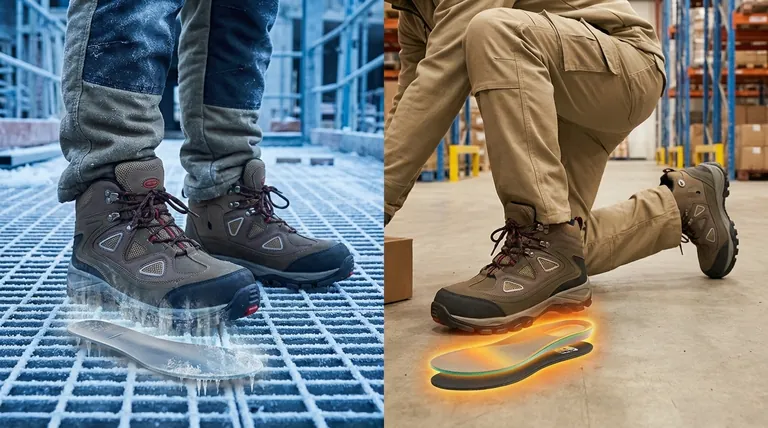
You’ve done everything by the book. Every member of your team is equipped with certified, penetration-resistant safety footwear. On paper, your compliance is perfect. So why are you still dealing with a steady stream of complaints about sore feet, fatigue after a long shift, or workers struggling to stay warm in cold conditions?
This is a frustratingly common scenario for safety managers and procurement officers. You've invested in protection, yet the real-world results are falling short. It’s a problem that seems to have no clear solution.
Why Thicker Socks and a Bigger Budget Won't Solve the Problem
When faced with these issues, the typical response is to try simple fixes. You might issue thicker socks to combat the cold, or perhaps you switch to a more expensive boot model, hoping a higher price tag equates to better comfort.
But the complaints persist. Here’s why these approaches often fail:
- Mounting Fatigue: Workers who crouch, kneel, or walk extensively report feeling drained by the end of the day, leading to slower work and a higher risk of mistakes.
- Persistent Cold: In refrigerated warehouses or on winter job sites, no amount of wool socks seems to prevent the biting cold from seeping up through the soles of the boots.
- Hidden Safety Gaps: A near-miss incident occurs where a nail punctures the sole near the edge of the foot—an area everyone assumed was protected.
These aren't minor inconveniences. They are symptoms of a deeper issue that directly impacts your bottom line through lost productivity, increased risk of accidents, and poor employee morale. You're left spending more budget on solutions that only treat the symptoms, not the underlying cause.
The Real Culprit: It's Not the Boot, It's the Insole
The turning point comes when you realize the problem isn't the quality of your footwear, but the architecture of its protection. All certified penetration-resistant insoles must withstand a 1,100-newton force, but how they achieve this protection creates a critical trade-off between two materials: traditional steel and modern textile.
Choosing the wrong one for your environment is the root cause of your team's problems.
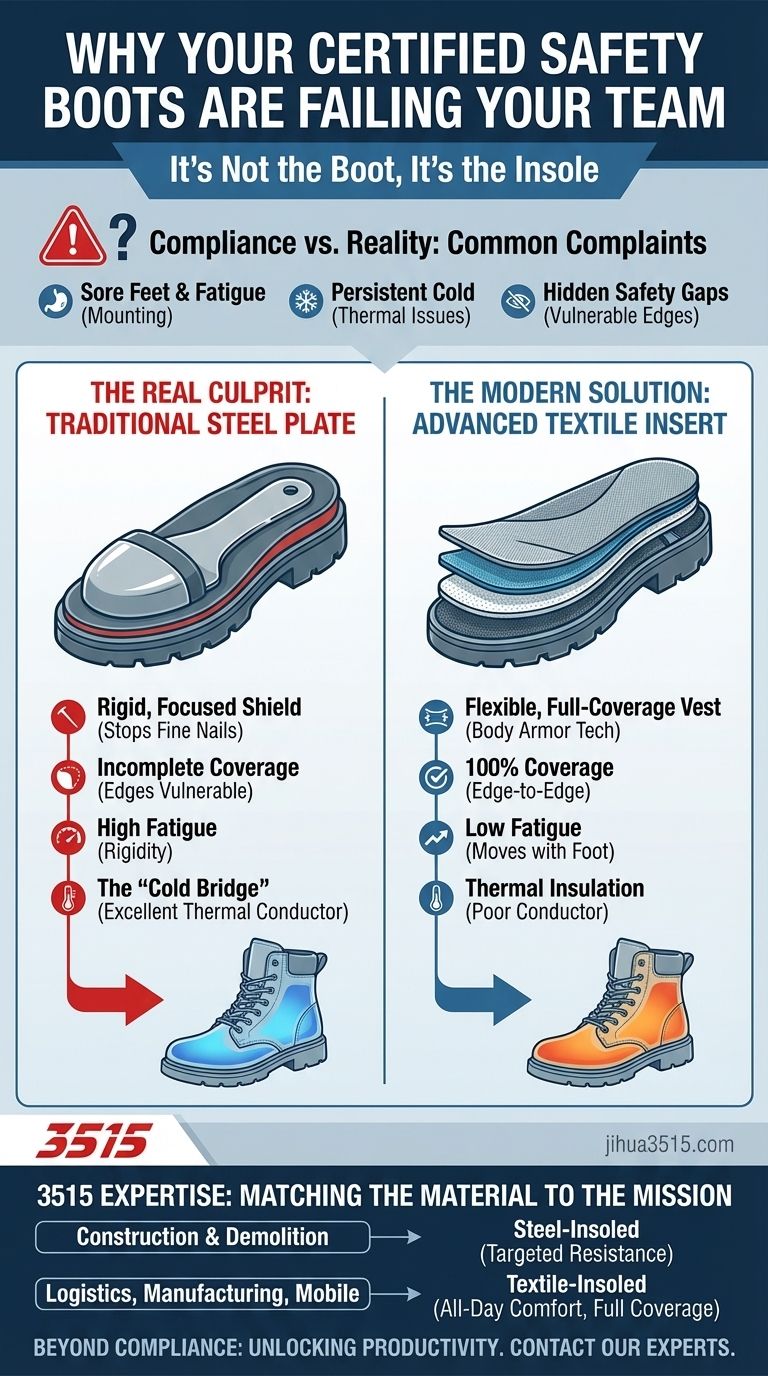
The Steel Plate: A Rigid, Focused Shield
For decades, a thin steel plate embedded in the sole has been the standard. It is exceptionally good at one thing: stopping very fine, sharp objects like a thin nail from piercing through.
However, this focused strength comes with significant drawbacks:
- Incomplete Coverage: Steel plates are made in standard sizes and often don't cover the entire surface of the sole, leaving the edges vulnerable.
- Rigidity and Fatigue: The plate doesn't bend with the foot, forcing workers to fight against their own footwear with every step. This rigidity is a primary cause of foot fatigue.
- The "Cold Bridge": Steel is an excellent thermal conductor. In cold weather, it acts like a pipeline, pulling cold directly from the ground into the foot and rendering thick socks ineffective.
The Textile Insert: A Flexible, Full-Coverage Vest
The modern alternative is an insert made from multiple layers of high-strength, anti-puncture fabrics—similar to materials used in body armor. This design fundamentally changes the performance of the boot.
- 100% Coverage: Textile inserts are cut to the exact shape of the sole, providing edge-to-edge protection across the entire foot.
- Flexibility and Comfort: They are lightweight and move naturally with the foot, providing comfort and agility comparable to a non-safety shoe. This dramatically reduces fatigue.
- Thermal Insulation: The fabric is a poor thermal conductor. It acts as a barrier, insulating the foot from the cold ground and keeping your team warmer.
The common solutions fail because they don't address this fundamental material science. Thicker socks can't stop thermal conduction through steel. A more expensive steel-insoled boot is still a rigid steel-insoled boot. The only real solution is to match the insole to the job.
Matching the Material to the Mission: A Smarter Approach to Protection
To truly solve this problem, you need to move beyond a one-size-fits-all approach. You need footwear engineered with a deep understanding of these trade-offs.
This is where our expertise at 3515 becomes your advantage. As a large-scale footwear manufacturer, we don't just assemble boots; we engineer safety solutions based on the specific demands of your work environment. Our product lines are built around this core principle: the right tool for the right job.
- For high-risk construction and demolition sites, where fine nails are a primary hazard, our steel-insoled footwear provides that targeted, uncompromising resistance.
- For logistics, manufacturing, or mobile workforces, where all-day comfort, flexibility, and full coverage are paramount, our advanced textile-insoled boots are the ideal choice. They eliminate the fatigue and thermal issues caused by steel, keeping your team focused and productive.
We build our footwear based on the physics of the problem, ensuring that the protection you specify is the protection your team actually gets, without compromise.
Beyond Compliance: Unlocking Productivity with Purpose-Built Footwear
When you equip your team with footwear that is truly suited to their tasks, the change is immediate. The persistent complaints disappear, replaced by a workforce that is safer, more comfortable, and more effective.
Imagine what becomes possible:
- Higher Productivity: Your team can work longer and more efficiently without the drain of foot fatigue.
- Improved Safety: Workers in cold environments can maintain focus without the dangerous distraction of numb feet.
- Enhanced Morale: Providing equipment that demonstrably improves daily comfort shows your employees that you are invested in their well-being.
- Strategic Procurement: You can stop wasting money on ineffective "upgrades" and instead implement a cost-effective footwear strategy that sources the right boot for each role from a single, expert partner.
Solving your team's footwear problems isn't just about buying a different boot; it's about adopting a smarter strategy. Let us help you move beyond simple compliance to achieve genuine operational excellence. We have the expertise and manufacturing capability to develop the optimal footwear solution that addresses the unique challenges your teams face every day. Contact Our Experts to start the conversation.
Visual Guide
Related Products
- Puncture-Resistant Velcro Safety Boots for Wholesale & Custom Manufacturing
- Wholesale Durable Safety Boots | Custom Steel Toe & Puncture-Resistant Manufacturing
- Premium Grain Leather Safety Boots for Bulk Supply
- Heavy-Duty Waterproof Nubuck Safety Boots Safety Shoes for Bulk Supply
- Premium High-Cut Waterproof Safety Boots Manufacturing & Wholesale Solutions
Related Articles
- The Unseen Engineering: Why Steel Toes Succeed or Fail in Oily Environments
- The Anatomy of Trust: A Systems Approach to Workplace Foot Protection
- The Lacing Paradox: Why the Safest Boots Contain Their Own Greatest Risk
- How Industrial Professionals Can Balance Safety Boot Requirements with Professional Appearance
- How to Choose Safety Boots That Reduce Fatigue Without Sacrificing Protection