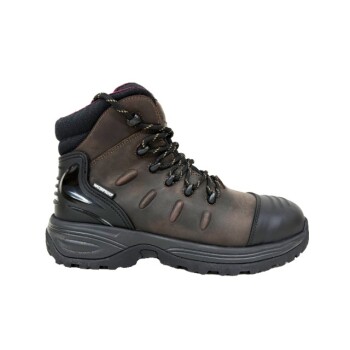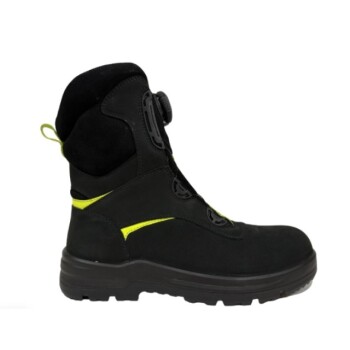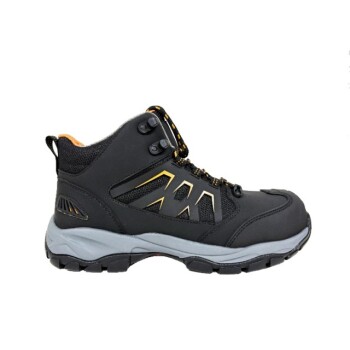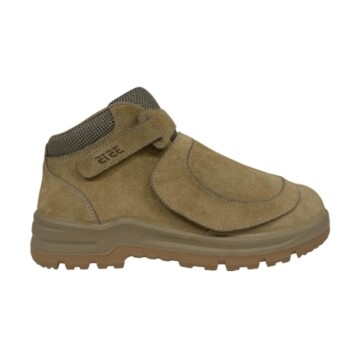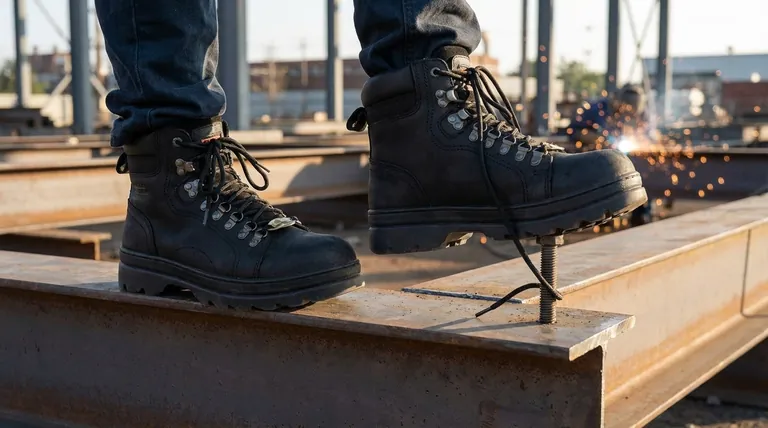
A Single Point of Failure
Imagine a steelworker walking a beam, dozens of feet in the air. Or a forestry technician navigating a debris-strewn slope. In these moments, their confidence comes from the ground up. The tool they rely on most is their footwear.
A well-made lace-up boot feels like an extension of the body. It’s an engineered solution for stability. Yet, the very component that provides its greatest strength—the lace—is also its most profound vulnerability.
This isn't a story about a design flaw. It's a story about human psychology and the hidden relationship between a tool and its user. The safety of a lace-up boot is a paradox, balanced on the diligence we afford a simple knot.
The Architecture of Stability
The primary function of a high-performance work boot is to create a stable, protective interface between the foot and an unpredictable world. The lacing system is the genius behind this.
Engineering Ankle Integrity
When you tighten the laces on a 6-inch or 8-inch boot, you're not just fastening it. You are creating a custom-fitted exoskeleton around your ankle. This structure distributes pressure evenly, locking the joint in place and drastically reducing the risk of sprains and twists—the most common injuries on uneven terrain. It’s a simple machine that translates tension into support.
A Fit That Fights Fatigue
No two feet are the same, and feet can even change shape over a long workday. Unlike slip-on or buckled boots, laces allow for micro-adjustments. This creates a snug, zero-movement fit that prevents the foot from sliding inside the boot. Less internal friction means fewer blisters, but more importantly, it means better balance and less energy wasted with every step.
A Seal Against the Elements
A securely laced boot creates a tight gasket around the upper ankle. This simple barrier is incredibly effective at preventing ingress from dust, sharp debris, or hot embers. It protects the foot not just from impact, but from the insidious hazards of the work environment.
The Unmanaged Variable: The Lace Itself
For all its structural brilliance, the boot's safety system is contingent on managing one loose variable: the lace. Neglecting it introduces risks that undermine the entire design.
The Physics of a Fall
The most obvious danger is a trip. A dangling lace that catches on a piece of rebar or even the opposing boot doesn't just cause a stumble. It creates an instant, uncontrolled pivot point. The forward momentum of the body is violently arrested, leading to falls that are far more severe than a simple misstep. Our brains are conditioned to overlook something as mundane as a shoelace, making it a perfect blind spot for danger.
The Cognitive Cost of Convenience
Properly lacing a tall pair of boots takes time. In a world that prizes speed, this can feel like an inefficiency. The temptation to rush the job—or to not lace them tightly enough—is a cognitive trap. We subconsciously trade a high-consequence, low-probability risk (a serious fall) for a small but immediate gain (saving thirty seconds). This is where human factors collide with mechanical safety.
The Kinetic Chain Reaction: Snagging
In environments with rotating machinery, a loose lace is not a trip hazard; it’s a life-altering threat. If a lace is caught by a rotating shaft, a chain, or a conveyor, the kinetic energy of the entire machine is transferred to the worker's limb in an instant. There is no time to react. The snagging risk makes lace management a non-negotiable protocol, not a suggestion.
The Equation of Safety: Design vs. Diligence
Choosing the right boot isn't just about the boot; it's about the environment and the person wearing it. The lace-up paradox forces a conscious decision.
- For Maximum Stability: On construction sites, logging operations, or any uneven terrain, the ankle support of a properly worn lace-up boot is superior to all other designs.
- Near Rotating Machinery: The risk profile shifts dramatically. The wearer's diligence in triple-knotting and tucking laces becomes the primary safety feature.
- Where Speed is Critical: In environments with smooth floors and less risk of ankle torsion, the time spent on lacing and the inherent trip hazard might make another style a more practical choice.
Safety Profile at a Glance
| Safety Aspect | Advantage of Lace-Up Boots | Key Risk to Manage |
|---|---|---|
| Ankle Support | Unmatched stability, prevents sprains. | N/A |
| Fit & Stability | Customizable, snug fit improves balance. | N/A |
| Debris Protection | Tight seal around the ankle keeps out hazards. | N/A |
| Lace Management | N/A | Trip and snagging hazard if laces are loose. |
Engineering for Human Factors
Ultimately, superior safety equipment is born from understanding this interplay between perfect design and imperfect human behavior. A boot is only as safe as it is used.
As a large-scale manufacturer producing a comprehensive range of footwear for distributors and bulk clients, we at 3515 see this firsthand. Our process is about more than just building durable boots; it's about engineering solutions for specific workplace realities. We understand that equipping a workforce requires a deep knowledge of these trade-offs, whether it’s designing lace-up models for maximum support or other styles for different risk environments.
Choosing the right footwear is a critical operational decision, and we help you make it with confidence. If you need to equip your team with footwear that balances robust protection with real-world usability, Contact Our Experts.
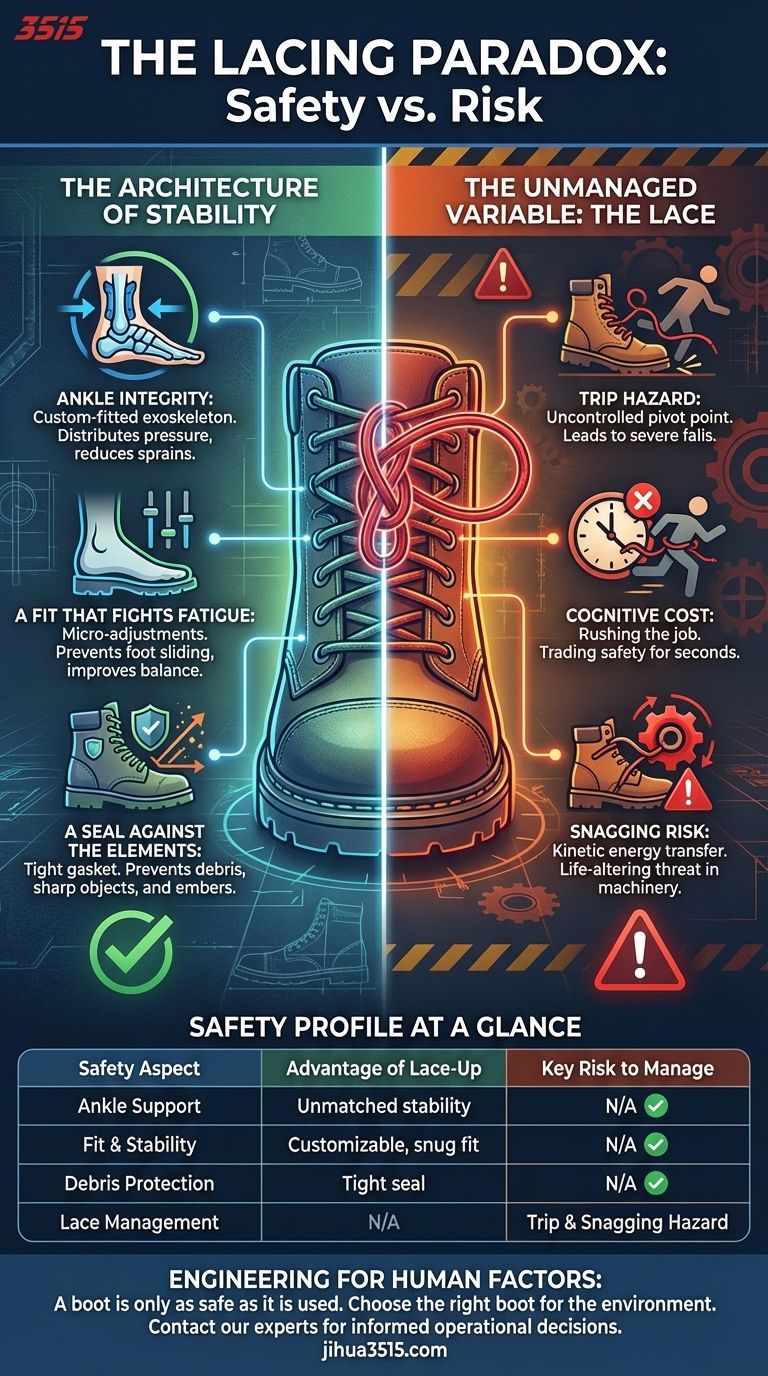
Visual Guide
Related Products
- Puncture-Resistant Velcro Safety Boots for Wholesale & Custom Manufacturing
- Premium Grain Leather Safety Boots for Bulk Supply
- Wholesale Durable Safety Boots | Custom Steel Toe & Puncture-Resistant Manufacturing
- Heavy-Duty Waterproof Nubuck Safety Boots Safety Shoes for Bulk Supply
- Premium Oil Wax Leather Safety Boots for Bulk Purchase
Related Articles
- The Unseen Engineering: Why Steel Toes Succeed or Fail in Oily Environments
- The Anatomy of Trust: A Systems Approach to Workplace Foot Protection
- How Industrial Professionals Can Balance Safety Boot Requirements with Professional Appearance
- How to Choose Safety Boots That Reduce Fatigue Without Sacrificing Protection
- Composite vs. Steel Toe Boots: When Lighter Protection Outperforms Traditional Safety