The Unseen Adversary
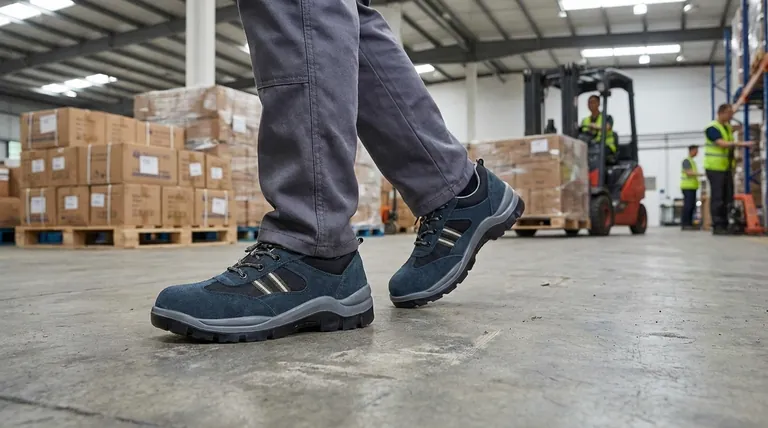
A logistics worker walks miles every day. Not on a forgiving trail, but on relentless, unforgiving concrete.
We often focus on the obvious dangers of this environment: the falling crate, the rolling pallet jack, the stray nail. These are acute, visible risks, and we design for them with steel toes and puncture plates.
But the most pervasive adversary isn't a single event. It's the floor itself. It's the cumulative load of thousands of steps, the constant negotiation with gravity, and the slow, metabolic tax it levies on the human body. This isn't just a matter of comfort; it's a fundamental challenge of energy management and cognitive endurance.
The Physics of Foundational Protection
Before we can address endurance, we must first solve for immediate safety. The right footwear is a worker's first line of defense, engineered to mitigate the physics of the warehouse.
Deflecting Kinetic Energy
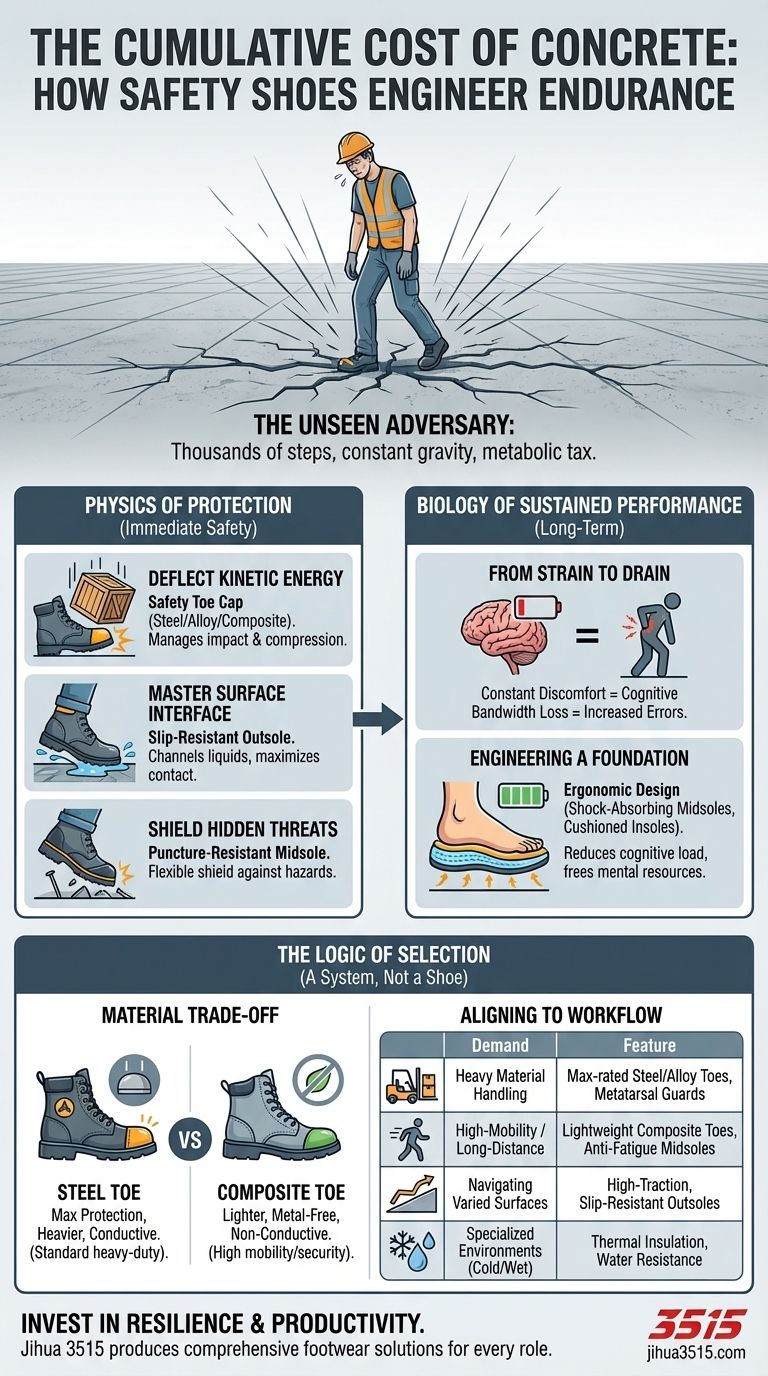
The primary function of a safety toe cap—be it steel, alloy, or composite—is to manage kinetic energy. It deflects the force of a falling object or resists compression from rolling equipment, preserving the integrity of the foot. This is the non-negotiable foundation of safety around loading docks and heavy inventory.
Mastering the Surface Interface
Slips and falls are a function of friction. Warehouse floors, often coated in dust or subject to spills, are low-friction environments. A slip-resistant outsole is not just rubber; it's a system of carefully designed treads and compounds engineered to channel away liquids and maximize contact, ensuring a stable connection between the worker and the ground.
Shielding Against Hidden Threats
The warehouse floor can hide sharp debris—nails, metal shards, broken pallet wood. A puncture-resistant midsole acts as a flexible shield, preventing these unseen hazards from causing serious injury.
These features address the immediate, obvious threats. But they are only half the story.
The Biology of Sustained Performance
The more subtle, and perhaps more significant, role of safety footwear is in managing the biological cost of a long shift.
From Physical Strain to Cognitive Drain
Constant discomfort is a thief. It quietly steals a worker's focus. Each nagging ache in the arch, heel, or lower back is a small, persistent distraction that consumes cognitive bandwidth.
This isn't just about feeling tired. It's about a measurable reduction in situational awareness and decision-making quality. When the mind is occupied with managing physical pain, it is less able to focus on the task at hand, increasing the likelihood of human error. Fatigue doesn't just cause soreness; it causes mistakes.
Engineering a Better Foundation
This is where modern ergonomic design becomes a performance tool. It's an engineering solution to a biological problem.
- Shock-Absorbing Midsoles: These dissipate the impact forces of each step, preventing that energy from traveling up the legs and spine.
- Cushioned Insoles & Arch Support: These elements properly distribute the body's weight across the foot, reducing strain on muscles and ligaments.
Together, these features do more than provide comfort. They reduce the cognitive load of physical strain, freeing up mental resources and allowing a worker to remain focused, alert, and productive for the duration of their shift.
The Logic of Selection: A System, Not a Shoe
Choosing the right footwear is not about finding one "best" shoe. It's about specifying the right component for a particular role within the larger logistics system. The needs of a forklift operator are vastly different from those of a picker who covers five miles a day on foot.
The Material Trade-Off
The choice between a steel and a composite toe cap is a classic engineering trade-off.
- Steel Toes: Offer maximum impact protection for their size. They are the standard for heavy-duty environments but are heavier and conduct temperature.
- Composite Toes: Are lighter, metal-free, and do not conduct electricity or temperature. They are ideal for roles requiring more walking or in environments with metal detectors.
Aligning Footwear to Workflow
A strategic approach requires matching the shoe's features to the job's primary demands.
| Primary Job Demand | Key Footwear Features to Prioritize | Rationale |
|---|---|---|
| Heavy Material Handling | Max-rated Steel/Alloy Toes, Metatarsal Guards | Provides ultimate protection against impact and compression. |
| High-Mobility / Long-Distance Walking | Lightweight Composite Toes, Anti-Fatigue Midsoles | Minimizes weight and metabolic cost to reduce cumulative fatigue. |
| Navigating Varied Surfaces | High-Traction, Slip-Resistant Outsoles | Ensures stability and prevents falls in dynamic environments. |
| Specialized Environments (Cold/Wet) | Thermal Insulation, Water Resistance | Maintains foot safety and comfort, preventing cold-related injury. |
Investing in the correct footwear is a direct investment in the resilience and productivity of your workforce. It acknowledges that a worker's energy and focus are finite resources, and it provides them with the tools to preserve both.
As a large-scale manufacturer, we understand these nuanced requirements. At 3515, we produce a comprehensive range of footwear, from heavy-duty boots to lightweight ergonomic shoes, designed for every role within the logistics chain. We equip distributors and brand owners with the specific solutions needed to build a safer, more enduring workforce. To find the optimal footwear system for your team's unique challenges, Contact Our Experts.
Visual Guide
Related Products
- Premium Suede Sport Safety Shoes for Wholesale & Bulk Orders
- Premium Lightweight Safety Shoes for Wholesale & Bulk Orders
- Wholesale Anti-Smash & Puncture-Proof Safety Shoes Custom Manufacturing for Brands
- Premium KPU Injection Athletic Style Safety Shoes
- Premium Safety Shoes with Rotating Buckle Safety Sneakers
Related Articles
- The Ghost in the Machine: Why an Obsolete Footwear Standard Creates Modern Risk
- Beyond the Steel Toe: The Hidden Ergonomics of Workplace Safety
- Why Traditional Laces Are a Hidden Safety Risk—And What to Do About It
- The True Cost of Skipping Safety Shoes: Long-Term Risks and Smart Protection
- How Safety Shoe Engineering Prevents Workplace Injuries Across Industries