The Mental Model of 'Safety'
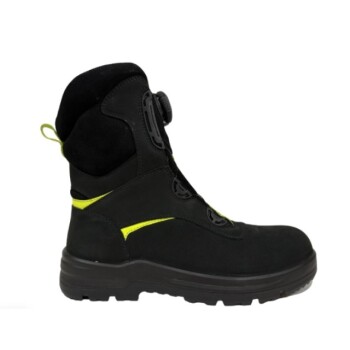
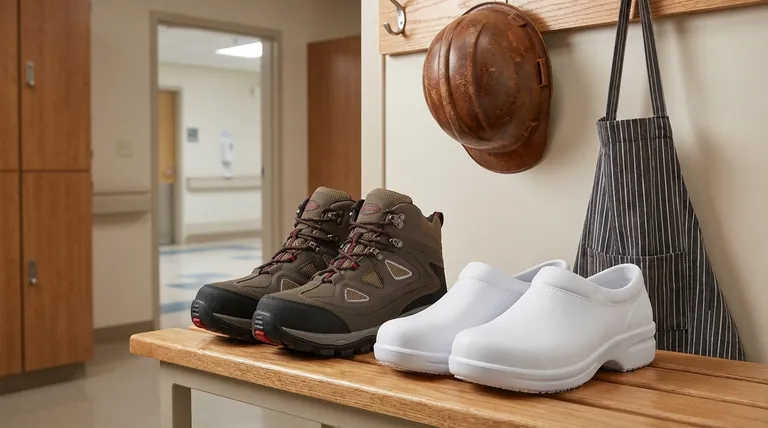
When we think of "safety footwear," our minds often conjure a specific image: a heavy, steel-toed boot on a construction site, shielding a worker from a falling brick. This mental shortcut is powerful. It equates safety with brute force protection against impact and puncture.
But this model fails spectacularly in other high-risk environments.
Consider a hospital ward or a commercial kitchen. The most immediate, persistent dangers aren't falling objects. They are invisible pathogens, slick floors from constant spills, and the profound physical fatigue that accumulates over a 12-hour shift.
Applying the "construction site" model here isn't just ineffective; it's counterproductive. True safety requires designing for the actual risks of the environment, not the imagined ones.
Designing for a Different Kind of Danger
The modern safety clog is a masterclass in purpose-built design. It's a tool engineered not for the dramatic, once-in-a-career accident, but for the mundane, everyday hazards that grind people down.
The Imperative of Sterility
In clinical and food preparation settings, the primary enemy is contamination. Traditional shoes, with their laces, mesh, and stitched seams, are breeding grounds for bacteria and fluids.
Safety clogs are built from a different philosophy.
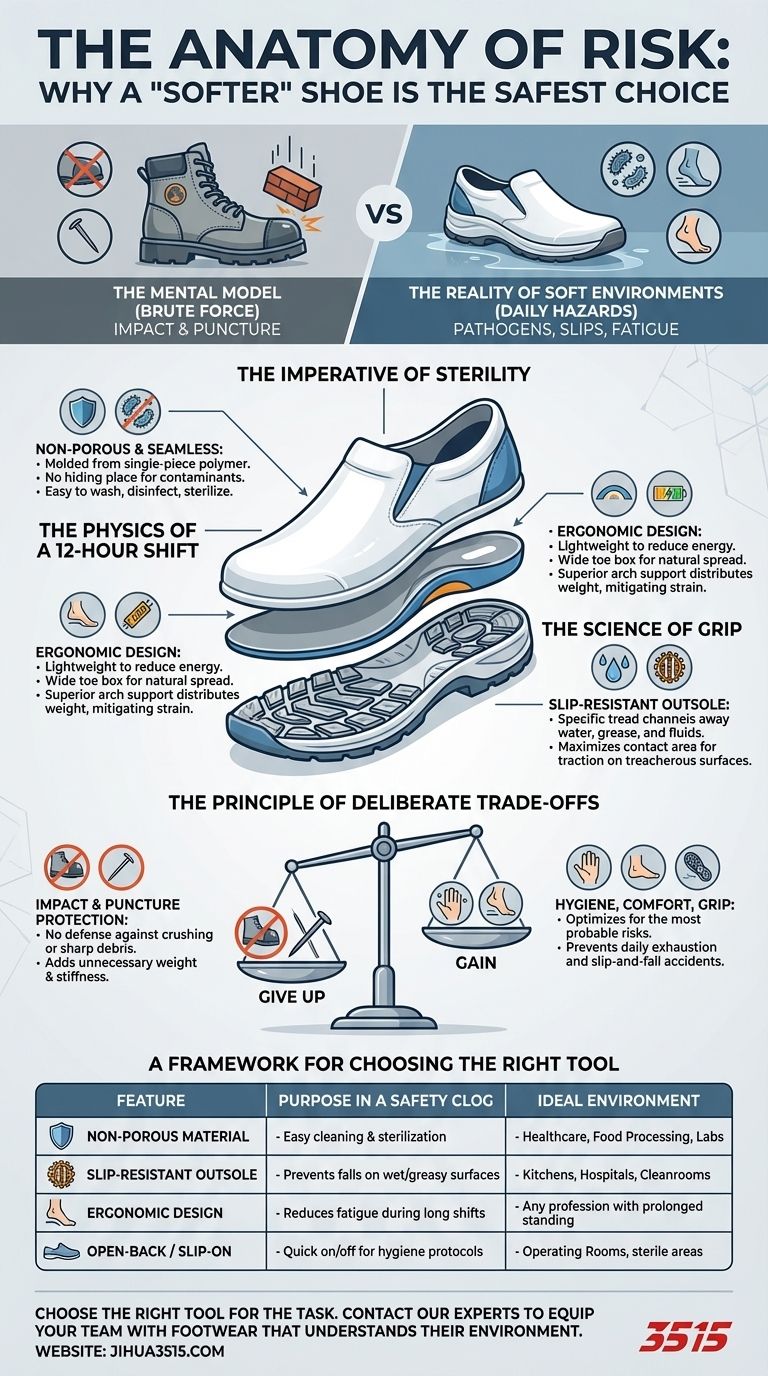
- Non-Porous Materials: They are typically molded from a single piece of rubber or specialized polymer.
- Seamless Construction: This lack of texture or joins leaves nowhere for contaminants to hide.
The entire shoe can be washed, disinfected, or even sterilized between shifts, forming a critical barrier in hygiene-sensitive professions.
The Physics of a 12-Hour Shift
Fatigue is not just a matter of comfort; it is a critical safety factor. A physically exhausted nurse or chef is more prone to mistakes, from misjudgments to a simple loss of balance.
The ergonomic design of a safety clog directly addresses this:
- Lightweight Construction: Reduces the energy required for each of the thousands of steps taken during a shift.
- Wide Toe Box: Allows the foot to spread naturally, preventing constriction and pain.
- Superior Arch Support: Distributes weight evenly, mitigating the strain of standing on hard, unforgiving floors for hours on end.
The Science of Grip
The most common cause of injury in a hospital or kitchen is a slip-and-fall accident. This is the central "safety" problem the clog is designed to solve.
The outsoles are not generic. They are engineered with specific tread patterns and compounds designed to channel away water, grease, and other fluids, maximizing the contact area between the shoe and the floor to maintain traction on treacherous surfaces.
The Principle of Deliberate Trade-offs
Every great engineering solution is the result of intelligent trade-offs. The safety clog is no exception. To excel at its primary mission, it must consciously sacrifice capabilities that are essential elsewhere.
What Safety Clogs Give Up
- Impact Protection: They do not have a protective steel or composite toe cap. They offer zero defense against crushing injuries.
- Puncture Resistance: They lack a reinforced midsole, making them completely unsuitable for environments with nails, glass, or other sharp ground debris.
Why This Trade-off is the Smart One
This is not a design flaw; it is a feature. Adding a steel toe would introduce weight and stiffness, increasing fatigue. It would solve a problem that rarely exists in a hospital while making the real, daily problem of exhaustion worse.
By forgoing heavy-duty protection, the safety clog can double down on what truly matters for its intended user: slip prevention, hygiene, and the mitigation of long-term physical strain. It optimizes for the most probable risk, not the most dramatic one.
A Framework for Choosing the Right Tool
Selecting the right professional footwear begins with an honest risk assessment. The goal is to match the tool to the task with precision.
| Feature | Purpose in a Safety Clog | Ideal Environment |
|---|---|---|
| Non-Porous Material | Easy cleaning & sterilization | Healthcare, Food Processing, Labs |
| Slip-Resistant Outsole | Prevents falls on wet or greasy surfaces | Kitchens, Hospitals, Cleanrooms |
| Ergonomic Design | Reduces fatigue during long shifts | Any profession with prolonged standing |
| Open-Back / Slip-On | Quick on/off for hygiene protocols | Operating Rooms, sterile areas |
For organizations outfitting entire teams—from hospital networks to food production conglomerates—this nuanced understanding of risk-appropriate design is paramount. As a large-scale manufacturer, 3515 partners with distributors and brand owners to produce footwear engineered for these specific realities, ensuring that professional teams are equipped not just with shoes, but with the right tool for the job.
If you need to equip your workforce with footwear that truly understands their environment, we have the capabilities to deliver. Contact Our Experts
Visual Guide
Related Products
- Wholesale Safety Boots Manufacturer for Custom & Private Label Orders
- Wholesale Durable Safety Boots | Custom Steel Toe & Puncture-Resistant Manufacturing
- Premium High-Cut Waterproof Safety Boots Manufacturing & Wholesale Solutions
- Heavy-Duty Waterproof Nubuck Safety Boots Safety Shoes for Bulk Supply
- Puncture-Resistant Velcro Safety Boots for Wholesale & Custom Manufacturing
Related Articles
- How to Choose Safety Boots That Reduce Fatigue Without Sacrificing Protection
- How Industrial Professionals Can Balance Safety Boot Requirements with Professional Appearance
- The Anatomy of Trust: A Systems Approach to Workplace Foot Protection
- The Lacing Paradox: Why the Safest Boots Contain Their Own Greatest Risk
- The Physics of a Crushed Toe: A First-Principles Guide to Safety Footwear