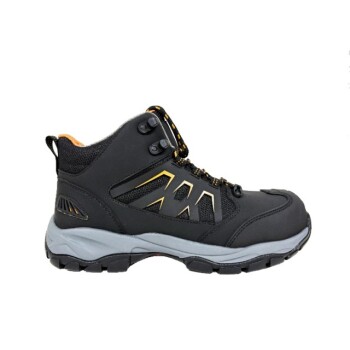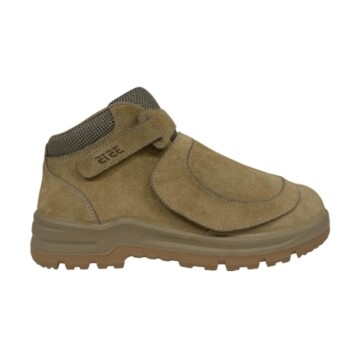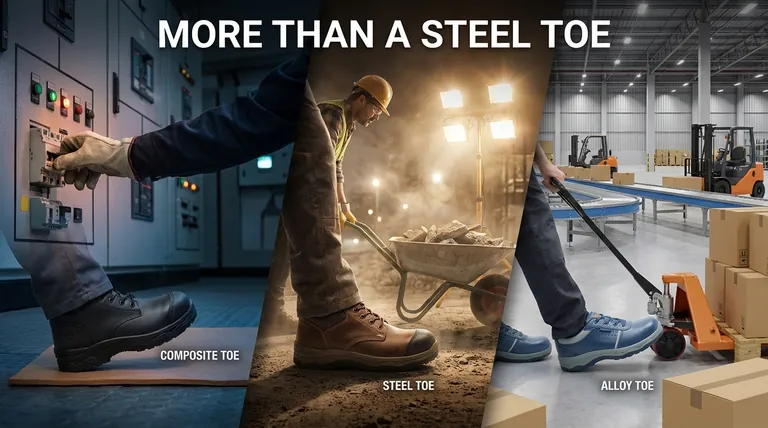
It’s a scenario no safety manager wants to face: a "near miss" incident report lands on your desk. An electrician received a mild shock while working on a panel. All protocols were followed, and he was wearing his company-issued, certified safety boots. The equipment checks out. The procedure was correct. So, what went wrong? The boots were steel-toed.
This is a subtle but critical failure point that many organizations overlook. The team was protected from impact, but not from the specific electrical hazard of their job. The problem wasn't a faulty boot; it was the wrong boot for the task.
The Costly Cycle of "One-Size-Fits-All" Safety
When faced with outfitting a diverse workforce, the default approach is often to standardize. Many procurement managers or safety officers select a single type of safety boot—typically the classic steel toe—for everyone from the warehouse floor to the construction site. It seems efficient and cost-effective.
But this strategy often backfires, creating a cycle of hidden costs and risks:
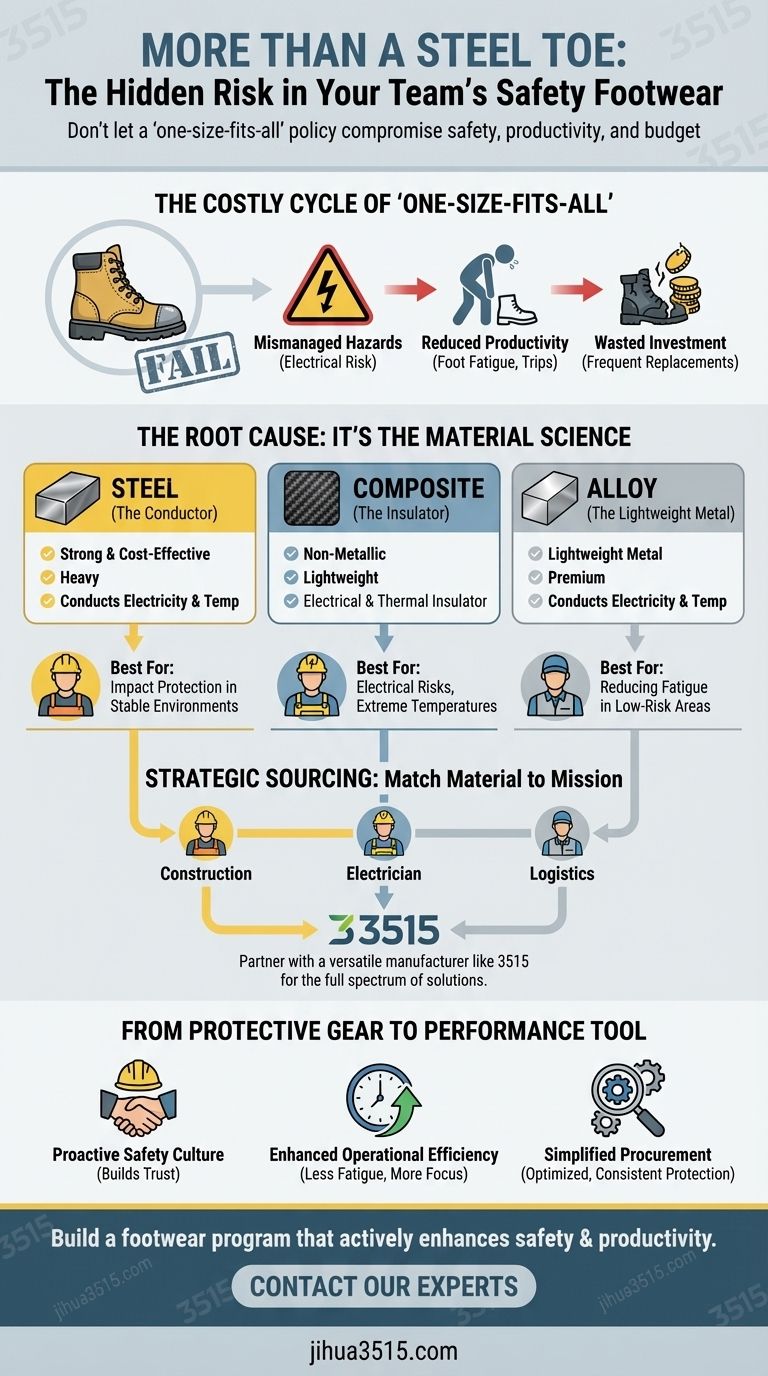
- Mismanaged Hazards: As with the electrician, a steel toe can introduce a new hazard (electrical conductivity) in an environment it’s not designed for. Similarly, in extreme cold, a steel toe can make feet dangerously cold, while a composite toe would provide insulation.
- Reduced Productivity: A heavy steel-toed boot worn by a worker who walks miles every day on a factory floor leads to significant foot fatigue. This doesn't just cause discomfort; it measurably slows them down and increases the likelihood of trips, falls, and other mistakes by the end of a long shift.
- Wasted Investment: When boots are uncomfortable or ill-suited for the job, employees are less likely to wear them properly, or they wear out faster from misuse. This leads to frequent replacement orders and a constant drain on the equipment budget.
Treating all safety toes as interchangeable is like giving every carpenter only a sledgehammer. It’s a tool, but it's rarely the right tool, and using it for the wrong job can cause more problems than it solves.
The Root Cause: It’s Not the Boot, It’s the Material Science
The reason the "one-size-fits-all" approach fails is that it ignores the fundamental physics and material science that make a safety toe effective. The term "safety toe" doesn't describe one thing; it describes a function achieved by very different materials, each with critical trade-offs.
Understanding the Core Materials
-
Steel (The Conductor): Steel is incredibly strong and cost-effective, which is why it became the industry standard. Its strength comes from its dense metallic structure. However, that same metallic structure makes it an excellent conductor of both electricity and temperature. It’s the perfect choice for protection against pure impact and compression in a stable environment, but a poor choice around electrical risks or in extreme temperatures.
-
Composite (The Insulator): Composite toes are made from non-metallic materials like carbon fiber, Kevlar, or specialized plastics. They achieve their strength through advanced engineering, not metallic density. Because they contain no metal, they are electrical insulators. They don't conduct heat or cold, making them the only truly safe choice for electricians and the most comfortable option for anyone working in a freezer or on hot asphalt. They are also significantly lighter, directly combating worker fatigue.
-
Alloy (The Lightweight Metal): Alloy toes, made from materials like aluminum or titanium, are the middle ground. They offer the same impact protection as steel but at a much lower weight, making them a premium choice for reducing fatigue. However, as they are still metal, they share steel's conductive properties for temperature and electricity.
The common mistake is focusing only on the boot's impact rating while ignoring the inherent properties of the material providing that protection.
Strategic Sourcing: Matching the Material to the Mission
To truly solve this problem, you need to shift from buying a "safety boot" to implementing a strategic footwear program. This means matching the specific material properties of the toe cap to the specific, known hazards of each role within your organization.
This is where a manufacturing partner with deep expertise and broad capabilities becomes essential. You need a supplier who doesn't just offer one solution, but provides the full spectrum of options. A partner who understands that the right boot for your construction crew (likely steel) is fundamentally different from the right boot for your electrical maintenance team (composite) or your logistics personnel (alloy or composite).
As a large-scale producer of all types of footwear, 3515 is built on this principle. Our production capabilities aren't just about volume; they're about versatility. We manufacture a comprehensive range of certified steel, composite, and alloy toe boots precisely because we know that real-world safety requires more than a single solution. We provide the toolkit for you to equip every single employee with the exact protection they need.
From Protective Gear to Performance Tool
When you move to a role-specific safety footwear program, the benefits extend far beyond simply preventing incidents. The entire dynamic shifts.
- Proactive Safety Culture: You’re no longer just meeting a baseline standard; you're demonstrating a deep commitment to individual worker well-being. This builds trust and reinforces a powerful safety-first culture.
- Enhanced Operational Efficiency: Workers with lighter, more comfortable boots are less fatigued. They are more focused, more productive, and make fewer errors throughout their shift. A team that can pass through security checkpoints without removing their non-metallic boots saves valuable time every single day.
- Simplified Procurement, Optimized Protection: By partnering with a single, capable manufacturer like 3515, you can source the right boot for every job role under one roof. This streamlines your logistics, ensures consistent quality, and eliminates the dangerous guesswork of a "one-size-fits-all" policy.
Your team's footwear shouldn't be a potential liability or a source of complaints. It should be a specialized tool that enhances their safety, comfort, and performance every day.
Choosing the right safety boot is more than a compliance issue; it’s a critical business decision with direct impacts on your safety record, operational budget, and employee productivity. Whether you're outfitting electricians, construction crews, or logistics teams, a one-size-fits-all approach is a risk you can't afford. Let's build a footwear program that doesn't just meet standards, but actively enhances your team's safety and productivity. Contact Our Experts to discuss the specific challenges and opportunities within your organization.
Visual Guide
Related Products
- Puncture-Resistant Velcro Safety Boots for Wholesale & Custom Manufacturing
- Wholesale Durable Safety Boots | Custom Steel Toe & Puncture-Resistant Manufacturing
- Premium Grain Leather Safety Boots for Bulk Supply
- Heavy-Duty Waterproof Nubuck Safety Boots Safety Shoes for Bulk Supply
- Premium High-Cut Waterproof Safety Boots Manufacturing & Wholesale Solutions
Related Articles
- The Unseen Engineering: Why Steel Toes Succeed or Fail in Oily Environments
- The Anatomy of Trust: A Systems Approach to Workplace Foot Protection
- The Lacing Paradox: Why the Safest Boots Contain Their Own Greatest Risk
- How Industrial Professionals Can Balance Safety Boot Requirements with Professional Appearance
- How to Choose Safety Boots That Reduce Fatigue Without Sacrificing Protection