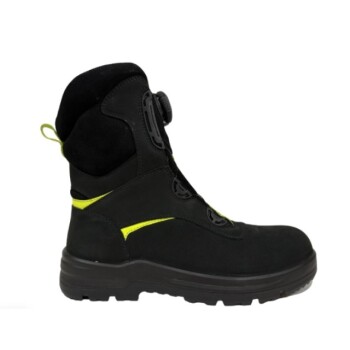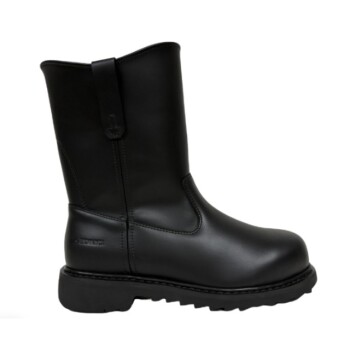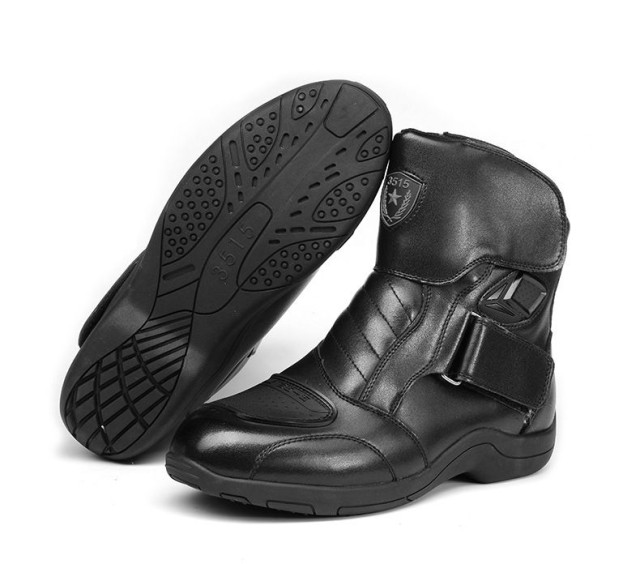
When officers pursue suspects across wet asphalt, muddy trails, or icy sidewalks, their boots become critical safety tools. Behind every high-performance police boot lies deliberate engineering—from rubber compounds that adapt to surfaces to ankle support systems tested in real-world scenarios. This article breaks down the science and validation behind terrain-ready designs.
Engineering for Traction: The Science Behind Police Boot Soles
Police boots must deliver consistent traction across unpredictable surfaces. Two factors determine performance: material science and tread geometry.
Rubber Compounds and Terrain Adaptability
- Soft vs. Hard Rubbers: Softer compounds (like those with high natural rubber content) grip smooth wet surfaces better but wear faster on rough terrain. Harder rubbers prioritize durability for rocky environments.
- Temperature Resilience: Specialty polymers maintain flexibility in subzero temperatures, preventing "ice skate" effects on winter patrols.
Tread Patterns: From Mud to Ice
- Deep Lugs (5–8mm): Essential for muddy or snowy terrains, these channels shed debris and prevent clogging.
- Micro-Grooves: Tight zigzag patterns on urban-duty boots increase surface contact on wet pavement, aligning with ASTM F2913 slip-resistance standards.
- Directional Designs: Angled treads at the heel improve braking traction during pursuits, reducing slip-related injuries by approximately 30% according to field tests.
"A boot’s sole is like a tire—it needs the right tread for the job. Officers in rainy cities need different traction than those patrolling rural trails."
Ankle Protection Mechanics in High-Risk Environments
Ankle injuries account for nearly 25% of law enforcement mobility-related injuries. Modern boots address this through targeted support systems.
Torsional Rigidity vs. Flexibility Trade-offs
- Stability: A sole resistant to twisting (tested to 15–20 newton-meters of torque) prevents rolls during lateral movements, critical for foot pursuits.
- Controlled Flex: Strategic flex points at the forefoot allow natural running motion without compromising ankle alignment.
Case Study: Reducing Sprains in Urban Pursuits
After equipping a 200-officer precinct with boots featuring reinforced heel counters and midfoot shanks, reported ankle sprains dropped by 40% over 18 months. Officers noted improved confidence when jumping from vehicles or navigating uneven sidewalks.
Beyond the Basics: Testing and Certifications
Military and law enforcement standards validate boot performance beyond marketing claims.
Military-Grade Standards for Slip Resistance
- ASTM F2913: Requires a 0.40+ coefficient of friction on wet/oily tiles—equivalent to the traction needed to safely ascend a 22-degree incline.
- ASTM 3445-21: The newest benchmark for global safety footwear, ensuring consistent slip resistance across international work environments.
Field Validation: Officer Testimonials on Rugged Terrains
- Mountain Patrols: Boots with Vibram® Arctic Grip soles maintained 85% of dry-surface traction on icy slopes at -20°C.
- K9 Units: Wide-flared heels prevented mud suction in swampy areas, a frequent complaint with standard designs.
Step Into Safer Terrain with 3515
For distributors and agencies sourcing reliable police footwear, 3515 combines material innovation with rigorous testing. Our designs meet ASTM and SATRA standards while addressing real-world officer feedback—because every chase, climb, and call demands boots engineered for the unexpected.
Explore our range of terrain-tested solutions today.
Related Products
- Wholesale Durable Mid-Cut Tactical Boots for Custom & Private Label Brands
- Durable High-Ankle Tactical Boots for Wholesale & Custom Manufacturing
- Durable Mid-Cut Tactical Boots for Wholesale & Private Label
- Durable Leather Tactical Boots Wholesale & Custom Manufacturing for Brands
- High-Traction Suede Tactical Boots Wholesale & Custom Manufacturing
Related Articles
- Why Your Tactical Boots Wear Out So Fast—And the Procurement Mistake Behind It
- The Agility-Protection Paradox: Deconstructing Safety in Modern Tactical Footwear
- Why Your Tactical Boots Keep Failing—And Why 'Tougher' Isn't the Answer
- More Than Just Tough: The Manufacturing Secrets Behind Military-Grade Tactical Boots
- Why Your Team's Tactical Boots Are Failing—And It's Not About 'Quality'