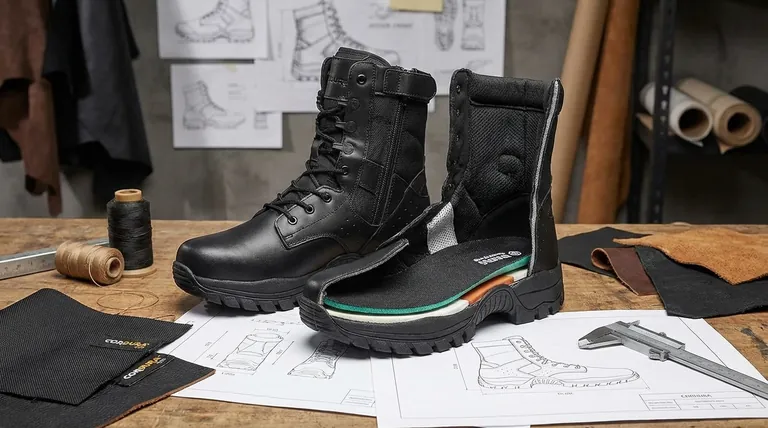
The Familiar Story of a Failed Boot
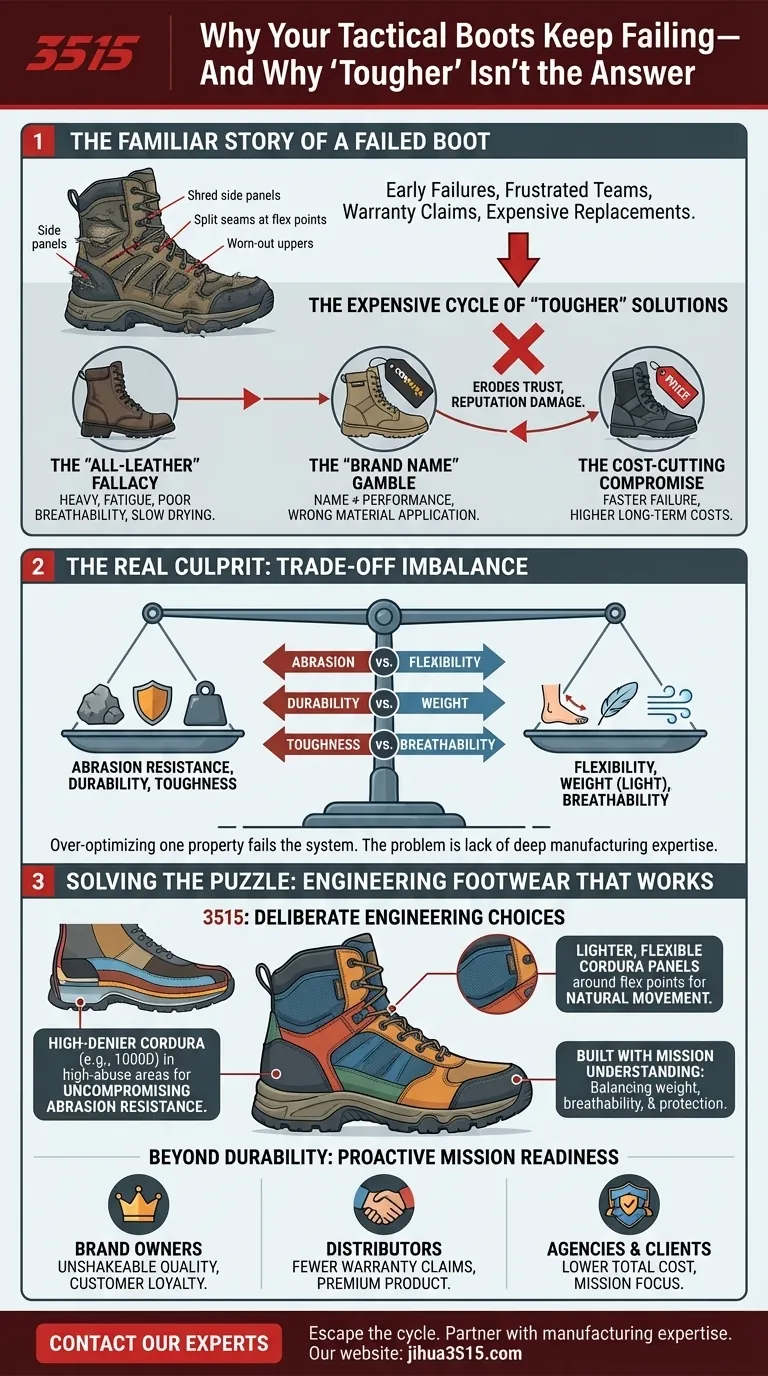
You’ve seen it before. A large shipment of tactical boots, procured to equip a team for a critical contract, starts failing just months into use. The side panels are shredded, the seams along the flex points are splitting, and the uppers look like they’ve been through a decade of wear, not a single season.
Your team is frustrated, performance is compromised, and you're left facing warranty claims, angry clients, or the expensive prospect of replacing hundreds of pairs of boots far ahead of schedule. You're stuck in a frustrating loop, wondering why the gear that promised "maximum durability" couldn't even handle its core mission.
The Expensive Cycle of "Tougher" Solutions
When faced with premature equipment failure, the instinctive reaction is to demand something "tougher." This leads to a predictable, yet flawed, series of attempts to solve the problem:
- The "All-Leather" Fallacy: You switch to a heavier, all-leather boot. It seems more robust, but soon you get different complaints. The boots are heavy, causing fatigue on long patrols. They don’t breathe, leading to discomfort and blisters. And once they get wet, they take forever to dry. The problem hasn't been solved; it's just changed shape.
- The "Brand Name" Gamble: You insist on boots made with a premium material like Cordura, assuming the name alone guarantees performance. Yet, the failures persist. You learn the hard way that not all products using the same branded material are created equal.
- The Cost-Cutting Compromise: You opt for a cheaper, generic nylon alternative to save on upfront costs, only to watch the boots fail even faster, erasing any initial savings and multiplying your long-term replacement expenses.
These reactive cycles don’t just drain your budget; they erode trust. For a brand owner, it means a damaged reputation. For a distributor, it means a flood of returns. For an agency, it means your personnel can't rely on the very equipment designed to protect them. The common thread is that these "solutions" are just shots in the dark because they fail to address the real source of the problem.
The Real Culprit: It’s Not Toughness, It’s a Trade-Off Imbalance
Here is the turning point: The reason most tactical footwear fails is not a simple lack of toughness. It’s a failure to properly engineer the balance between competing physical properties.
A boot is not a single block of material; it's a complex system that must simultaneously manage several trade-offs:
- Abrasion Resistance vs. Flexibility: A material that resists scraping against rocks and concrete (like high-denier Cordura) is often stiffer. A boot needs to be tough in high-wear zones but flexible where the foot needs to bend.
- Durability vs. Weight: Maximum strength often comes with maximum weight. But in the field, every extra ounce becomes a pound of perceived effort by the end of the day, leading to fatigue and reduced operational effectiveness.
- Toughness vs. Breathability: A heavy, coated fabric might stop a puncture, but it also traps sweat and heat, creating an environment for blisters and discomfort that can take a person out of action as surely as a gear failure.
The "common solutions" fail because they over-optimize one property at the expense of all others. An all-leather boot maximizes perceived toughness but fails on weight and breathability. A boot using the wrong type of Cordura—say, a lightweight 500D fabric where a heavy-duty 1000D is needed—fails on abrasion resistance.
The root cause isn't the material; it's the lack of deep manufacturing expertise to select and apply the right material in the right way to achieve the perfect operational balance.
Solving the Puzzle: Engineering Footwear That Actually Works
To break the cycle of failure, you don't just need a boot made from strong materials. You need a boot that is intelligently designed by a partner who understands the science behind those materials.
This is where expert manufacturing becomes the solution. A truly durable and effective boot is the product of deliberate engineering choices:
- It uses high-denier Cordura (e.g., 1000D) in the areas that take the most abuse, like the heel and side panels, to provide uncompromising abrasion resistance.
- It integrates lighter, more flexible Cordura panels or blends around the ankle and tongue to allow for natural movement without sacrificing durability.
- It is built with an understanding of the end-user's mission, balancing weight, breathability, and protection to create a tool that enhances performance, rather than hindering it.
As a large-scale footwear manufacturer, 3515 doesn't just assemble boots; we engineer them. Our expertise is in translating operational demands into precise material specifications. We don't just use Cordura; we leverage its entire family of textiles to build footwear that resolves the core trade-off imbalance. Our products are the direct result of understanding the problem at its source and designing the correct, balanced solution.
Beyond Durability: What Happens When Your Gear Just Works?
When you finally equip your teams with footwear that is properly engineered, the entire equation changes. You move from a reactive state of damage control to a proactive state of mission readiness.
- For Brand Owners: Your reputation shifts from questionable reliability to unshakeable quality. Customer loyalty grows, and you can confidently stand behind your product line.
- For Distributors: Warranty claims and returns plummet. You can offer a premium product that solves a real, persistent problem for your clients, strengthening your market position.
- For Bulk Clients & Agencies: Your total cost of ownership drops significantly. More importantly, your teams can focus completely on their mission, trusting that their most critical piece of equipment is built to endure, perform, and protect.
You're no longer just buying boots; you're investing in a reliable platform for performance and safety.
Escaping the cycle of equipment failure begins with choosing a partner who understands the difference between simply making a "tough" product and engineering a truly effective one. If you're ready to move beyond recurring problems and equip your team with footwear built on a foundation of material science and manufacturing expertise, we can help you build the precise solution your mission demands. Contact Our Experts to discuss your unique project requirements.
Visual Guide
Related Products
- Durable Leather Tactical Boots Wholesale & Custom Manufacturing for Brands
- High-Traction Suede Tactical Boots Wholesale & Custom Manufacturing
- Durable Leather High-Ankle Tactical Boots for Wholesale & Custom Manufacturing
- Durable Mid-Cut Tactical Boots for Wholesale & Private Label
- Wholesale Waterproof Tactical Boots Custom Suede & High-Traction Soles
Related Articles
- Why Your Tactical Boots Wear Out So Fast—And the Procurement Mistake Behind It
- The Agility-Protection Paradox: Deconstructing Safety in Modern Tactical Footwear
- How Tactical Boots Deliver Long-Term Value: A Cost & Performance Breakdown
- The Procurement Officer's Gamble: Why 'Tough Enough' Isn't Good Enough for Tactical Boots
- Why Your Team Hates Their New Tactical Boots: A Buyer's Guide to What Really Matters















