The Myth of Maximum Protection
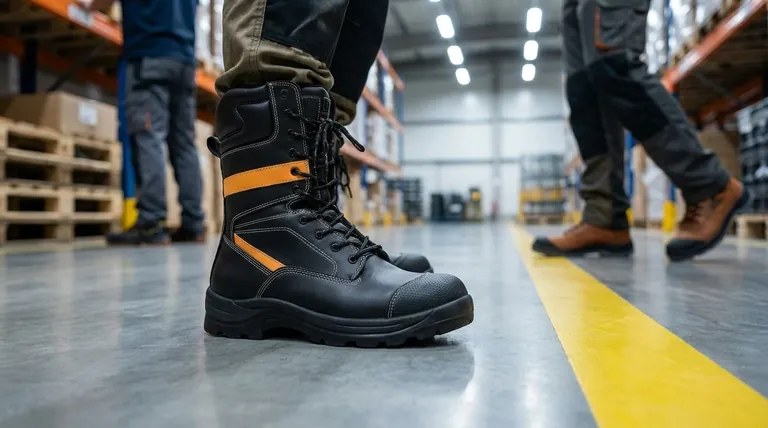
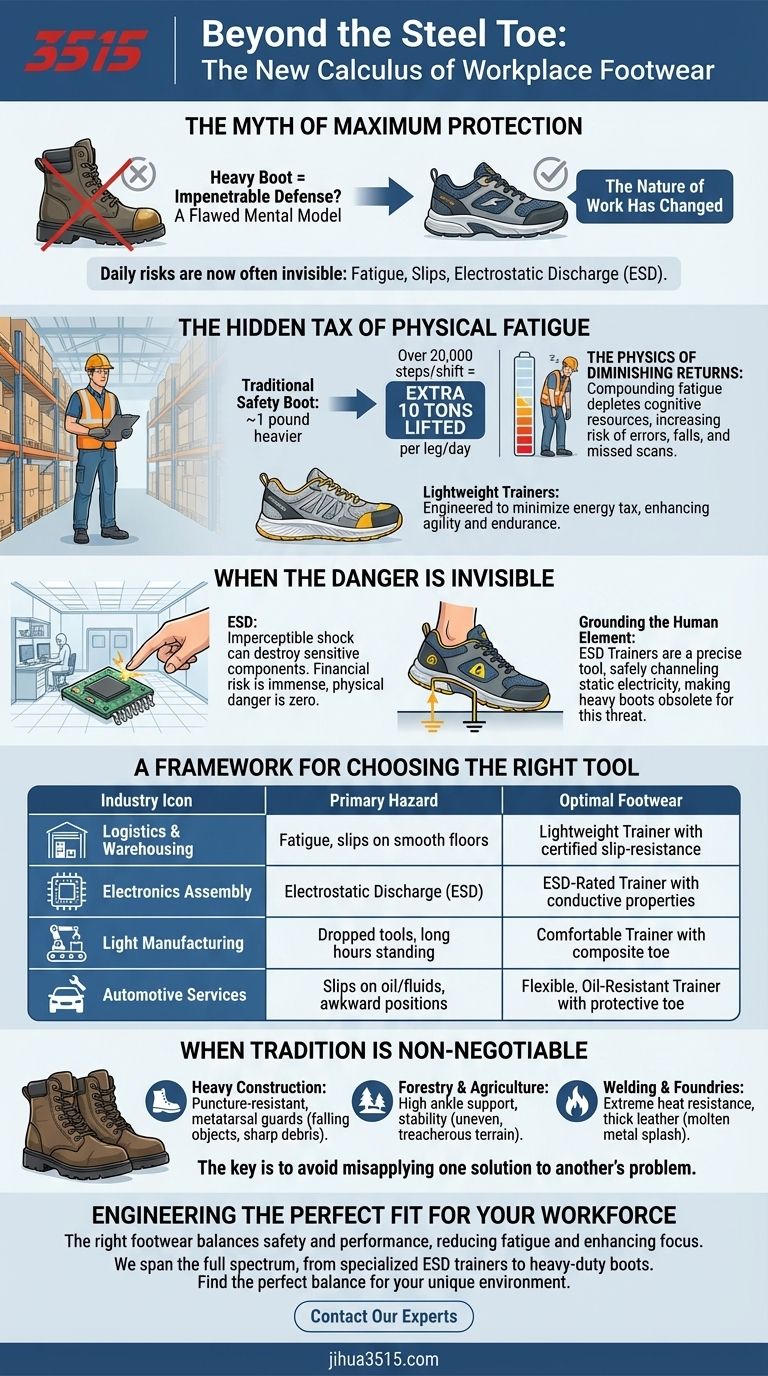
For decades, the image of workplace safety was a heavy, steel-toed leather boot. It was a symbol of impenetrable defense, designed for the most hazardous environments. We psychologically associate weight with protection.
This created a powerful, but flawed, mental model: that the safest shoe is always the strongest one.
But the nature of work has changed. For many, the greatest daily risks aren't falling anvils or puncture wounds. They are the cumulative, invisible threats of fatigue, slips on polished floors, and electrostatic discharge.
The Hidden Tax of Physical Fatigue
Consider a logistics worker in a modern distribution center. They might walk ten miles in a single shift on unforgiving concrete.
With each step, they lift their footwear. A traditional safety boot can weigh over a pound more than a modern safety trainer. Over 20,000 steps, that’s an extra 10 tons of weight lifted per leg, per day.
This isn't just about comfort; it's a direct tax on human energy.
The Physics of Diminishing Returns
Physical fatigue isn't linear. It's a compounding force that depletes cognitive resources. A tired worker is more prone to mistakes—a missed scan, a poorly stacked pallet, a misstep that leads to a fall.
The heavy boot, designed to prevent a specific type of injury, can inadvertently increase the risk of others by draining the worker's focus and stamina. The "protection" starts creating its own set of problems.
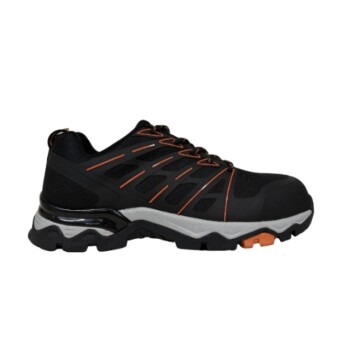
Lightweight safety trainers, built with flexible materials and composite toe caps, are engineered to minimize this energy tax. They recognize that in a fast-paced environment, agility and endurance are critical components of safety.
When the Danger is Invisible
In other industries, the primary threat is completely imperceptible to human senses.
In semiconductor or electronics assembly, a single static shock—so small a person wouldn't even feel it—can destroy thousands of dollars worth of sensitive components. The financial risk is immense, but the physical danger to the worker is zero.
Grounding the Human Element
Here, a heavy boot offers no relevant protection. The critical requirement is Electrostatic Discharge (ESD) protection.
Specialized safety trainers are engineered as a critical part of a grounding system. Their soles contain conductive materials that safely channel static electricity from the body to the grounded floor. They are a precise tool for an invisible threat, rendering the old paradigm of heavy protection obsolete.
A Framework for Choosing the Right Tool
The decision to use a safety trainer over a traditional boot isn't about an industry. It's about a granular risk assessment of the specific job. The right footwear is the one that precisely matches the daily hazards.
| Environment | Primary Hazard | Optimal Footwear Solution |
|---|---|---|
| Logistics & Warehousing | Fatigue from long distances, slips on smooth floors | Lightweight Trainer with certified slip-resistance |
| Electronics Assembly | Electrostatic Discharge (ESD) to sensitive parts | ESD-Rated Trainer with conductive properties |
| Light Manufacturing | Dropped tools, long hours standing | Comfortable Trainer with a composite toe for balanced protection |
| Automotive Services | Slips on oil/fluids, awkward working positions | Flexible, Oil-Resistant Trainer with a protective toe |
When Tradition is Non-Negotiable
This is not to say the heavy-duty boot is obsolete. It remains essential where the risks are severe and kinetic.
- Heavy Construction: Requires puncture-resistant midsoles and metatarsal guards for protection against falling objects and sharp debris.
- Forestry & Agriculture: Demands the ankle support and stability of a high-ankled boot for uneven, treacherous terrain.
- Welding & Foundries: Needs the extreme heat resistance of thick leather to protect against molten metal splash.
In these cases, a lightweight trainer would be a catastrophic failure. The key is to avoid misapplying one solution to another's problem.
Engineering the Perfect Fit for Your Workforce
Choosing the right safety footwear is an exercise in precision engineering. It's about understanding that protecting your team and optimizing their performance are two sides of the same coin. The right shoe reduces fatigue, enhances focus, and provides the exact protection needed for the task at hand—no more, and no less.
As a large-scale manufacturer, we understand this calculus. Our production capabilities span the full spectrum, from specialized ESD trainers for cleanrooms to reinforced boots for heavy industry, ensuring your team has the right tool for the job.
To find the perfect balance of safety, performance, and comfort for your unique environment, Contact Our Experts.
Visual Guide
Related Products
- Premium Suede Sport Safety Shoes for Wholesale & Bulk Orders
- Premium Lightweight Safety Shoes for Wholesale & Bulk Orders
- Premium KPU Injection Athletic Style Safety Shoes
- Wholesale Anti-Smash & Puncture-Proof Safety Shoes Custom Manufacturing for Brands
- Advanced KPU Athletic Safety Shoe with Steel Toe Cap Anti-Slip Rotary Lacing System
Related Articles
- The Ghost in the Machine: Why an Obsolete Footwear Standard Creates Modern Risk
- Beyond the Steel Toe: The Hidden Ergonomics of Workplace Safety
- Why Traditional Laces Are a Hidden Safety Risk—And What to Do About It
- The True Cost of Skipping Safety Shoes: Long-Term Risks and Smart Protection
- How Safety Shoe Engineering Prevents Workplace Injuries Across Industries