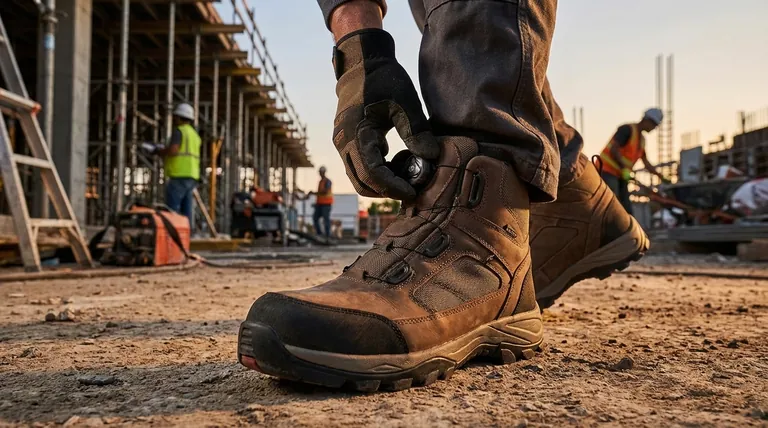
It’s a familiar scene on any job site at the end of a long day: the deep sigh of relief as workers unlace their heavy boots. The act is more than just a routine; it's an escape from the persistent, low-grade discomfort that has built up over hours. We often dismiss this as just "part of the job"—a necessary evil of wearing protective footwear.
But what if this daily discomfort wasn't just an inconvenience? What if it was a symptom of a fundamental design flaw that actively undermines worker safety, drains energy, and subtly chips away at productivity, day after day? The culprit is often hiding in plain sight: the traditional shoelace.
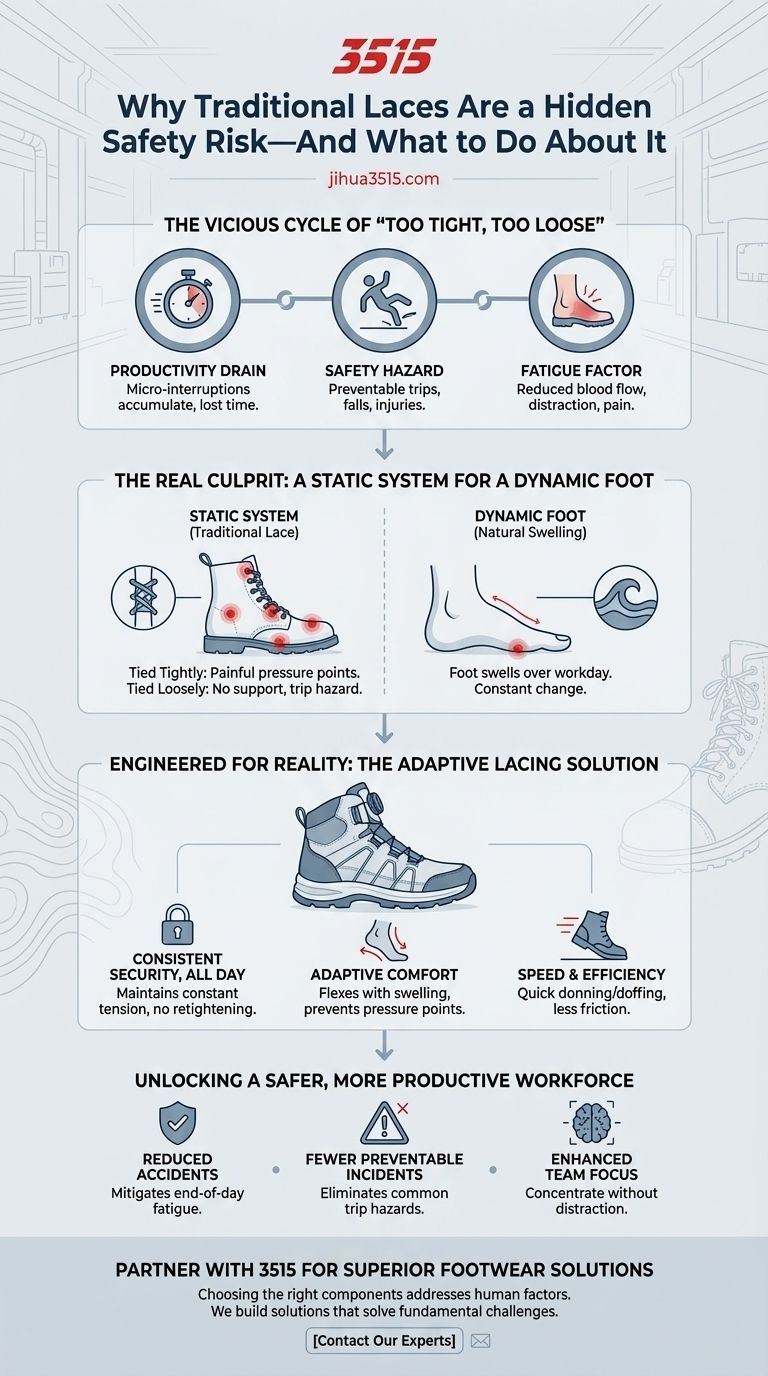
The Vicious Cycle of "Too Tight, Too Loose"
When faced with complaints about foot fatigue or the safety hazard of untied laces, the typical response is to look for obvious solutions. We might invest in more expensive boots with extra padding, try specialized insoles, or simply remind teams to "double-knot" their laces.
Yet, the problem persists. Here’s why these common fixes often fail to address the real issue:
- The Productivity Drain: Every time a worker has to stop what they're doing—whether on a scaffold or in a cleanroom—to retie a loose lace, it’s a break in focus and a loss of momentum. Across a large workforce, these micro-interruptions accumulate into significant lost time.
- The Safety Hazard: The National Safety Council identifies slips, trips, and falls as a leading cause of workplace injuries. An untied lace is a primary and entirely preventable trip hazard, with consequences ranging from minor scrapes to serious, recordable incidents.
- The Fatigue Factor: This is the most insidious consequence. A boot tied securely in the morning becomes a compression device by the afternoon as the foot naturally swells. This constriction reduces blood flow, accelerates fatigue, and can lead to chronic pain. A worker with aching feet is a distracted worker, and distraction is a gateway to accidents.
These aren't isolated issues; they are the direct business costs of relying on a century-old fastening technology in a modern work environment.
The Real Culprit: A Static System for a Dynamic Foot
The fundamental conflict is simple: a traditional shoelace is a static system. Once tied, it provides a fixed amount of tension and volume. Your foot, however, is dynamic.
Throughout a physically demanding workday, the human foot can swell up to half a shoe size. This is a natural physiological response.
Here lies the no-win scenario of traditional laces:
- Tied Tightly in the Morning: By afternoon, the lace becomes a tourniquet, creating painful pressure points and restricting circulation precisely when the worker needs maximum stability and comfort.
- Tied Loosely for Comfort: The boot fails to provide adequate ankle support from the start and the laces are far more likely to come undone, creating an immediate trip hazard.
No amount of padding or insole technology can fix this core mechanical problem. You are asking a rigid, non-adaptive fastener to secure a part of the body that is constantly changing. The "solutions" we try only address the symptoms, not the underlying cause.
Engineered for Reality: The Adaptive Lacing Solution
To truly solve this problem, you need a fastening system designed to work with the body, not against it. It must be able to do two things simultaneously: maintain a constant, secure tension while adapting to the dynamic changes in foot volume.
This is the principle behind modern elastic lacing systems.
They are not just a "convenience" feature; they are an engineered solution born from a deep understanding of workplace ergonomics and physiology. Unlike a static nylon lace, an elastic system flexes and stretches with the foot as it swells.
Here’s how this directly resolves the root cause of the problem:
- Consistent Security, All Day: The system maintains constant tension, ensuring the boot remains securely fitted without ever needing to be retightened. This single feature eliminates the trip hazard of loose laces.
- Adaptive Comfort: As the foot expands, the elastic lacing expands with it. This prevents the painful pressure points and circulatory constriction that cause end-of-day fatigue, keeping your team members more comfortable and focused.
- Speed and Efficiency: For roles requiring frequent donning and doffing of footwear, such as drivers or emergency responders, these systems offer significant time savings and reduce daily friction.
Beyond the Fix: Unlocking a Safer, More Productive Workforce
When you solve the chronic issue of poor footwear fit, you do more than just make workers more comfortable. You unlock new potential for safety and productivity.
With a workforce consistently wearing properly secured, adaptive footwear, you can expect to see tangible benefits:
- A Reduction in Late-Shift Accidents: By mitigating end-of-day foot fatigue, you help keep your team more alert and focused during the hours when they are most vulnerable.
- Fewer Preventable Incidents: You virtually eliminate one of the most common causes of trips and falls on the worksite.
- Enhanced Team Focus: Your workers can concentrate on their craft without the constant distraction of foot pain or the need to adjust their gear.
For distributors and brand owners, incorporating this technology isn't just about adding a feature. It's about demonstrating a commitment to solving the real-world challenges your customers face every day. It’s a powerful differentiator that shows you understand safety beyond the spec sheet.
Choosing the right components for your safety footwear goes deeper than just meeting standards; it's about addressing the human factors that drive performance and prevent injury. As a large-scale manufacturer, 3515 partners with clients to build footwear solutions that solve these fundamental challenges, from the sole up. If you're ready to move beyond the compromises of traditional footwear and equip your teams or customers with a truly superior solution, we can help you build it.
Contact Our Experts to discuss how incorporating advanced fastening systems can elevate your footwear program and deliver a meaningful return on safety.
Visual Guide
Related Products
- Premium Suede Sport Safety Shoes for Wholesale & Bulk Orders
- Premium Lightweight Safety Shoes for Wholesale & Bulk Orders
- Premium KPU Injection Athletic Style Safety Shoes
- Advanced KPU Athletic Safety Shoe with Steel Toe Cap Anti-Slip Rotary Lacing System
- Premium Safety Shoes with Rotating Buckle Safety Sneakers
Related Articles
- The Ghost in the Machine: Why an Obsolete Footwear Standard Creates Modern Risk
- Beyond the Steel Toe: The Hidden Ergonomics of Workplace Safety
- The True Cost of Skipping Safety Shoes: Long-Term Risks and Smart Protection
- How Safety Shoe Engineering Prevents Workplace Injuries Across Industries
- Beyond the Steel Toe: The Cognitive Science of Choosing the Right Work Boot