The Boot as an Interface
A riding boot is not merely footwear. It is a high-fidelity interface between rider and horse.
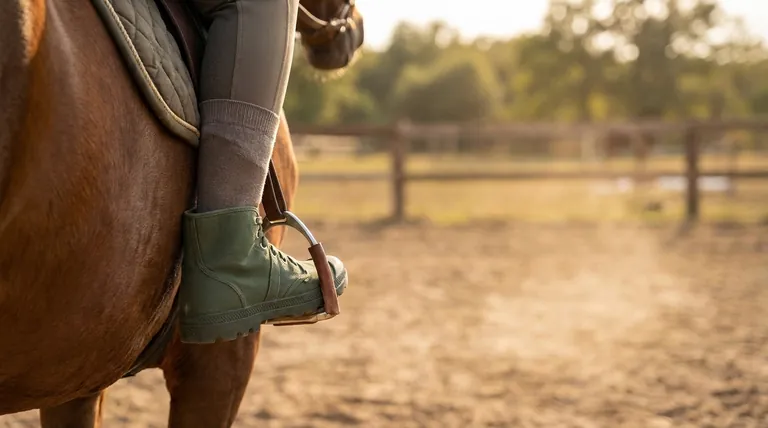
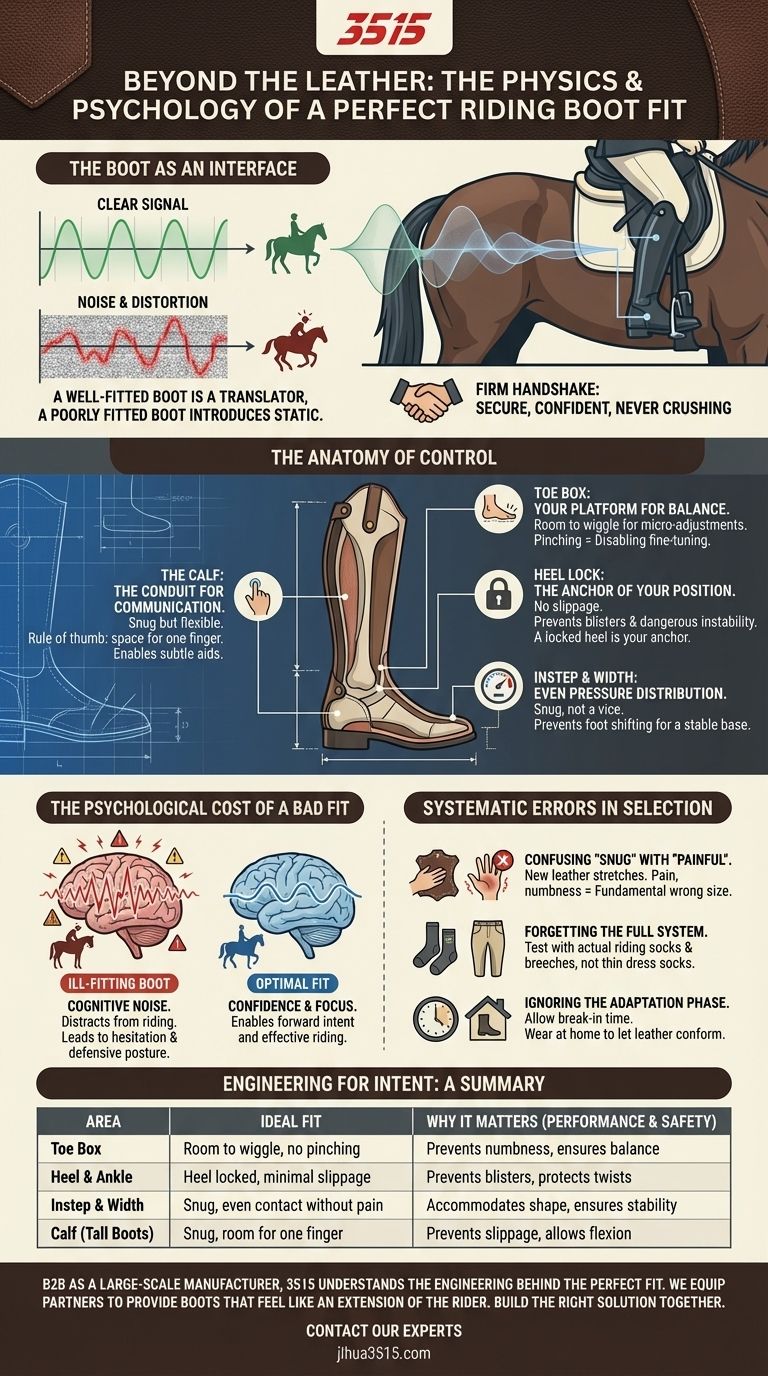
Think of it as a translator. Your leg applies pressure—a clear, specific instruction. The horse feels this instruction and responds. A well-fitted boot transmits this signal with perfect clarity. A poorly fitted boot introduces static, distortion, and noise. It muddles the conversation, frustrating both you and your mount.
The ideal fit feels less like wearing a boot and more like an extension of your own body. It’s a firm handshake: secure and confident, but never crushing. This is the foundation not just of comfort, but of control and safety.
The Anatomy of Control
Achieving this perfect interface requires a point-by-point calibration. Each area of the boot serves a distinct engineering purpose, contributing to the stability of the entire system.
The Toe Box: Your Platform for Balance
Your toes should never be jammed against the front of the boot. They need slight room to wiggle and spread. This space isn't a luxury; it's essential for maintaining micro-adjustments in balance, much like the sensitive controls on a complex machine. Pinching your toes is like disabling your fine-tuning mechanism.
The Heel Lock: The Anchor of Your Position
Your heel must be locked into place. Any slippage, however minor, is a bug in the system. As you walk or post, a lifting heel introduces friction, causing blisters. More critically, it allows your entire foot to slide forward, compromising your secure position in the stirrup and creating a dangerous instability. A locked heel is your anchor.
The Instep and Width: Even Pressure Distribution
The boot should apply even, firm pressure across the width of your foot and instep. It should feel snug, but not like a vice. This even contact ensures your foot doesn't shift inside the boot during lateral movements, providing a stable, consistent base for your entire leg.
The Calf: The Conduit for Communication
For tall boots, the calf fit is paramount. It must be snug enough that it doesn't drop or bunch at the ankle, yet flexible enough to allow for muscle engagement. The rule of thumb is space for one finger. This creates the close contact necessary for subtle leg aids, turning your lower leg into a precise communication tool.
The Psychological Cost of a Bad Fit
An ill-fitting boot doesn't just cause physical pain; it exacts a mental toll that degrades performance.
The human brain is wired to react to discomfort and instability. A boot that pinches, slips, or restricts blood flow sends a constant, low-level alarm signal. This "noise" consumes cognitive bandwidth, distracting you from your primary task: riding effectively.
You begin to hesitate. You ride defensively, guarding against the next pinch or slip, rather than riding with forward intent. Your confidence erodes not because of a lack of skill, but because your foundational equipment is unreliable.
Systematic Errors in Selection
Choosing the right boot involves avoiding common calibration errors.
- Confusing "Snug" with "Painful": New leather has a break-in period where it will stretch and mold. It should feel very snug—almost too snug—but never actively painful. Pain, numbness, or tingling are signals that the boot is fundamentally the wrong size or shape, a problem that breaking-in will not solve.
- Forgetting the Full System: Always try on boots with the breeches and socks you ride in. The thickness of your attire is a critical variable. Testing with thin dress socks will give you a false positive, resulting in a boot that is too tight when paired with your actual gear.
- Ignoring the Adaptation Phase: A boot is not a finished product out of the box. It requires a break-in period. Wear them around the house first. This allows the leather to soften and conform to the unique topography of your foot and leg, completing the final stage of its manufacturing process.
Engineering for Intent: A Summary
The optimal fit is not a single point, but a spectrum defined by your primary goal. The engineering must match the rider's intent.
| Area of the Boot | Ideal Fit | Why It Matters for Performance & Safety |
|---|---|---|
| Toe Box | Room to wiggle toes, no pinching | Prevents numbness, ensures balance and comfort |
| Heel & Ankle | Heel locked in, minimal slippage | Prevents blisters, protects from twists and strains |
| Instep & Width | Snug, even contact without pain | Accommodates foot shape, ensures stability |
| Calf (Tall Boots) | Snug, room for one finger | Prevents slippage, allows for muscle flexion |
For brands and distributors, providing riders with footwear that meets these exacting standards is non-negotiable. It's about delivering a product that is not just a piece of apparel, but a crucial component of a high-performance system.
As a large-scale manufacturer, 3515 understands the engineering behind the perfect fit. We produce a comprehensive range of equestrian footwear, from schooling boots to competition-grade models, all built on the principles of safety, performance, and rider confidence. We equip our partners to provide their customers with boots that feel like a true extension of themselves.
To ensure your customers get the flawless fit and performance they demand, let's build the right solution together. Contact Our Experts
Visual Guide
Related Products
- Heavy-Duty Goodyear Welted Pull-On Safety Rigger Boot
- Wholesale High-Traction Camo Boots - Custom Manufacturer for Brands
- Premium Wholesale Tactical Style Safety Shoes Boots with Quick Lacing
- Wholesale Tactical Boots High-Traction & Reflective for Bulk & Brand Orders
- Durable Leather High-Ankle Tactical Boots for Wholesale & Custom Manufacturing
Related Articles
- Beyond the Tread: The Molecular Battle for Grip on Oily Surfaces
- How to Choose Safety Boot Certifications for Your Industry's Hazards
- How Safety Boot Features Address Industry-Specific Workplace Hazards
- The True Cost of a Safety Boot: Why Your Footwear Budget Is Breaking
- How Safety Boot Engineering Protects Against Workplace Hazards: A Buyer's Guide