A common mistake in footwear is assuming your walking shoe size is the same as your dress shoe size. In reality, your walking shoes should be about a half to a full size larger. This extra space is not for comfort alone; it is essential for accommodating the natural swelling and dynamic movement of your feet during exercise, which prevents painful and common injuries.
The core principle of sizing walking shoes is to account for change. Your feet expand in volume and lengthen with each step, and failing to provide space for this dynamic process is the primary cause of walking-related foot ailments like blisters and black toenails.
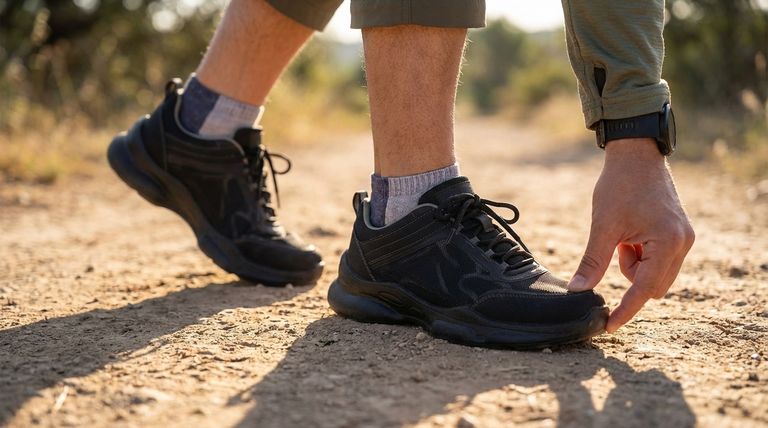
The Biomechanics of a Walking Foot
To understand why more room is necessary, you must first understand what happens to your feet when you walk. They are not static blocks but complex structures that change shape under pressure.
Understanding Foot Swell
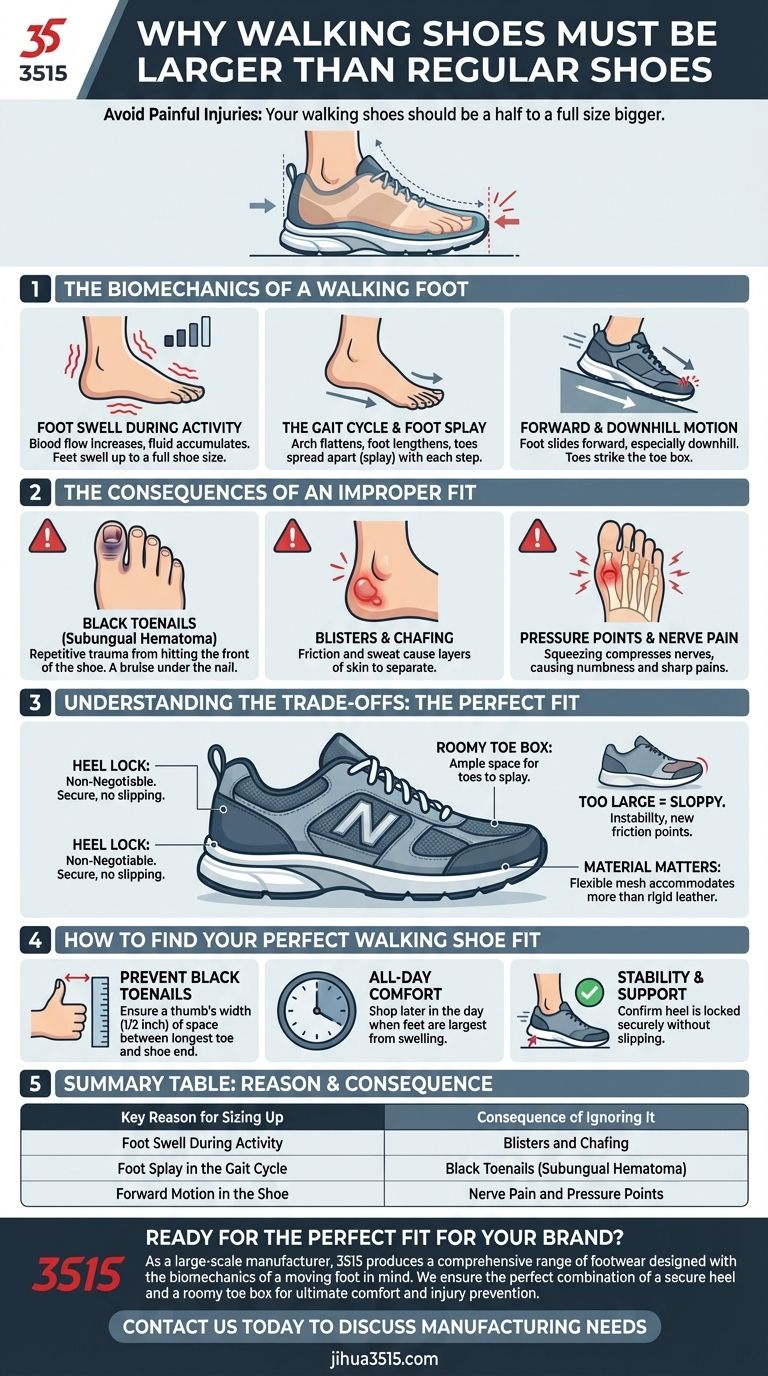
During any prolonged physical activity, blood flow to your muscles increases. Over the course of a long walk, gravity and this increased circulation cause fluid to accumulate in your feet, making them swell. This swelling can easily increase your foot's volume by up to a full shoe size.
The Gait Cycle and Foot Splay
With every step you take, your foot rolls forward and your arch flattens slightly to absorb the impact. This causes your foot to lengthen and your toes to spread apart, or splay. A shoe with a snug toe box constricts this natural movement, creating pressure and friction.
Forward and Downhill Motion
Your foot also moves within the shoe, sliding forward slightly with each step. This effect is far more pronounced when walking downhill. Without adequate length, your toes will repeatedly slam into the front of the shoe's toe box.
The Consequences of an Improper Fit
Ignoring the need for extra space leads directly to preventable injuries that can sideline your walking routine. These issues arise from excessive pressure and friction.
Black Toenails
Known medically as a subungual hematoma, a black toenail is simply a bruise under the nail. It is the classic sign of a shoe that is too short, caused by the repetitive trauma of your toenail hitting the front of the shoe.
Blisters and Chafing
Blisters are the result of friction. When a shoe is too tight, it rubs against the skin. Combined with the moisture from sweat, this rubbing action quickly separates the layers of skin, forming a painful, fluid-filled pocket.
Pressure Points and Nerve Pain
A shoe that's too small doesn't just affect length; it also affects width. Squeezing the ball of your foot can compress nerves between your metatarsal bones, leading to numbness, tingling, or sharp pains.
Understanding the Trade-offs
While sizing up is crucial, "larger" should never mean "sloppy." The goal is securing your foot while allowing it to move naturally.
The Risk of Going Too Large
A shoe that is excessively large creates a different set of problems. Your foot will slide around inside, creating friction in new places, like the heel and arch. This instability can also increase the risk of a twisted ankle.
The Heel Lock is Non-Negotiable
The ideal fit provides ample room in the toe box while locking your heel securely in the back of the shoe. Your heel should not slip up and down as you walk. This combination of a snug heel and a roomy forefoot is the hallmark of a well-fitted shoe.
Material Matters
The material of the shoe's upper affects the fit. A flexible mesh material can accommodate more foot splay and swelling than a rigid leather. Keep this in mind, as a stiffer shoe may require even more attention to proper sizing.
How to Find Your Perfect Walking Shoe Fit
Finding the right size is a practical process that accounts for the dynamic nature of your feet.
- If your primary focus is preventing black toenails: Ensure there is a thumb's width (about half an inch) of space between your longest toe and the end of the shoe.
- If your primary focus is all-day comfort on long walks: Shop for shoes in the afternoon or evening when your feet are naturally at their largest due to daily swelling.
- If your primary focus is stability and support: Confirm your heel is securely locked in place without slipping, even while ensuring the toe box is wide and long enough for your toes to splay.
Properly sizing your walking shoes is the single most effective step you can take to guarantee countless miles of comfortable, injury-free movement.
Summary Table:
| Key Reason for Sizing Up | Consequence of Ignoring It |
|---|---|
| Foot Swell During Activity | Blisters and Chafing |
| Foot Splay in the Gait Cycle | Black Toenails (Subungual Hematoma) |
| Forward Motion in the Shoe | Nerve Pain and Pressure Points |
Ready to find the perfect fit for your customers or brand?
As a large-scale manufacturer, 3515 produces a comprehensive range of footwear for distributors, brand owners, and bulk clients. Our production capabilities encompass all types of walking shoes and boots, designed with the biomechanics of a moving foot in mind. We ensure your products provide the perfect combination of a secure heel and a roomy toe box for ultimate comfort and injury prevention.
Contact us today to discuss your manufacturing needs and deliver superior walking shoes to your market!
Visual Guide
Related Products
- Wholesale Durable Camouflage Canvas Shoes with High-Traction Cleated Rubber Sole
- Durable Rubber Sole Outdoor Shoes Wholesale & Custom Manufacturing
- Premium Suede Sport Safety Shoes for Wholesale & Bulk Orders
- Durable Goodyear Welt Leather Work Boots for Wholesale & Private Label
- Wholesale Comfortable Business Casual Shoes Custom Manufacturing
People Also Ask
- Why is the selection of high-strength fabric materials necessary in the production of canvas shoes and training shoes?
- What are the properties of canvas as a shoe material? A Guide to Lightweight Comfort & Style
- Can canvas shoes be worn in rainy conditions? The Truth About Water Resistance
- What are some examples of vulcanized shoes? Discover the Flexibility and Board Feel of Classic Sneakers
- What are the characteristics of canvas as a shoe material? A Guide to Lightweight, Breathable Footwear