The selection of work footwear is a foundational element of operational risk management. Prioritizing comfort and safety directly impacts worker wellbeing by minimizing physical fatigue and preventing immediate injuries, while simultaneously driving efficiency by ensuring staff can focus on their tasks rather than their physical discomfort.
Core Insight: Comfort in industrial footwear is not a luxury; it is a critical safety feature. Uncomfortable Personal Protective Equipment (PPE) leads to neglect and non-compliance, whereas ergonomic footwear encourages consistent use, reduces long-term health liabilities, and sustains workforce productivity.
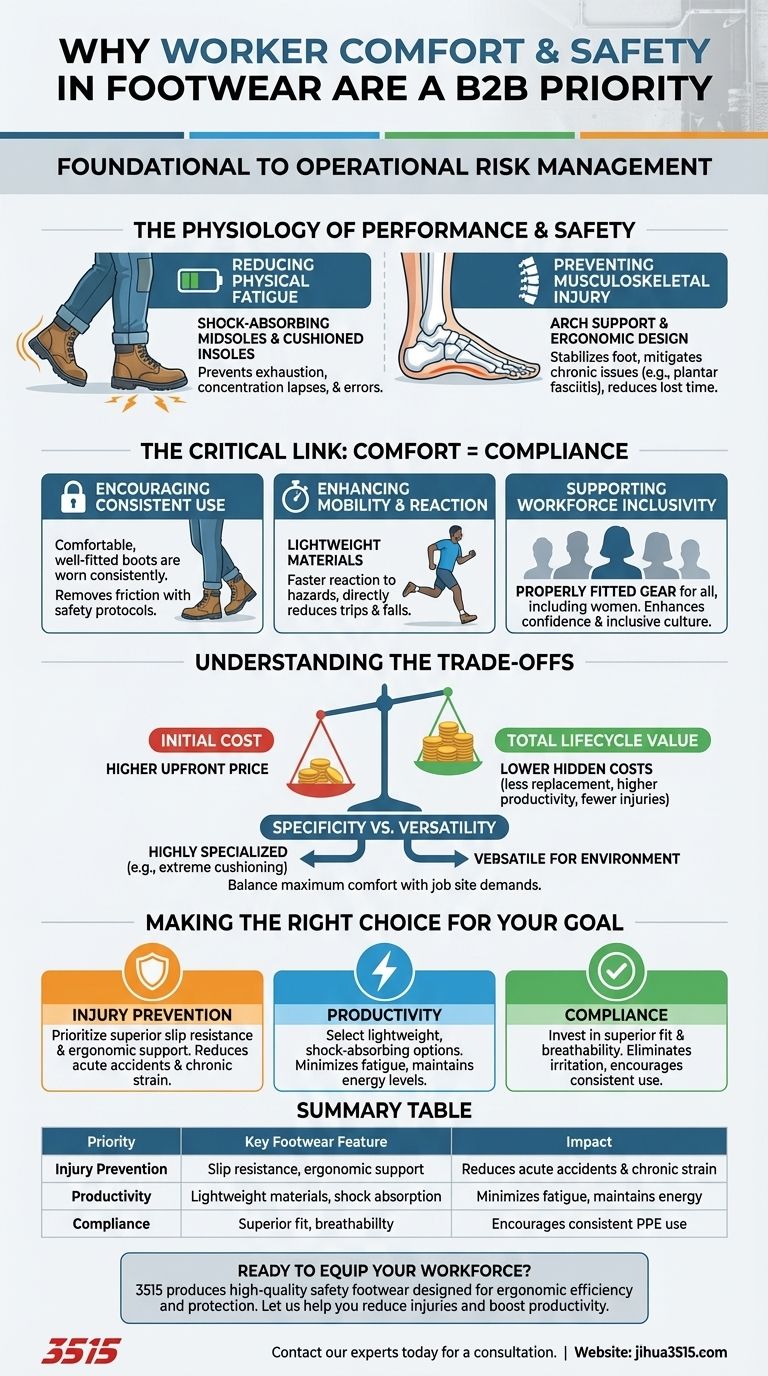
The Physiology of Performance and Safety
Reducing Physical Fatigue
Fatigue is a precursor to accidents. Safety footwear designed with shock-absorbing midsoles and cushioned insoles actively reduces the energy required for movement.
By alleviating physical strain on the lower extremities, you prevent the exhaustion that often leads to lapses in concentration and procedural errors.
Preventing Musculoskeletal Injury
Beyond preventing slips and falls, proper footwear addresses long-term health risks. Features like arch support and ergonomic design stabilize the foot during extended periods of standing.
This proactive approach mitigates the risk of chronic issues, such as plantar fasciitis or joint pain, which can lead to lost time and increased insurance claims.
The Critical Link Between Comfort and Compliance
Encouraging Consistent Use
The most effective PPE is the gear that workers actually wear. If boots are heavy, blister-inducing, or poorly fitted, workers are likely to remove them the moment supervision relaxes.
Comfortable boots encourage compliance. When footwear provides a proper fit and breathability, it removes the friction between the worker and safety protocols, ensuring the equipment remains on the manufacturing floor where it belongs.
Enhancing Mobility and Reaction Time
Heavy, clunky footwear impedes movement. Modern safety footwear utilizes lightweight materials to maintain protection without the "cement block" feel.
Improved mobility allows workers to react faster to hazards and move through their environment with greater agility, directly reducing the likelihood of trips and falls.
Supporting Workforce Inclusivity
A "one-size-fits-all" approach often compromises safety. Prioritizing fit ensures that all workers, including women, have footwear that accommodates their specific anatomical needs.
Providing properly fitted gear enhances confidence and contributes to an inclusive workplace culture, ensuring every employee can perform effectively without compromising their well-being.
Understanding the Trade-offs
Initial Cost vs. Total Lifecycle Value
High-comfort, ergonomic safety footwear generally carries a higher upfront price tag than basic compliance models. Budget-focused decision-makers often view this as an unnecessary expense.
However, the "cheaper" option often results in hidden costs, such as faster replacement cycles, lower productivity due to fatigue, and higher injury rates.
Specificity vs. Versatility
Highly specialized comfort features (like extreme cushioning) can sometimes reduce stability on uneven terrain. A boot designed for standing on concrete all day may not be suitable for climbing ladders or traversing loose gravel.
You must balance maximum comfort with the specific environmental demands of the job site to avoid introducing new risks.
Making the Right Choice for Your Goal
Selecting the right footwear is about matching the technical specifications of the boot to the operational reality of your workers.
- If your primary focus is Injury Prevention: Prioritize boots with superior slip resistance and specific ergonomic support to reduce both acute accidents and chronic strain.
- If your primary focus is Productivity: Select lightweight options with shock absorption to minimize fatigue and maintain energy levels throughout the shift.
- If your primary focus is Compliance: Invest in footwear with superior fit and breathability to eliminate the physical irritation that causes workers to neglect their PPE.
Investing in worker comfort is ultimately an investment in operational resilience and consistent output.
Summary Table:
| Priority | Key Footwear Feature | Impact |
|---|---|---|
| Injury Prevention | Slip resistance, ergonomic support | Reduces acute accidents & chronic strain |
| Productivity | Lightweight materials, shock absorption | Minimizes fatigue, maintains energy |
| Compliance | Superior fit, breathability | Encourages consistent PPE use |
Ready to equip your workforce with footwear that prioritizes both safety and comfort?
As a large-scale manufacturer, 3515 produces a comprehensive range of high-quality safety footwear for distributors, brand owners, and bulk clients. Our production capabilities encompass all types of safety shoes and boots, designed with the ergonomic features detailed above to protect your workers and enhance your operational efficiency.
Let us help you reduce workplace injuries and boost productivity. Contact our experts today for a consultation and discover the right footwear solution for your business.
Visual Guide
Related Products
- Premium Suede Sport Safety Shoes for Wholesale & Bulk Orders
- Premium Lightweight Safety Shoes for Wholesale & Bulk Orders
- Wholesale Anti-Smash & Puncture-Proof Safety Shoes Custom Manufacturing for Brands
- Premium KPU Injection Athletic Style Safety Shoes
- Premium Safety Shoes with Rotating Buckle Safety Sneakers
People Also Ask
- What are the primary functions of professional safety shoes? Maximize Safety in Water Supply Confined Spaces
- What industries have specific OSHA footwear requirements? Ensure Compliance & Protect Your Workforce
- What role do specialized safety shoes play in preventing falls? Engineering Stability in Industrial Environments
- Why should ergonomics and comfort be prioritized when selecting safety shoes? Boost Compliance & Worker Health
- Why must safety training be synchronized with the provision of physical safety shoes? Achieve Optimal Workplace Protection