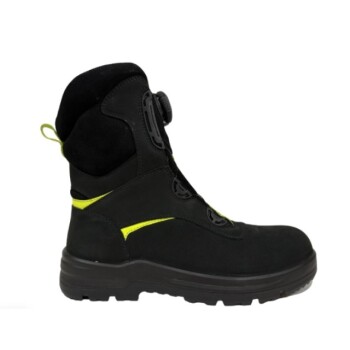
To achieve high precision in large-scale footwear manufacturing, facilities must rely on industrial cutting machines, high-power sewing units, and fully automatic molding and pressing equipment. These advanced mechanical tools are the baseline for meeting international physical quality standards while minimizing the variations inherent in manual labor.
The Core Insight: True manufacturing precision comes from replacing variable manual processes with automated mechanization. By integrating specialized cutting, sewing, and molding machinery, large-scale facilities ensure that every unit meets strict structural and aesthetic benchmarks required for global export.
The Core Machinery for Physical Precision
To move beyond the limitations of manual craftsmanship, large-scale facilities must implement specific industrial units. These machines are designed to standardize the most critical phases of shoe construction.
Industrial Cutting Machines
The foundation of a precise shoe lies in the accuracy of its component parts. Industrial cutting machines are essential for processing raw materials with exact dimensions.
Unlike manual cutting, these machines ensure that every piece of fabric or leather is identical, preventing assembly issues later in the production line.
High-Power Sewing Units
Stitching defines both the durability and the aesthetic of the final product. High-power sewing units provide the force and consistency necessary to handle industrial-grade materials.
These units maintain uniform stitch tension and spacing, which is critical for meeting physical quality standards that manual labor often fails to sustain over long shifts.
Automatic Molding and Pressing Equipment
The final shape and structural integrity of the footwear are determined by fully automatic molding and pressing equipment.
This machinery applies consistent pressure and heat to bond soles and shape uppers. It eliminates the "human factor" in pressure application, ensuring that the structural bond is uniform across thousands of units.
Elevating Consistency Through Automation
Simply owning the machinery is not enough; the integration of automation determines the level of precision. Industrial-grade production lines use mechanization to replace traditional low-efficiency manual processes.
Precise Path Control
Automated systems utilize precise path control to guide cutting and sewing tools. This ensures that the machinery follows the exact design specifications for every single unit, regardless of volume.
This technology allows for complex aesthetic details to be replicated perfectly, a requirement for high-quality production demands.
Pressure Management Systems
In the bottoming and molding phases, automation manages the application of force. Pressure management ensures that delicate materials are not crushed while ensuring distinct bonds are formed.
This standardization creates consistent structural strength across large-scale batches, reducing the rate of defective products.
Optimizing the Production Environment
Precision also requires an environment that supports visual accuracy and operational efficiency.
Intelligent Lighting Systems
While not a direct manufacturing tool, intelligent lighting systems are critical infrastructure. They utilize high-efficiency light sources and sensors to optimize visual quality.
By improving visibility, these systems aid in quality control inspection. Furthermore, they help facilities meet strict environmental compliance requirements (such as those in the EU) by optimizing energy loads.
Understanding the Trade-offs
Transitioning to high-precision industrial equipment involves strategic considerations regarding cost and flexibility.
Capital vs. Consistency
The primary trade-off is the significant investment required for fully automatic molding and high-power processing tools compared to manual labor. However, this cost is offset by the reduction in rejected units and the ability to meet international standards.
Rigidity of Process
Automated lines with precise path control are excellent for large batches but can be less flexible than manual labor.
Adjusting these systems for small, custom runs requires reprogramming and retooling. Therefore, this equipment is best suited for facilities focused on standardization and volume rather than bespoke customization.
Making the Right Choice for Your Goal
Selecting the right equipment depends on the specific bottlenecks in your current production line.
- If your primary focus is Structural Integrity: Prioritize automatic molding and pressing equipment to ensure consistent bonding strength and shape retention.
- If your primary focus is Aesthetic Consistency: Invest in automated systems with precise path control to standardize cutting and sewing details.
- If your primary focus is Environmental Compliance: Implement intelligent lighting systems to reduce energy consumption and meet global export standards.
By leveraging these advanced mechanical processing tools, you transform footwear production from a variable craft into a precise, scalable science.
Summary Table:
| Equipment Type | Core Function | Benefit to Precision |
|---|---|---|
| Industrial Cutting Machines | Raw material sizing | Ensures identical component dimensions |
| High-Power Sewing Units | Material stitching | Maintains uniform tension and spacing |
| Automatic Molding/Pressing | Sole bonding & shaping | Guarantees consistent structural integrity |
| Path Control Systems | Automated guidance | Replicates complex designs flawlessly |
| Intelligent Lighting | Visual environment | Enhances QC inspection and energy efficiency |
Scale Your Production with 3515’s Manufacturing Excellence
As a large-scale manufacturer serving global distributors and brand owners, 3515 offers comprehensive production capabilities to transform your footwear designs into precision-engineered products. Our facility is anchored by our flagship Safety Shoes series and extends to high-performance tactical boots, outdoor shoes, training sneakers, and professional dress shoes.
By partnering with us, you leverage our investment in advanced automated molding and precise path control technologies, ensuring every batch meets rigorous international standards.
Ready to elevate your inventory with superior consistency? Contact us today to discuss your bulk requirements
References
- Ogbonnaya Ukeh Oteh, Emmanuel Onyedikachi Ahaiwe. Celebrity endorsement in African context: TEARS model approach. DOI: 10.1108/rege-07-2021-0110
This article is also based on technical information from 3515 Knowledge Base .
Related Products
- Durable Leather Moc Toe Work Boots for Wholesale & Custom Manufacturing
- Durable Leather Work Boots for Wholesale & Custom Manufacturing
- Durable Goodyear Welt Leather Work Boots for Wholesale & Private Label
- Durable Moc-Toe Wedge Work Boots | Wholesale Manufacturing for Brands
- Durable Canvas Work Shoes with Rubber Lug Sole | Wholesale Manufacturer
People Also Ask
- What are moc toe work boots designed for? Superior Comfort and Mobility for Tradespeople
- What are the key features to look for when purchasing moc toe boots? A Guide to Durability & Fit
- How did moc toe boots originate? A Legacy of Workwear Durability and Style
- What clothing items complement the Outdoorsman/Heritage Look with moc toe boots? Build a Timeless, Rugged Wardrobe
- What types of outfits can moc toe boots be worn with? Versatile Style Guide