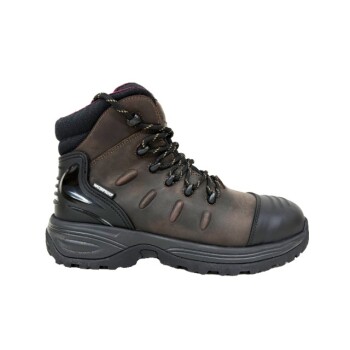
For a law enforcement officer, your choice of footwear is a critical decision that directly impacts your safety and effectiveness. Mass-produced boots with poor-quality materials should be avoided because they consistently fail to provide the necessary support, durability, and protection required for the unpredictable and physically demanding nature of police work.
The core issue is simple: standard consumer-grade boots are not engineered for the extreme and varied stresses of law enforcement. Choosing purpose-built, high-quality footwear is a non-negotiable investment in your immediate safety, long-term health, and ability to perform when it matters most.
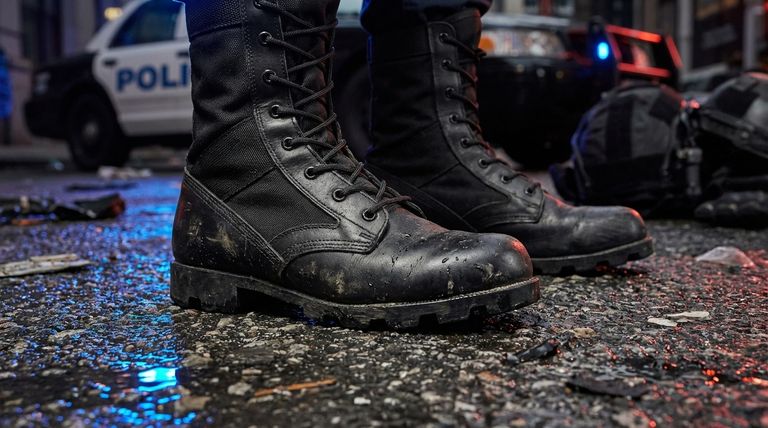
Why Standard Mass-Produced Boots Fail Under Pressure
The fundamental disconnect lies in the design philosophy. Mass-market boots are built for casual wear and cost-efficiency, not for the mission-critical demands an officer faces daily.
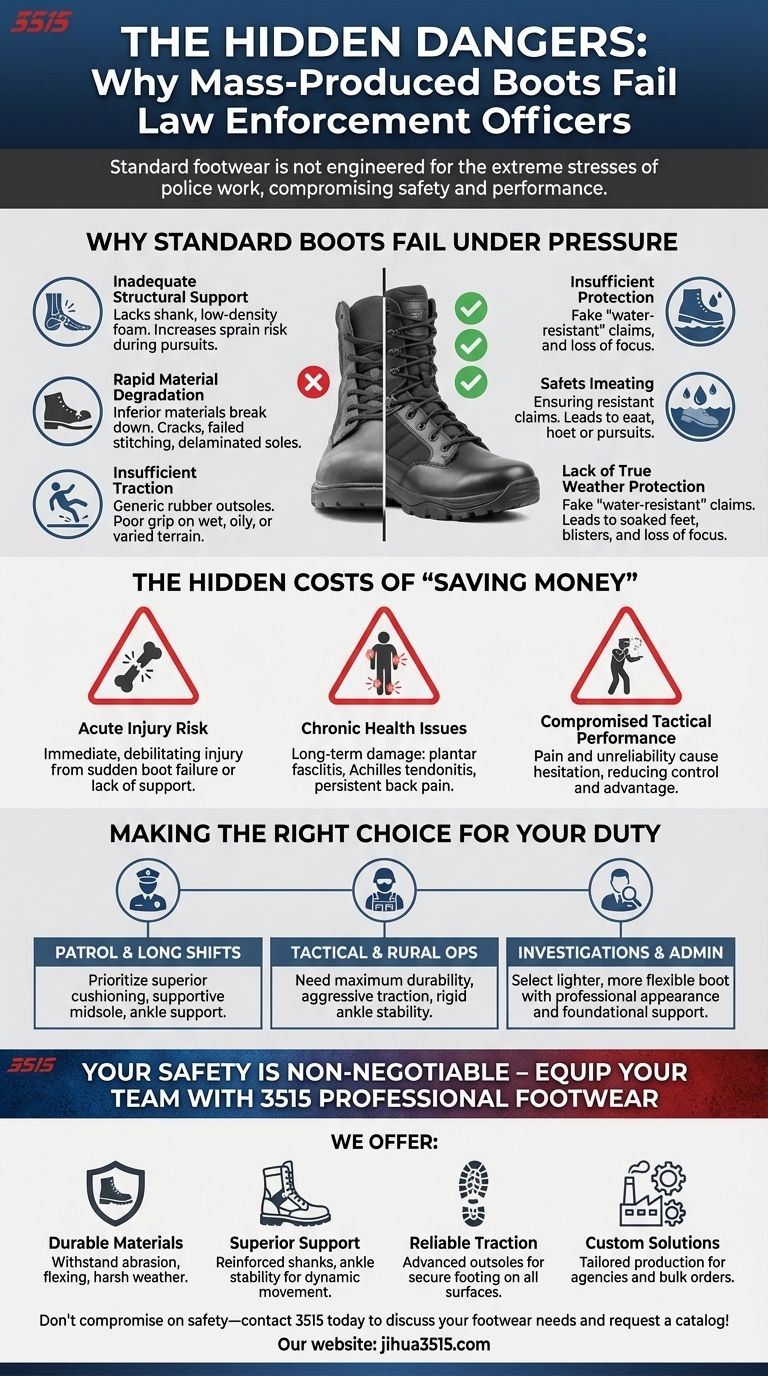
Inadequate Structural Support
Mass-produced boots often lack a supportive shank and use low-density foams that break down quickly. This leads to poor arch and ankle support, increasing the risk of sprains during a foot pursuit or a fall on uneven terrain.
Rapid Material Degradation
Inferior materials like bonded leather or cheap synthetics cannot withstand the constant abrasion, flexing, and exposure to the elements. This results in cracked uppers, failed stitching, and delaminated soles, often at the worst possible moment.
Insufficient Traction
The outsoles on cheap boots are typically made from generic rubber compounds that offer poor grip on wet, oily, or varied surfaces. A slip during a critical incident can have catastrophic consequences for an officer.
Lack of True Weather Protection
While a cheap boot might claim to be "water-resistant," it rarely features a true waterproof and breathable membrane. This results in soaked feet, which can lead to blisters, discomfort, and a dangerous loss of focus during a long shift.
The Hidden Costs of 'Saving Money'
Opting for cheaper, lower-quality footwear introduces significant risks that far outweigh any initial cost savings. These costs manifest as physical injury, diminished performance, and frequent replacement needs.
The Risk of Acute Injury
A boot that fails—whether through a sole separation or a lack of ankle support during a sudden change in direction—can cause an immediate, debilitating injury. This takes you out of the field and compromises your team's safety.
The Toll of Chronic Health Issues
The daily impact of poor support accumulates over a career. Officers using inadequate footwear are far more susceptible to chronic conditions like plantar fasciitis, Achilles tendonitis, and persistent lower back pain.
Compromised Tactical Performance
You cannot perform at your peak if your feet are in pain or your footwear is unreliable. Hesitation caused by poor traction or instability can mean the difference between controlling a situation and losing the advantage.
Making the Right Choice for Your Duty
Selecting the right boot requires matching its specific features to the primary demands of your role.
- If your primary focus is patrol and long shifts: Prioritize boots with superior cushioning, a supportive midsole, and proven ankle support to combat fatigue and prevent long-term strain.
- If your primary focus is tactical response or rural operations: You need maximum durability, aggressive traction for varied terrain, and rigid ankle stability for dynamic movement.
- If your primary focus is investigations or administrative work: A lighter, more flexible boot that offers a professional appearance without sacrificing foundational support is the most practical choice.
Your boots are a foundational piece of your professional equipment, just as critical as your vest or duty weapon.
Summary Table:
| Risk of Poor-Quality Boots | Consequence for Officers |
|---|---|
| Inadequate Structural Support | Increased risk of sprains and ankle injuries during pursuits |
| Rapid Material Degradation | Boot failure at critical moments, compromising safety |
| Insufficient Traction | Higher chance of slips and falls on hazardous surfaces |
| Lack of True Weather Protection | Soaked feet, blisters, and loss of focus during long shifts |
Your Safety is Non-Negotiable – Equip Your Team with 3515 Professional Footwear
As a large-scale manufacturer, 3515 produces a comprehensive range of purpose-built footwear for law enforcement agencies, distributors, and bulk clients. Our boots are engineered with the durability, support, and traction needed for the unpredictable demands of police work, protecting officers from injury and enhancing tactical performance.
We offer:
- Durable Materials: Built to withstand abrasion, flexing, and harsh weather conditions.
- Superior Support: Designed with reinforced shanks and ankle stability for dynamic movement.
- Reliable Traction: Advanced outsoles for secure footing on wet or uneven surfaces.
- Custom Solutions: Tailored production for agencies and bulk orders.
Don’t compromise on safety—contact 3515 today to discuss your footwear needs and request a catalog!
Visual Guide
Related Products
- Durable Mid-Cut Tactical Boots for Wholesale & Private Label
- Wholesale Durable Mid-Cut Tactical Boots for Custom & Private Label Brands
- Durable High-Ankle Tactical Boots for Wholesale & Custom Manufacturing
- Durable Leather High-Ankle Tactical Boots for Wholesale & Custom Manufacturing
- Durable Leather Tactical Boots Wholesale & Custom Manufacturing for Brands
People Also Ask
- What are some key features of top-tier tactical boots for 2023? Find the Perfect Boot for Your Mission
- Can tactical boots be stylish for everyday wear? Yes, with the right styling and features.
- What are the weight and mobility differences between combat and tactical boots? Choose the Right Boot for Your Mission
- How should tactical boots be stored to maintain their condition? Protect Your Gear Investment
- What are the main construction similarities between tactical boots and tactical sneakers? Built for Performance & Durability