The most critical rule for staying warm in winter is simple: avoid cotton socks at all costs. While comfortable for casual wear in dry conditions, cotton becomes a liability in the cold. It readily absorbs sweat from your feet and, once wet, loses all its insulating properties, actively pulling heat away from your body and dramatically increasing your risk of discomfort and frostbite.
The core problem with cotton is its relationship with moisture. By absorbing and holding sweat against your skin, cotton socks work against your body's efforts to stay warm, turning a minor inconvenience into a significant safety risk in cold conditions.
Why Cotton Fails in the Cold
The phrase "cotton kills" is common among outdoor enthusiasts for a reason. Its inherent properties make it uniquely unsuited for cold-weather insulation, especially when next to the skin.
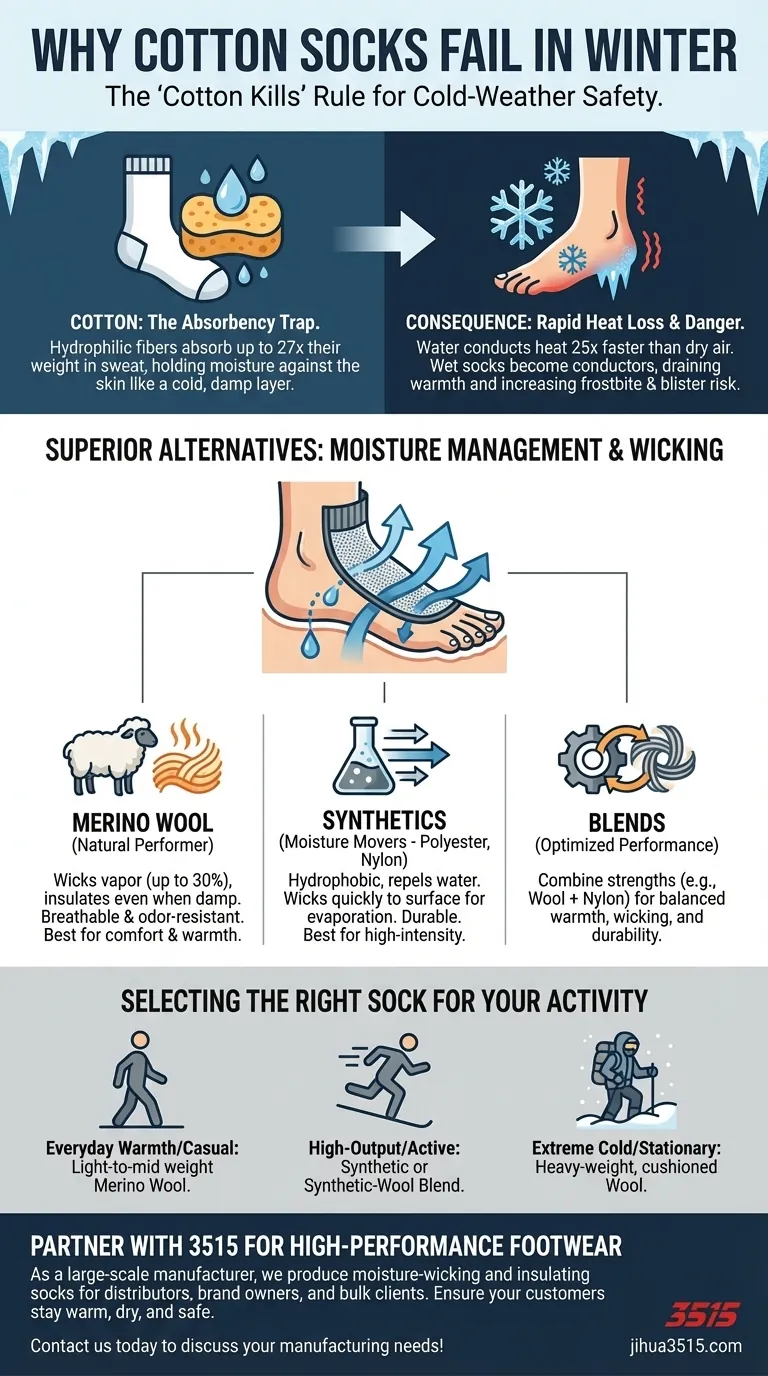
The Absorbency Trap
Cotton is a hydrophilic fiber, meaning it loves water. A cotton sock can absorb up to 27 times its own weight in water.
Instead of moving this moisture away from your skin, it holds it like a sponge, creating a damp, cold layer directly against your foot.
The Science of Heat Loss
Water is an incredibly efficient conductor of heat. In fact, it pulls heat away from your body about 25 times faster than dry air.
When your cotton sock becomes damp with sweat, it transforms from an insulator into a conductor, rapidly draining warmth from your feet and making you feel colder much faster.
From Discomfort to Danger
This rapid heat loss isn't just uncomfortable; it's dangerous. Consistently cold and damp feet are far more susceptible to frostbite.
Furthermore, damp skin is softer and more prone to friction, leading to painful blisters that can ruin an outing and create an entry point for infection.
Superior Alternatives: The Power of Wicking
The key to warm feet is not just insulation, but effective moisture management. Materials that excel in winter either insulate when damp or actively move moisture away from the skin—a process known as wicking.
Merino Wool: The Natural Performer
Merino wool is the gold standard for winter socks. Its fibers can absorb up to 30% of their weight in moisture vapor without feeling wet to the touch.
Crucially, wool continues to insulate even when it becomes damp, preventing the rapid heat loss seen with cotton. It is also naturally breathable and odor-resistant.
Synthetics: The Moisture Movers
Synthetic materials like polyester, nylon, and acrylic are hydrophobic, meaning they repel water.
Instead of absorbing sweat, these fibers pull moisture along their surface, wicking it away from your skin toward the outside of the sock where it can evaporate. This makes them excellent for high-intensity activities where you expect to sweat a lot.
Understanding the Trade-offs
Choosing the right material involves balancing performance, comfort, and cost. While anything is better than cotton, there are distinctions between the superior options.
Material Strengths and Weaknesses
Merino wool offers the best combination of warmth, moisture management, and odor control, but it is typically the most expensive option and can be less durable than synthetics.
Synthetics offer excellent wicking and durability at a lower cost, but they can feel less comfortable against the skin and are more prone to retaining odors.
The Value of Blends
Many of the best winter socks are not 100% one material. Blends are designed to leverage the strengths of each fiber.
A common example is a merino wool sock blended with nylon for durability and a small amount of spandex or Lycra for a secure, non-bunching fit.
Choosing the Right Sock for Your Needs
Selecting the correct sock depends entirely on your planned activity and the conditions you expect to face.
- If your primary focus is everyday warmth and casual winter wear: A light- to mid-weight merino wool sock provides unparalleled comfort and temperature regulation.
- If your primary focus is high-output activity like winter running or skiing: A synthetic or synthetic-wool blend designed for maximum moisture-wicking is your best choice.
- If your primary focus is extreme cold and lower-intensity activity: A heavy-weight, cushioned wool sock offers the best insulation for stationary periods.
Ultimately, managing moisture is the key to winter warmth, and choosing the right sock is your first and most important line of defense.
Summary Table:
| Material | Key Property | Winter Performance |
|---|---|---|
| Cotton | Highly absorbent | Loses insulation when wet; increases risk of frostbite |
| Merino Wool | Wicks moisture; insulates when damp | Excellent warmth & comfort; odor-resistant |
| Synthetics | Hydrophobic; wicks moisture quickly | Great for high-intensity activity; durable |
| Blends | Combines strengths of fibers | Optimized balance of warmth, wicking, and durability |
Ready to equip your customers with high-performance winter footwear?
As a large-scale manufacturer, 3515 produces a comprehensive range of moisture-wicking and insulating socks and footwear for distributors, brand owners, and bulk clients. Our production capabilities ensure your customers stay warm, dry, and safe in any condition.
Contact us today to discuss your manufacturing needs and bring superior winter footwear to market!
Visual Guide
Related Products
- Wholesale Durable Camouflage Canvas Shoes with High-Traction Cleated Rubber Sole
- Lightweight Breathable Training Shoes for Wholesale & Custom OEM Manufacturing
- Durable Canvas Work Shoes with Rubber Lug Sole | Wholesale Manufacturer
- Wholesale Durable & Breathable Training Shoes for Custom Brands
- Premium Wholesale Tactical Style Safety Shoes Boots with Quick Lacing
People Also Ask
- Why is the selection of high-strength fabric materials necessary in the production of canvas shoes and training shoes?
- What are the properties of canvas as a shoe material? A Guide to Lightweight Comfort & Style
- Can canvas shoes be worn in rainy conditions? The Truth About Water Resistance
- What are some examples of vulcanized shoes? Discover the Flexibility and Board Feel of Classic Sneakers
- What are the characteristics of canvas as a shoe material? A Guide to Lightweight, Breathable Footwear