At its core, a PVC half-boot is chosen for its unique combination of complete waterproof protection, durability, and effortless convenience. People select these boots when they need reliable defense against moisture and ground-level hazards without the bulk and commitment of a full-length wellington.
The decision to use a PVC half-boot comes down to practicality. It is the ideal tool for tasks where your feet need to stay dry and protected from mud or splashes, but full-leg coverage is unnecessary and would only hinder comfort and mobility.
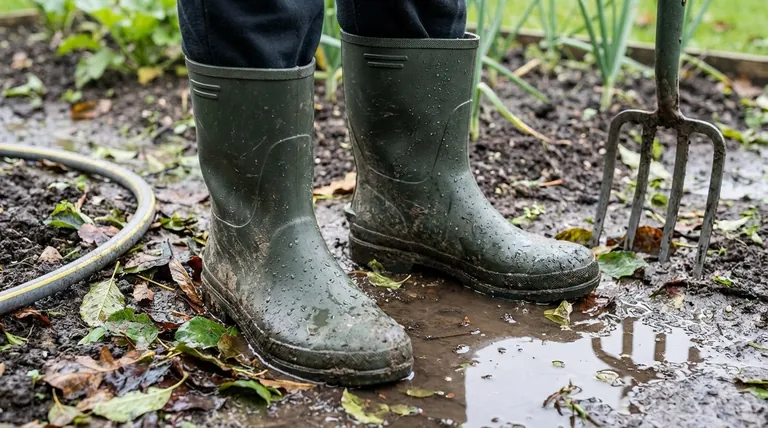
The Core Functional Advantages of PVC
Polyvinyl chloride (PVC) is the key material, and its inherent properties directly translate to the boot's primary benefits in real-world use.
Uncompromised Water and Mud Protection
The most critical feature of PVC is that it is perfectly impermeable. This means it provides an absolute barrier against water, mud, and other liquids.
Unlike water-resistant materials that can eventually soak through, a PVC boot ensures your feet remain completely dry when walking through wet grass, washing a car, or working in a muddy garden.
Durability for Everyday Hazards
These boots are engineered to be strong, sturdy, and long-lasting. The robust nature of PVC provides reliable protection against common outdoor annoyances.
This includes shielding your feet from sharp thorns in the garden, stray branches on a path, or the general scrapes and scuffs of outdoor work.
Lightweight and Effortless to Wear
Despite their sturdy construction, PVC half-boots are notably lightweight. This significantly reduces fatigue during use compared to heavier traditional work boots.
Their simple, slip-on design emphasizes ease of use, making them an excellent choice for quick trips into the yard or for tasks that require putting on and taking off footwear frequently.
Why a Half-Boot Design Excels
The "half-boot" height is not a limitation but a deliberate design choice that balances protection with practicality for a specific range of activities.
The Balance of Protection and Mobility
A half-boot provides ample protection against the most common issues like splashes and shallow puddles.
By ending around the lower calf, it offers far greater flexibility and freedom of movement than a full-height boot, making it more comfortable for activities that involve bending or crouching, such as gardening.
Optimized for Comfort in Milder Conditions
The lower height also means less heat buildup. In warmer weather or for strenuous activities, a full-length boot can become uncomfortable and sweaty.
The half-boot design provides the necessary protection from the ground up while allowing for better air circulation around the leg.
Understanding the Trade-offs
To make an informed choice, it's essential to recognize where PVC half-boots are not the ideal solution. Objectivity requires acknowledging their limitations.
Limited Breathability
The same impermeability that keeps water out also keeps moisture in. PVC does not breathe, which can lead to sweaty feet during prolonged wear, especially in hot climates.
Minimal Ankle Support
While sturdy, the flexible nature of PVC offers very little in the way of ankle support. These boots are not designed for hiking on uneven terrain or for activities that carry a risk of twisting an ankle.
Protection Height Limitations
The most obvious trade-off is the height. A half-boot is perfect for splashes and shallow mud, but it offers no protection if you need to wade through deep puddles or cross a stream.
Making the Right Choice for Your Needs
Selecting the right footwear means matching the tool to the task. Consider your primary goal to determine if a PVC half-boot is the correct fit.
- If your primary focus is gardening or general yard work: The combination of waterproofness, thorn protection, and slip-on convenience makes these boots an ideal choice.
- If your primary focus is walking on wet paths or muddy fields: Their lightweight and impermeable construction provides excellent comfort and protection for these common conditions.
- If your primary focus is hiking, heavy construction, or navigating deep water: You should opt for a specialized boot that offers ankle support, safety features, or full-leg coverage.
Ultimately, choosing a PVC half-boot is about selecting a specialized tool for practical, everyday protection.
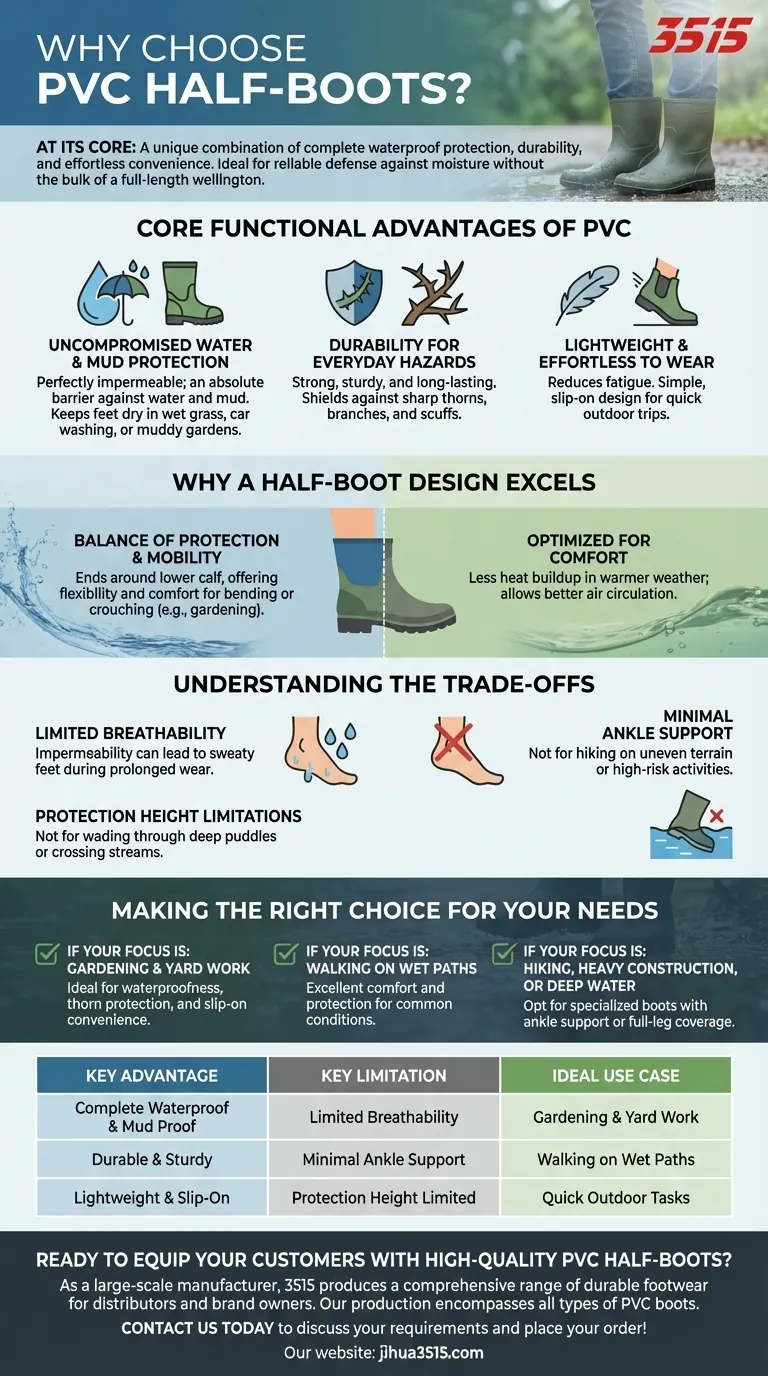
Summary Table:
| Key Advantage | Key Limitation | Ideal Use Case |
|---|---|---|
| Complete Waterproof & Mud Proof | Limited Breathability | Gardening & Yard Work |
| Durable & Sturdy | Minimal Ankle Support | Walking on Wet Paths |
| Lightweight & Slip-On | Protection Height Limited | Quick Outdoor Tasks |
Ready to equip your customers with high-quality PVC half-boots?
As a large-scale manufacturer, 3515 produces a comprehensive range of durable and comfortable footwear for distributors, brand owners, and bulk clients. Our production capabilities encompass all types of PVC boots, ensuring you get reliable products tailored to your market's needs.
Contact us today to discuss your requirements and place your order!
Visual Guide
Related Products
- Wholesale Durable Mid-Cut Tactical Boots for Custom & Private Label Brands
- Premium Wholesale Waterproof Safety Boots High Performance Protection for Industrial Markets
- High-Traction Suede Tactical Boots Wholesale & Custom Manufacturing
- Wholesale Durable Camouflage Canvas Shoes with High-Traction Cleated Rubber Sole
- Premium Waterproof High-Cut Industrial Safety Boots for Wholesale and Bulk Orders
People Also Ask
- Can tactical boots be stylish for everyday wear? Yes, with the right styling and features.
- What are the general characteristics of tactical boots? Lightweight, Agile Footwear for Professionals
- How should tactical boots be stored to maintain their condition? Protect Your Gear Investment
- What are some tips for breaking in new tactical boots? Achieve a Perfect, Pain-Free Fit
- What are some key features of top-tier tactical boots for 2023? Find the Perfect Boot for Your Mission