
The short answer is: Hikers, particularly those on long-distance trails, often prefer lightweight running shoes because they dry significantly faster than traditional boots. This rapid drying is crucial for preventing blisters, reducing foot fatigue, and minimizing the overall weight carried, especially in wet conditions.
The choice between trail runners and hiking boots isn't just about footwear; it's a fundamental shift in philosophy. It prioritizes energy conservation and moisture management over the traditional ideals of rigid support and total water protection.
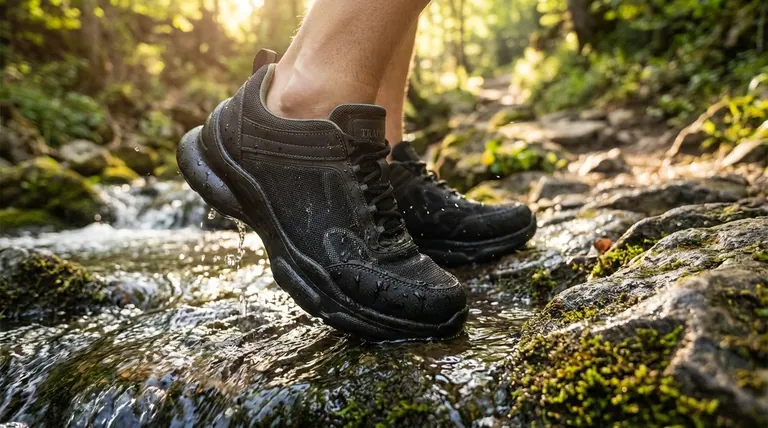
The Core Principle: Energy and Moisture Management
For decades, heavy, waterproof hiking boots were the undisputed standard. The logic was simple: keep water out and support the ankle at all costs. However, experienced long-distance hikers discovered that this approach has two significant drawbacks: energy expenditure and the inevitability of wet feet.
Minimizing Energy Expenditure
The old saying, "a pound on your feet is like five on your back," holds true. Every ounce of weight attached to your feet requires substantially more energy to lift with each step compared to weight in a backpack.
Lighter footwear, like running shoes, directly translates to less energy used over the course of a day. On a multi-day or multi-week trek, this energy savings compounds, leading to less fatigue and greater endurance.
The Inevitability of Wet Feet
No waterproof boot is invincible. Water can enter over the top of the boot during a deep creek crossing, or sweat can accumulate from the inside, leaving the foot damp regardless of external conditions.
Once a waterproof boot is wet on the inside, its membrane works against you, dramatically slowing down the drying process. A wet boot is a heavy boot and a primary cause of blisters and other foot issues.
The "Quick-Drying" Advantage
This is where lightweight running shoes, often called "trail runners," fundamentally change the strategy. They operate on a principle of acceptance: your feet will get wet. The goal is no longer to prevent water from getting in, but to get it out as quickly as possible.
Breathability is Key
Running shoes are made of highly breathable mesh and synthetic materials. They are designed to let air circulate freely, which also means they let water pass through them easily—in both directions.
When you step out of a stream, much of the water immediately drains out. The remaining moisture then evaporates quickly as you walk, aided by your own body heat and airflow.
Practical Impact on the Trail
A hiker in trail runners can cross a stream, have wet feet for a short period, and have nearly dry shoes within an hour of walking in sunny conditions. In contrast, a hiker in soaked waterproof boots may have damp feet for the rest of the day, or even several days.
Understanding the Trade-offs
Choosing running shoes for hiking is not without its compromises. The decision depends entirely on your priorities, the terrain, and your personal physiology.
The Ankle Support Debate
The most cited benefit of boots is ankle support. However, many proponents of trail runners argue that avoiding fatigue through lighter footwear is a more effective way to prevent the clumsy, tired steps that lead to twisted ankles in the first place.
Stronger ankles, developed through training and experience, can also compensate for the lack of a rigid boot cuff.
Durability and Protection
Traditional boots, with their thick leather and robust rubber rands, offer more protection from sharp rocks and generally last longer. Lightweight running shoes will wear out faster and provide less of a buffer against direct impacts.
Making the Right Choice for Your Goal
Ultimately, the best footwear is the one that aligns with your specific needs and hiking style.
- If your primary focus is maximum protection and support for short, rugged hikes: A traditional hiking boot is likely the superior choice, especially if you are carrying a very heavy pack or have a history of ankle instability.
- If your primary focus is long-distance endurance and rapid recovery from wet conditions: Lightweight, quick-drying running shoes offer a compelling advantage in energy savings and foot health.
Embracing lighter footwear is a strategic choice to manage moisture and conserve energy over the long haul.
Summary Table:
| Feature | Traditional Hiking Boots | Lightweight Trail Runners |
|---|---|---|
| Drying Speed | Slow (can take days) | Fast (often under an hour) |
| Weight | Heavy (more energy per step) | Light (conserves energy) |
| Moisture Strategy | Tries to keep water out | Lets water in and out quickly |
| Best For | Short, rugged hikes with heavy packs | Long-distance endurance and wet conditions |
Ready to equip your customers with the perfect hiking footwear?
As a large-scale manufacturer, 3515 produces a comprehensive range of footwear for distributors, brand owners, and bulk clients. Our production capabilities encompass all types of shoes and boots, including high-performance, quick-drying trail runners designed for the demands of long-distance hikers.
Partner with us to offer your customers the durability, comfort, and innovative features that drive sales. Contact our team today to discuss your manufacturing needs and bring high-quality hiking footwear to market.
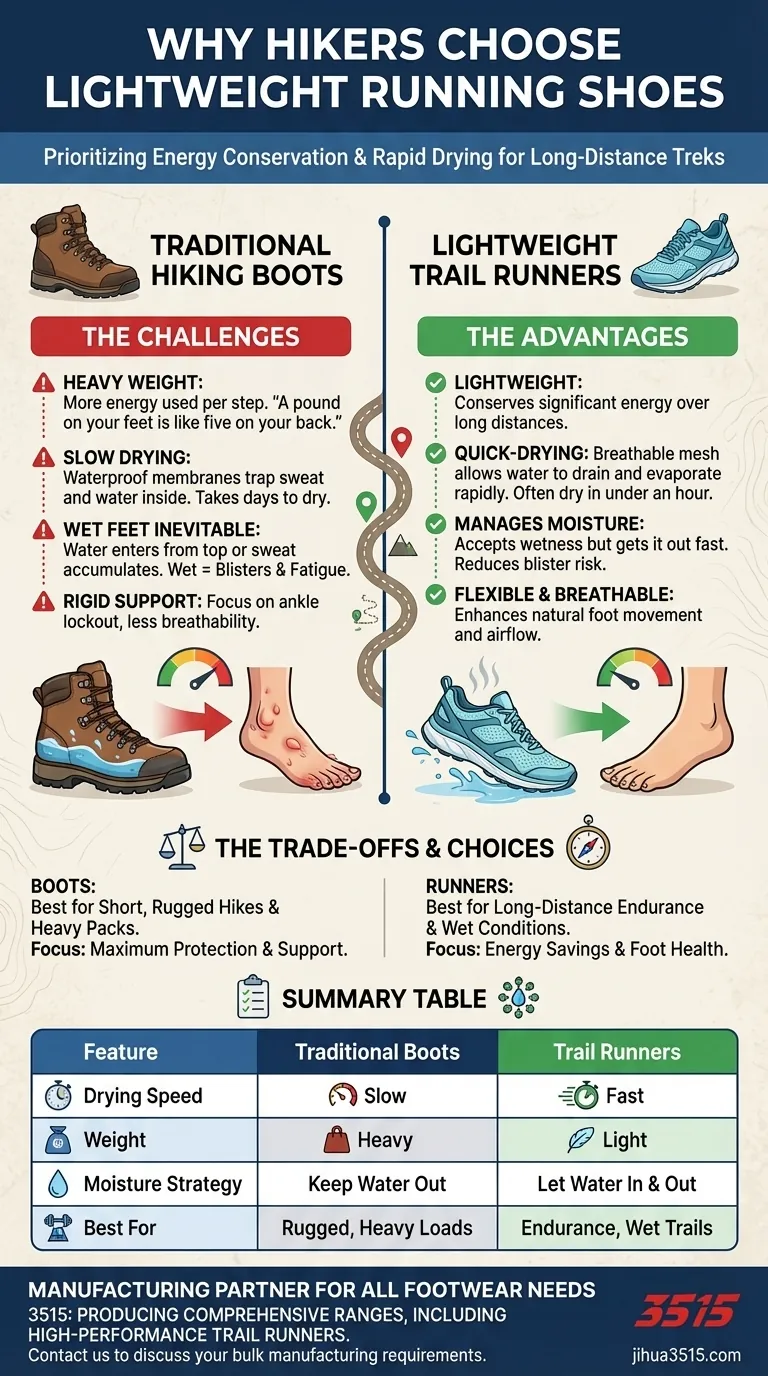
Visual Guide
Related Products
- Premium Wholesale Tactical Style Safety Shoes Boots with Quick Lacing
- Lightweight Breathable Training Shoes for Wholesale & Custom OEM Manufacturing
- Wholesale Durable & Breathable Training Shoes for Custom Brands
- Advanced KPU Athletic Safety Shoe with Steel Toe Cap Anti-Slip Rotary Lacing System
- Lightweight Breathable Sneakers with Wet-Traction Grip for Wholesale & Private Label
People Also Ask
- How are gait analysis research findings applied to the functional design of safety shoes and tactical boots?
- How do quality certification standards for safety shoes reduce perceived risk? Buy Online with Technical Certainty
- How can specialized footwear mitigate safety risks? High-Volume OEM/ODM Solutions since 1951
- How does anthropomorphic design influence material selection? Enhance Footwear Performance through Biological Alignment
- Why is the synchronization of craftsmanship and UX development emphasized for bulk customization of safety shoes?
















