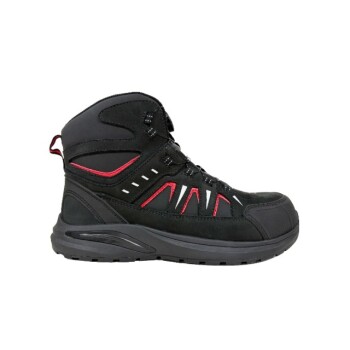
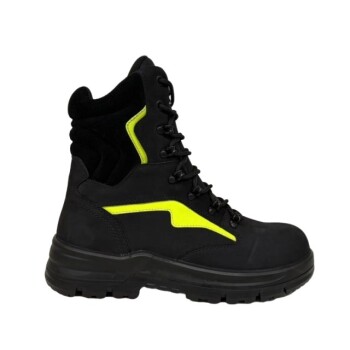
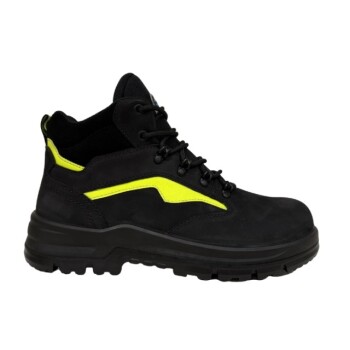
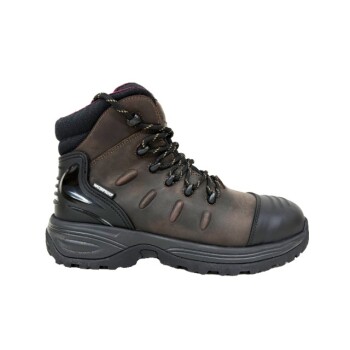
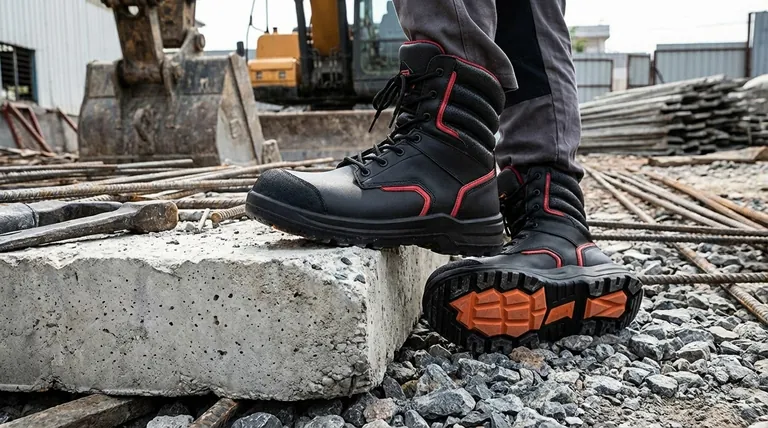
At its core, toe protection is vital in work boots because it serves as a critical shield against severe crushing and compression injuries. In environments with heavy materials, rolling objects, or falling tools, a reinforced toe cap is the primary defense preventing a workplace accident from becoming a life-altering injury.
The purpose of a safety toe is to prevent catastrophic injury from impact and compression hazards. However, this single feature is part of a larger system of foot protection that includes puncture resistance, electrical safety, and proper fit, all of which must be matched to your specific work environment.
The Primary Role of Toe Protection: Impact and Compression
The most obvious dangers in manual labor and industrial settings are direct threats to the feet. A safety toe is engineered specifically to counter these two fundamental risks.
Preventing Crushing Injuries
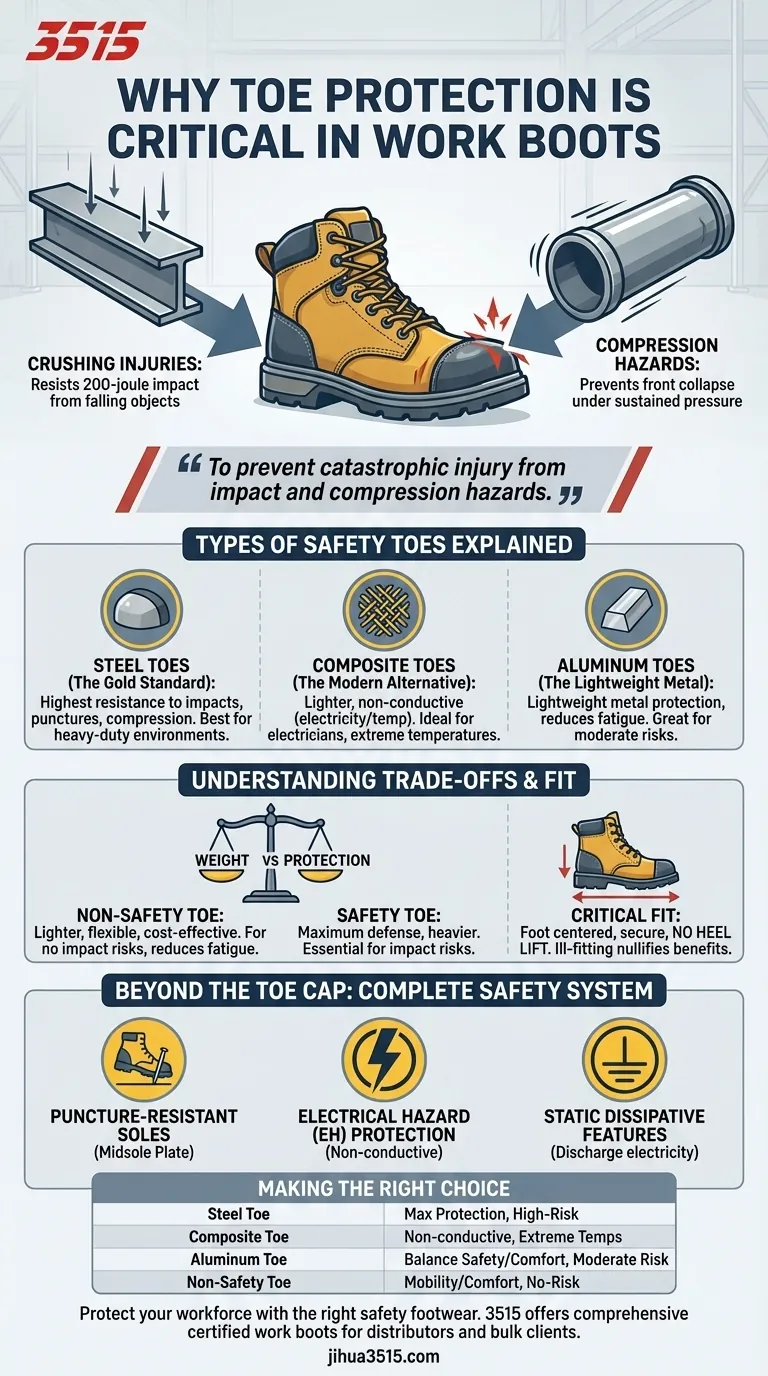
A reinforced toe cap is designed to withstand a significant direct impact from a falling object. Materials like steel are tested to resist a 200-joule impact, providing a rigid barrier between the hazard and the delicate bones of your toes.
Resisting Compression
Beyond falling objects, there's a risk of the foot being trapped or rolled over by heavy equipment. The structural integrity of the safety toe prevents the front of the boot from collapsing under sustained pressure, preserving the space needed to keep your foot safe.
Types of Safety Toes Explained
While the goal is the same, the materials used to achieve it offer different benefits. Understanding these options is key to selecting the right boot for your needs.
Steel Toes (The Gold Standard)
This is the traditional choice for a reason. Steel toe caps provide the highest level of resistance to impacts, punctures, and side compression, making them the default for heavy-duty environments like construction and manufacturing.
Composite Toes (The Modern Alternative)
Made from non-metallic materials like Kevlar, carbon fiber, or plastic, composite toes are a lighter alternative. Their key advantage is that they do not conduct electricity or transfer cold or heat, making them ideal for electricians or those working in extreme temperatures.
Aluminum Toes (The Lightweight Metal)
Offering a middle ground, aluminum toes provide the security of metal but are significantly lighter than steel. They offer robust protection while helping to reduce foot fatigue over a long day.
Understanding the Trade-offs
Choosing a boot isn't just about picking the highest level of protection; it's about finding the right tool for the job. An inappropriate choice can introduce its own problems.
Safety Toe vs. Non-Safety Toe
A non-safety toe boot is lighter, often more flexible, and more cost-effective. For jobs with no significant impact risks, such as fast-paced logistics or general labor in a controlled environment, a "soft toe" boot can reduce fatigue where the added weight is a clear disadvantage.
Material Considerations
The primary trade-off is between weight and protection. Steel offers maximum defense but is the heaviest option. Composite and aluminum toes provide excellent, certified protection for most jobs while being much lighter, though a composite toe might be bulkier than steel to achieve an equivalent safety rating.
The Critical Importance of Fit
No safety feature can overcome an ill-fitting boot. Your foot should feel centered and secure, with no heel lift when you walk. A boot that is too loose or too tight can cause blisters, painful rubbing, or even create a tripping hazard, nullifying its protective benefits.
Beyond the Toe Cap: A Complete Safety System
True foot protection extends well beyond the toe. A high-quality work boot functions as a complete system to guard against a wide range of workplace hazards.
Puncture-Resistant Soles
Many job sites, from construction to demolition, have sharp objects like nails, screws, and glass on the ground. A non-metallic or steel midsole plate is added to the sole to prevent these items from puncturing through to your foot.
Electrical Hazard (EH) Protection
Specialized boots are made with non-conductive soles and heels that can protect you from accidental contact with live electrical circuits. This is a critical feature for anyone working around energized objects.
Static Dissipative Features
Conversely, some boots are designed to safely discharge static electricity from your body into the ground. This is essential when working with sensitive electronic components that could be damaged by a static shock.
Sole and Material Integrity
The boot's outer materials provide other crucial protections. This includes heat-resistant soles made of materials like TPU for hot surfaces and chemical-resistant polymers like rubber and PVC for handling hazardous liquids.
Making the Right Choice for Your Job
Selecting the right boot requires an honest assessment of your daily environment and tasks.
- If your primary focus is maximum protection in high-risk environments: A steel toe boot provides the ultimate defense against severe impact and compression.
- If your primary focus is working around electricity or in extreme temperatures: A composite toe offers certified protection without conducting electricity or heat.
- If your primary focus is reducing fatigue in moderate-risk roles: An aluminum or composite toe provides a great balance of safety and lightweight comfort.
- If your primary focus is mobility and comfort in a no-risk environment: A non-safety toe boot is the most practical and comfortable choice.
Ultimately, choosing the right work boot is a direct investment in your personal safety and your ability to perform your job effectively and without injury.
Summary Table:
| Safety Toe Type | Key Features | Best For |
|---|---|---|
| Steel Toe | Maximum impact/compression resistance, durable | Heavy-duty construction, manufacturing |
| Composite Toe | Lightweight, non-conductive, no temperature transfer | Electricians, extreme temperature work |
| Aluminum Toe | Lightweight metal, good protection, reduces fatigue | Moderate-risk roles requiring all-day comfort |
| Non-Safety Toe | Lightest, most flexible, cost-effective | Controlled environments with no impact risk |
Protect your workforce with the right safety footwear. As a large-scale manufacturer, 3515 produces a comprehensive range of certified work boots for distributors, brand owners, and bulk clients. Our production capabilities encompass all types of safety toes (steel, composite, aluminum) and additional protective features like puncture-resistant soles and electrical hazard protection. Ensure your team's safety and compliance — contact our experts today to discuss your specific needs and receive a customized solution!
Visual Guide
Related Products
- Wholesale Durable Safety Boots Manufacturer Customizable Steel Toe Work Boots
- Customizable Anti-Smash Safety Boots for Wholesale & Private Label Manufacturing
- Wholesale Customizable Safety Boots Durable & Protective Footwear Manufacturing
- Wholesale Durable Breathable Safety Boots Custom OEM Manufacturer
- Durable Steel Toe Safety Boots Wholesale & Custom Manufacturing
People Also Ask
- What are the pros and cons of steel toe work boots? A Guide to Maximum Protection vs. Comfort
- What are the different types of steel toe work boots? Choose the Right Boot for Your Job
- What is the history of steel toe work boots? From German Invention to Modern Safety Standard
- How much weight can steel toe work boots withstand? Unpacking the 3,372 lb. Safety Standard
- What are some common myths about steel toe work boots? Debunked for Modern Workers