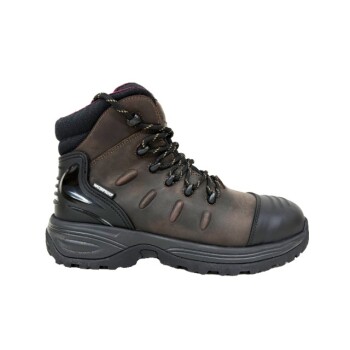
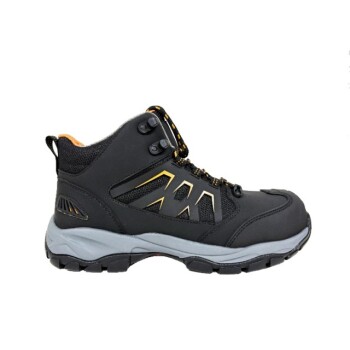
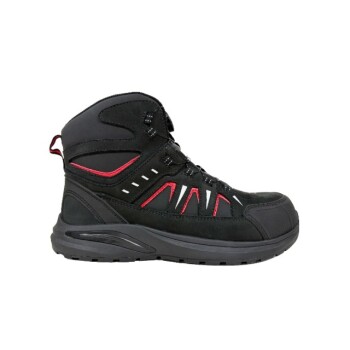
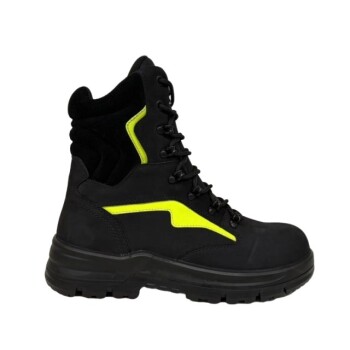
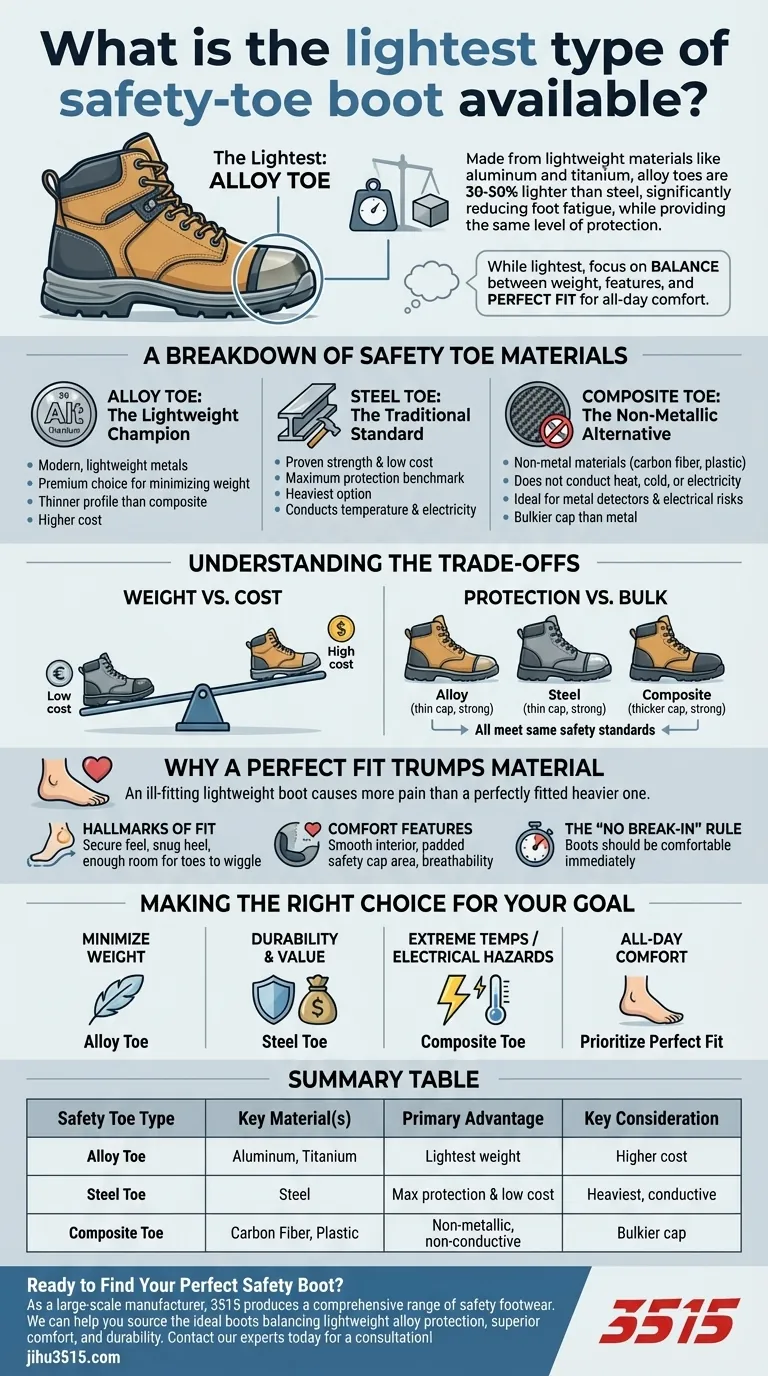
The lightest type of safety-toe boot available is the alloy toe. Made from lightweight materials like aluminum and titanium, alloy toes provide the same level of impact and compression resistance as steel but can be 30-50% lighter, significantly reducing foot fatigue over a long workday.
While alloy toes offer the lowest weight, focusing solely on material misses the bigger picture. The true key to all-day comfort and safety is finding the optimal balance between the boot's weight, its specific features, and, most importantly, a perfect fit.
A Breakdown of Safety Toe Materials
Choosing a safety boot involves more than just picking the lightest option. Each material comes with a distinct set of properties suited for different environments and job requirements.
Alloy Toe: The Lightweight Champion
Alloy toes are crafted from modern, lightweight metals like aluminum or titanium. They represent the premium choice for minimizing weight.
Because the material is strong, the protective cap can be thinner than a composite toe, resulting in a less bulky boot profile that looks more like a standard shoe.
The primary drawback is cost, as these advanced materials are more expensive to produce than steel.
Steel Toe: The Traditional Standard
Steel is the original and most common material for safety toes due to its proven strength and low cost.
It offers maximum protection and is the industry benchmark for impact resistance. However, it is also the heaviest option.
Steel is also a conductor, making it a poor choice for those working in extreme hot or cold environments or for electricians who need protection from electrical hazards.
Composite Toe: The Non-Metallic Alternative
Composite toes are made from non-metal materials like carbon fiber, fiberglass, Kevlar, or dense plastic. They do not conduct heat, cold, or electricity.
This makes them the ideal choice for workers who frequently pass through metal detectors or work in environments with electrical risks.
While lighter than steel, they are generally not as light as alloy. To meet the same safety standards, the composite cap must be thicker and bulkier than its metal counterparts.
Understanding the Trade-offs
The "best" boot is rarely a simple choice. You must weigh the benefits of one feature against the potential downsides.
Weight vs. Cost
There is a direct relationship between weight and price. The lightest boots, made with alloy toes and advanced sole materials, command the highest price. Steel-toe boots remain the most budget-friendly option.
Protection vs. Bulk
All safety toes—steel, alloy, and composite—must meet the same ASTM safety standards to be sold as protective footwear. However, the materials achieve this differently.
Alloy and steel can provide this protection in a thinner cap, while composite toes need to be bulkier to offer the same level of impact resistance.
Why a Perfect Fit Trumps Material
An ill-fitting lightweight boot will cause more pain and fatigue than a heavier boot that fits perfectly. Proper fit is the most critical factor for comfort and safety.
The Hallmarks of a Proper Fit
A well-fitted boot should feel secure but not tight. Pay close attention to a snug heel fit to prevent blisters and ensure your toes have enough room to wiggle without touching the end of the safety cap.
Key Comfort Features to Look For
Beyond fit, seek out boots with a smooth, seamless interior and a padded area around the safety cap. Good breathability is also essential for preventing moisture and heat buildup during long shifts.
The "No Break-In" Rule
Modern, high-quality work boots should be comfortable from the moment you put them on. If a boot feels painful or restrictive in the store, do not assume it will "break in" over time.
Making the Right Choice for Your Goal
Select your boot based on a clear understanding of your daily tasks and environment.
- If your primary focus is minimizing weight above all else: An alloy toe is your best option, but be prepared for the higher cost.
- If your primary focus is durability and value: The traditional steel toe remains the most cost-effective and widely available choice.
- If your primary focus is working in extreme temperatures or near electrical hazards: A non-metallic composite toe is the safest and most practical solution.
- If your primary focus is all-day comfort: Prioritize getting a precise fit over any single material, as this will have the greatest impact on reducing fatigue.
Ultimately, the right safety boot is a personalized tool that balances protection, comfort, and the specific demands of your job.
Summary Table:
| Safety Toe Type | Key Material(s) | Primary Advantage | Key Consideration |
|---|---|---|---|
| Alloy Toe | Aluminum, Titanium | Lightest weight (30-50% lighter than steel) | Higher cost |
| Steel Toe | Steel | Maximum protection & low cost | Heaviest option; conducts temperature/electricity |
| Composite Toe | Carbon Fiber, Plastic | Non-metallic; non-conductive | Bulkier than alloy/steel for same protection level |
Ready to Find Your Perfect Safety Boot?
As a large-scale manufacturer, 3515 produces a comprehensive range of safety footwear for distributors, brand owners, and bulk clients. Our production capabilities encompass all types of safety-toe boots and shoes.
We can help you source the ideal boots that balance lightweight alloy protection, superior comfort, and job-specific durability. Let's discuss your requirements and find the perfect solution for your customers or workforce.
Contact our experts today for a consultation!
Visual Guide
Related Products
- Premium Oil Wax Leather Safety Boots for Bulk Purchase
- Wholesale Leather Safety Boots with Customizable Protective Toe
- Durable Leather Safety Boots for Wholesale & Custom OEM Manufacturing
- Puncture-Resistant Velcro Safety Boots for Wholesale & Custom Manufacturing
- Premium Sport Style Safety Boots for Bulk Orders
People Also Ask
- What materials are commonly used for outsoles in safety boots? A Guide to Durability, Grip, and Comfort
- How do safety boots reduce cutting hazards? Essential Protection for Your Workforce
- What are the common types of safety boots and their primary uses? A Guide to Industrial Footwear
- Which organizations develop safety standards for work boots? Ensure Compliance & Worker Safety
- What primary protective functions do professional safety boots provide in urban solid waste recovery and waste picking processes? Discover Dual-Layer Protection.