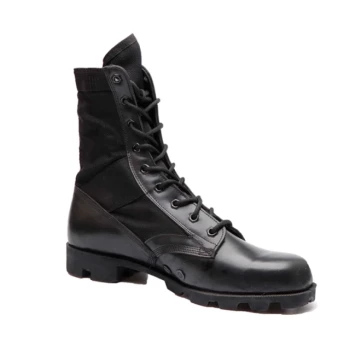
Accurate plantar pressure data depends entirely on the spatial alignment between the human foot's anatomy and the sensor's active sensing grid. Using a professional measurement device ensures that sensors are sized and positioned correctly within tactical footwear, preventing the data loss and signal artifacts that occur when a sensor shifts or fails to cover critical weight-bearing zones.
Precise foot measurement is the foundational step in biomechanical data collection; without it, the misalignment of sensor hardware with anatomical landmarks renders the resulting data unreliable for tactical performance analysis.
The Mechanics of Data Integrity
Aligning Sensor Grids with Weight-Bearing Regions
A professional measurement device like a Brannock device ensures the sensor size is perfectly matched to the subject's specific foot geometry. This alignment is a non-negotiable prerequisite for accuracy, as it places the sensitive areas of the sensor directly beneath critical weight-bearing regions.
Preventing Sensor Migration and Signal Artifacts
Improperly sized sensors or footwear can lead to sensor migration, where the insert shifts during movement. This movement creates "artifacts"—false data points or noise—that obscure the actual pressure distribution occurring during tactical maneuvers.
Ensuring Consistent Data Capture
When a sensor is correctly fitted, it remains stable within the tactical boot, providing a repeatable and reliable data stream. If the fit is poor, the sensor may fold or bunch, leading to permanent hardware damage and invalid test results.
Beyond Simple Length: The Multi-Dimensional Fit
The Role of Arch Length in Functional Support
Professional devices measure more than just heel-to-toe length; they capture arch length and width, which are vital for tactical applications. Accurate arch measurement ensures that the footwear’s functional features, such as arch support positioning, align with the subject's anatomy.
Validating Biomechanical Experiments
In research settings, using standardized measurement tools is essential for the validity of biomechanical experiments. It ensures that variables like balance and stability are being tested based on a proper interface between the foot and the boot, rather than reflecting errors caused by improper sizing.
Optimizing Heel Cup and Width Alignment
A tactical boot must secure the heel and forefoot to prevent internal sliding. By using precise measurements, technicians ensure the heel cup fit is optimized, which directly influences how pressure is distributed across the sensor during high-impact activities.
Understanding the Trade-offs
Precision vs. Field Efficiency
While professional measurement is necessary for data integrity, it adds a layer of logistical complexity to the deployment process. In rapid field assessments, the time required for precise measurement may be viewed as a bottleneck, yet bypassing this step frequently results in unusable data.
Sensitivity to Foot Volumetric Changes
Standard measurement devices capture a static footprint, but the foot often expands or changes shape under heavy tactical loads or long-duration rucking. Relying solely on a static Brannock measurement without considering these dynamic volumetric changes can still lead to fit issues during actual operations.
Implementing Precise Measurement in Tactical Environments
To ensure the success of your plantar pressure study or footwear evaluation, the measurement process must be standardized across all subjects.
- If your primary focus is Research Validity: Use a Brannock device to document heel-to-toe, arch length, and width to ensure every sensor is calibrated to the subject's specific anatomical landmarks.
- If your primary focus is Equipment Durability: Ensure the sensor fit eliminates any "bunching" or "sliding" within the boot, as mechanical friction is the leading cause of sensor failure in tactical testing.
- If your primary focus is Tactical Performance: Prioritize the alignment of the footwear’s arch support with the foot’s natural arch to ensure that balance and stability data reflect the user's true capabilities.
By treating foot measurement as a critical technical calibration rather than a simple fitting exercise, you guarantee the integrity and actionable value of your biomechanical data.
Summary Table:
| Factor | Impact of Precise Measurement | Consequence of Improper Fit |
|---|---|---|
| Data Integrity | Perfect alignment with weight-bearing zones | Signal artifacts and data loss |
| Sensor Stability | Prevents migration and bunching | Mechanical hardware damage |
| Anatomical Fit | Aligns arch support and heel cup | Internal sliding and instability |
| Research Validity | Standardized, repeatable results | Invalid biomechanical variables |
As a large-scale manufacturer serving distributors and brand owners, 3515 offers comprehensive production capabilities for all footwear types, anchored by our flagship Safety Shoes series. Our extensive portfolio covers work and tactical boots, outdoor shoes, training shoes, and sneakers, as well as Dress & Formal shoes to meet diverse bulk requirements. We understand that precision is the foundation of performance—whether in measurement or manufacturing. Partner with us to provide your customers with high-quality, anatomically precise footwear that supports advanced biomechanical technology. Contact us today to explore our bulk manufacturing solutions!
References
- Pui Wah Kong, Cheryl Lim. Validation of In-Shoe Force Sensors during Loaded Walking in Military Personnel. DOI: 10.3390/s23146465
This article is also based on technical information from 3515 Knowledge Base .
Related Products
- Durable Leather High-Ankle Tactical Boots for Wholesale & Custom Manufacturing
- Durable Leather Tactical Boots Wholesale & Custom Manufacturing for Brands
- Durable High-Ankle Tactical Boots Wholesale Manufacturer for Custom & Bulk Orders
- Durable Mid-Cut Tactical Boots for Wholesale & Private Label
- Wholesale Waterproof Tactical Boots Custom Suede & High-Traction Soles
People Also Ask
- How do military uniforms and tactical boots impact the prediction of thermal risk? Essential Safety Insights
- How does the material of tactical boots affect their performance? Choose the Right Material for Your Mission
- Why is sequential analysis utilized to evaluate tactical boots? Master Dynamic Boot Development and Ergonomic Performance
- How do tactical boots differ from regular boots? Performance, Durability & Design Explained
- What are the primary differences between tactical boots and combat boots? Choose the Right Boot for Your Mission