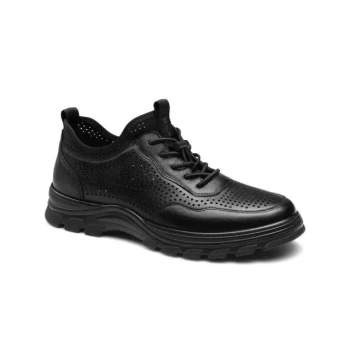
The selection of professional footwear is a fundamental control variable in rehabilitation research, acting as the foundation for valid data collection. It directly influences the accuracy of gait analysis by providing the structural support and stability necessary to prevent the user from altering their natural walk. When footwear is not standardized or professionally selected, the resulting data often reflects the subject's struggle with the equipment rather than their actual pathological or rehabilitative state.
Core Takeaway: Professional footwear stabilizes the foot and standardizes surface friction, eliminating variables that cause "atypical compensatory movements." This structural baseline is essential for precise sensor placement and capturing true Minimum Foot Clearance (MFC) data.
The Role of Stability in Data Fidelity
Minimizing Compensatory Behavior
The primary function of professional footwear in this context is to minimize atypical compensatory movements.
When a shoe lacks proper structure, users unconsciously adjust their gait to maintain balance. This introduces noise into the dataset that has nothing to do with the rehabilitation progress.
The Impact of Surface Interaction
Issues such as uneven outsole friction or insufficient wrapping around the foot can cause slipping or internal shifting.
Professional footwear mitigates these risks, ensuring that the foot remains secure and the interaction with the treadmill is consistent. This allows researchers to attribute observed movement patterns solely to the user's physiology.
Sensor Placement and Trajectory Analysis
Critical Anatomical Landmarks
Accurate gait analysis relies on the precise positioning of sensors on specific parts of the foot.
Key locations identified for optimal tracking include the heel, the proximal lower surface of the outsole, and the front-most part of the toe. Professional footwear is designed to accommodate these placements without distorting the shoe's shape.
Capturing Authentic Trajectories
By stabilizing these key points, researchers can record accurate foot movement trajectories.
This precision is non-negotiable for calculating Minimum Foot Clearance (MFC). Valid MFC data depends entirely on the sensor maintaining its position relative to the foot throughout the gait cycle.
Understanding the Trade-offs
Equipment Rigidity vs. Natural Variance
While professional footwear is critical for accuracy, it imposes a strict standard on the testing environment.
The trade-off is that researchers must prioritize safety and stability over the convenience of using a patient's personal footwear. Allowing patients to wear their own shoes might seem "natural," but it introduces uncontrolled variables—like poor friction or loose fit—that render high-precision metrics like MFC unreliable.
Making the Right Choice for Your Goal
To ensure your gait analysis yields actionable data, select footwear based on the following priorities:
- If your primary focus is User Safety: Prioritize shoes with high-quality outsoles that eliminate uneven friction and prevent slips on the treadmill.
- If your primary focus is Data Accuracy: Ensure the footwear provides sufficient wrapping to prevent the foot from sliding inside the shoe, which would decouple the foot's movement from the sensor's trajectory.
Correct footwear selection transforms gait analysis from a rough estimation into a precise, scientific measurement of rehabilitation progress.
Summary Table:
| Feature | Impact on Gait Analysis | Research Benefit |
|---|---|---|
| Structural Stability | Minimizes compensatory movements | Eliminates data noise/bias |
| Optimal Outsole Friction | Standardizes surface interaction | Prevents slips & irregular strides |
| Secure Foot Wrapping | Maintains sensor-to-foot alignment | Ensures accurate MFC trajectories |
| Standardized Design | Consistent anatomical landmarking | Enables repeatable, valid results |
Partner with 3515 for Professional Research-Grade Footwear
As a premier large-scale manufacturer serving global distributors and brand owners, 3515 delivers the structural integrity required for precise rehabilitation and performance analysis. Our comprehensive production capabilities cover all footwear types—from our flagship Safety Shoes and Tactical Boots to high-performance Training Shoes, Outdoor Shoes, and Sneakers.
Whether you need standardized footwear for clinical research or bulk supply for professional distribution, 3515 provides the quality, stability, and durability your clients demand.
Ready to elevate your footwear inventory? Contact us today to discuss your bulk requirements.
References
- Hanatsu Nagano, Rezaul Begg. Biomechanical Correlates of Falls Risk in Gait Impaired Stroke Survivors. DOI: 10.3389/fphys.2022.833417
This article is also based on technical information from 3515 Knowledge Base .
Related Products
- Lightweight Breathable Training Shoes for Wholesale & Custom OEM Manufacturing
- Custom OEM Training Shoes Wholesale Manufacturer Durable & Breathable
- Wholesale Breathable & Cushioned Training Shoes Custom Factory Production
- Wholesale Durable & Breathable Training Shoes for Custom Brands
- Wholesale Breathable Training Shoes Custom Athletic Footwear Manufacturer
People Also Ask
- Why are lightweight training shoes often preferred over professional hiking boots in urban walking? Maximize City Comfort
- What is the primary role of specialized training or orthopedic shoes? Enhance Safety in Elderly Balance Training
- Why are professional-grade training shoes essential for physical therapy? Ensure Patient Safety and Gait Stability
- Why are the slip-resistance and stability performance of training shoes critical in gait analysis? Ensure Data Accuracy
- Why is the use of flat-soled or professional training shoes essential for WBV? Maximize Vibration Energy Transfer