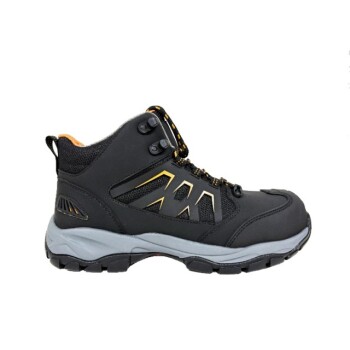
The primary importance of a composite toe boot's lightweight design is its direct impact on reducing wearer fatigue. Over a long workday, the cumulative energy required to lift your feet thousands of times is substantial, and minimizing that weight significantly slows the onset of physical exhaustion.
The core benefit of a lightweight safety boot is not just about comfort—it's a fundamental performance feature. By reducing the physical toll of constant movement, it enhances endurance, improves mobility, and ultimately contributes to a safer, more productive work environment.
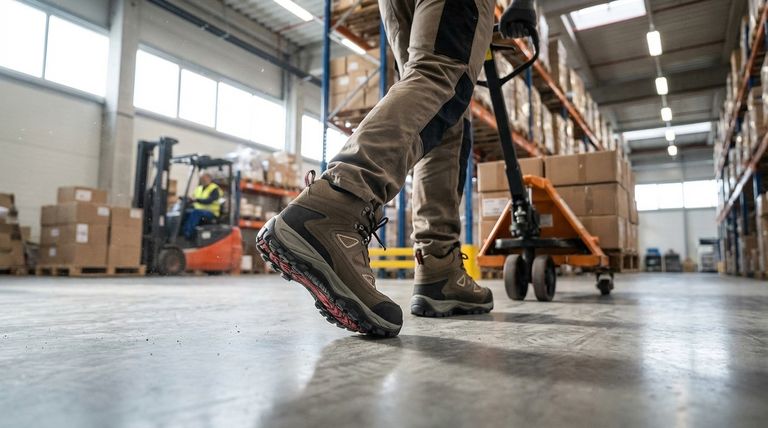
The Physics of Fatigue: Why Every Ounce Matters
The difference of a few ounces per boot might seem trivial, but its effect is magnified over the course of thousands of steps. This cumulative load is the key factor in daily physical strain.
The Cumulative Effect of Repetitive Motion
An average worker takes between 8,000 and 10,000 steps during a shift. A lighter boot reduces the energy expended on every single one of those steps, resulting in a massive conservation of energy by the end of the day.
Conserving Energy, Enhancing Endurance
By minimizing the weight you have to lift, you directly lower the metabolic cost of movement. This allows you to work longer and more efficiently before fatigue begins to compromise your performance and focus.
Reducing Musculoskeletal Strain
The constant strain of lifting heavy footwear can contribute to long-term musculoskeletal disorders (MSDs). Lightweight boots lessen this daily impact on your leg muscles, joints, and lower back.
Beyond Endurance: The Impact on Agility
Reduced weight does more than just fight fatigue; it fundamentally changes how you move. This is critical in jobs that demand more than just walking on a flat surface.
Enabling Quicker Movement
Lighter boots allow for faster reactions and more agile movement. This is crucial for navigating complex work sites, avoiding hazards, or performing tasks that require speed and precision.
Maintaining Freedom of Movement
Heavier boots can feel cumbersome and restrictive. A lightweight composite design offers a less taxing experience, providing greater freedom and a more natural range of motion without sacrificing essential protection.
Understanding the Trade-offs: Composite vs. Steel
While a composite toe is significantly lighter, it's essential to understand its place relative to the traditional steel toe. The choice involves balancing weight against other factors.
The Weight Advantage
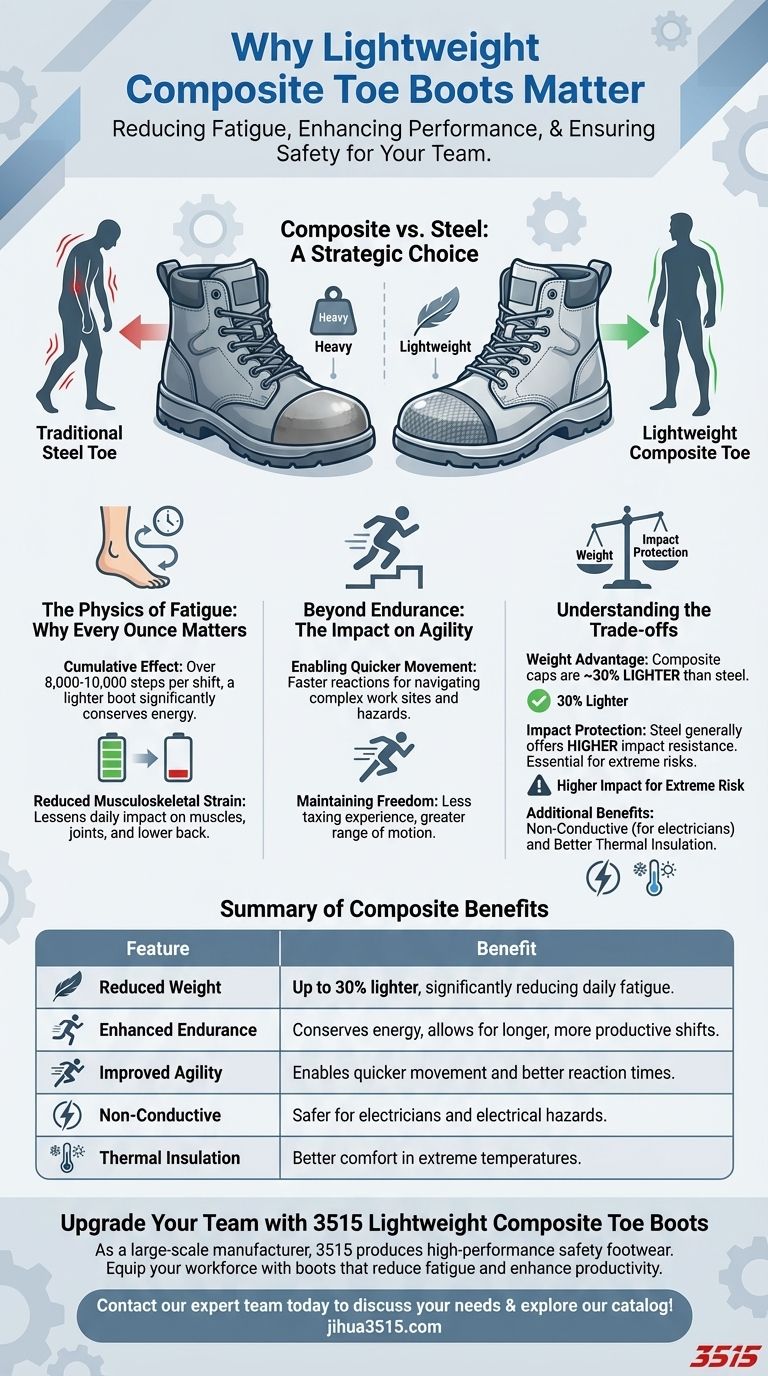
Composite toe caps are typically around 30% lighter than their steel counterparts. This is the single most significant advantage for anyone concerned with fatigue over long hours.
Impact Protection Considerations
It is critical to note that steel toes generally offer higher impact resistance than composite materials. For environments with extreme risks of heavy falling objects, steel may still be the required standard.
Additional Composite Benefits
Beyond weight, composite materials are non-conductive to electricity, making them ideal for electricians. They also do not transfer heat or cold as readily as metal, offering better thermal comfort in extreme weather.
Making the Right Choice for Your Goal
Selecting the right safety boot is about aligning its features with the specific demands of your job.
- If your primary focus is reducing daily fatigue and increasing mobility: A lightweight composite toe boot is the superior choice for long shifts that involve constant walking, climbing, or fast-paced work.
- If your primary focus is maximum impact protection in a high-risk environment: A heavier steel toe boot may be the necessary option, as it typically provides a higher level of impact rating.
- If your primary focus is working around electricity or through metal detectors: The non-metallic, non-conductive properties of composite toe boots make them the only practical solution.
Ultimately, choosing your boot based on its weight is a strategic decision that directly invests in your daily energy, safety, and long-term well-being.
Summary Table:
| Feature | Benefit |
|---|---|
| Reduced Weight | Up to 30% lighter than steel toes, significantly reducing daily fatigue. |
| Enhanced Endurance | Conserves energy over thousands of steps, allowing for longer, more productive shifts. |
| Improved Agility | Enables quicker movement and better reaction times for navigating complex work sites. |
| Non-Conductive | Safer for electricians and environments with electrical hazards. |
| Thermal Insulation | Better comfort in extreme temperatures compared to metal toes. |
Upgrade Your Team's Safety and Comfort with 3515's Lightweight Composite Toe Boots
As a large-scale manufacturer, 3515 produces a comprehensive range of high-performance safety footwear for distributors, brand owners, and bulk clients. Our production capabilities encompass all types of industrial boots, including advanced lightweight composite toe designs that prioritize worker endurance and safety without compromising on protection.
Let us help you equip your workforce with boots that reduce fatigue and enhance productivity. Contact our expert team today to discuss your specific needs and explore our catalog!
Visual Guide
Related Products
- Wholesale Durable Safety Boots Manufacturer Customizable Steel Toe Work Boots
- Durable Leather Moc Toe Work Boots for Wholesale & Custom Manufacturing
- Wholesale Mesh Steel Toe Safety Shoes with Dial Closure Factory Production
- Wholesale Durable Breathable Safety Boots Custom OEM Manufacturer
- Wholesale Customizable Safety Boots Durable & Protective Footwear Manufacturing
People Also Ask
- What are the pros and cons of steel toe work boots? A Guide to Maximum Protection vs. Comfort
- What are the different types of steel toe work boots? Choose the Right Boot for Your Job
- What is the history of steel toe work boots? From German Invention to Modern Safety Standard
- How much weight can steel toe work boots withstand? Unpacking the 3,372 lb. Safety Standard
- What are some common myths about steel toe work boots? Debunked for Modern Workers