
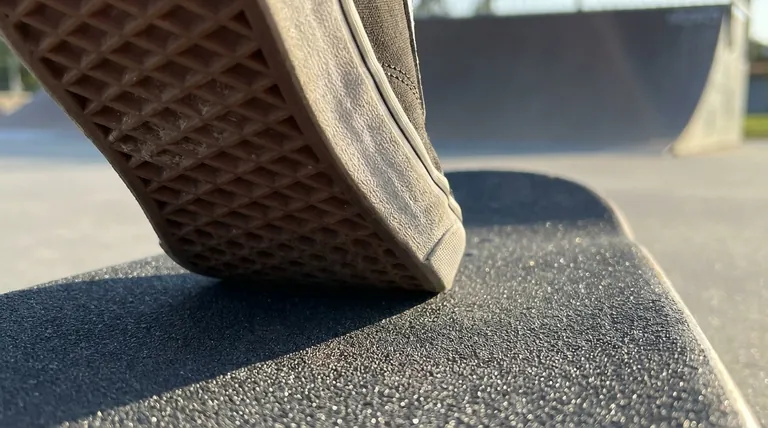
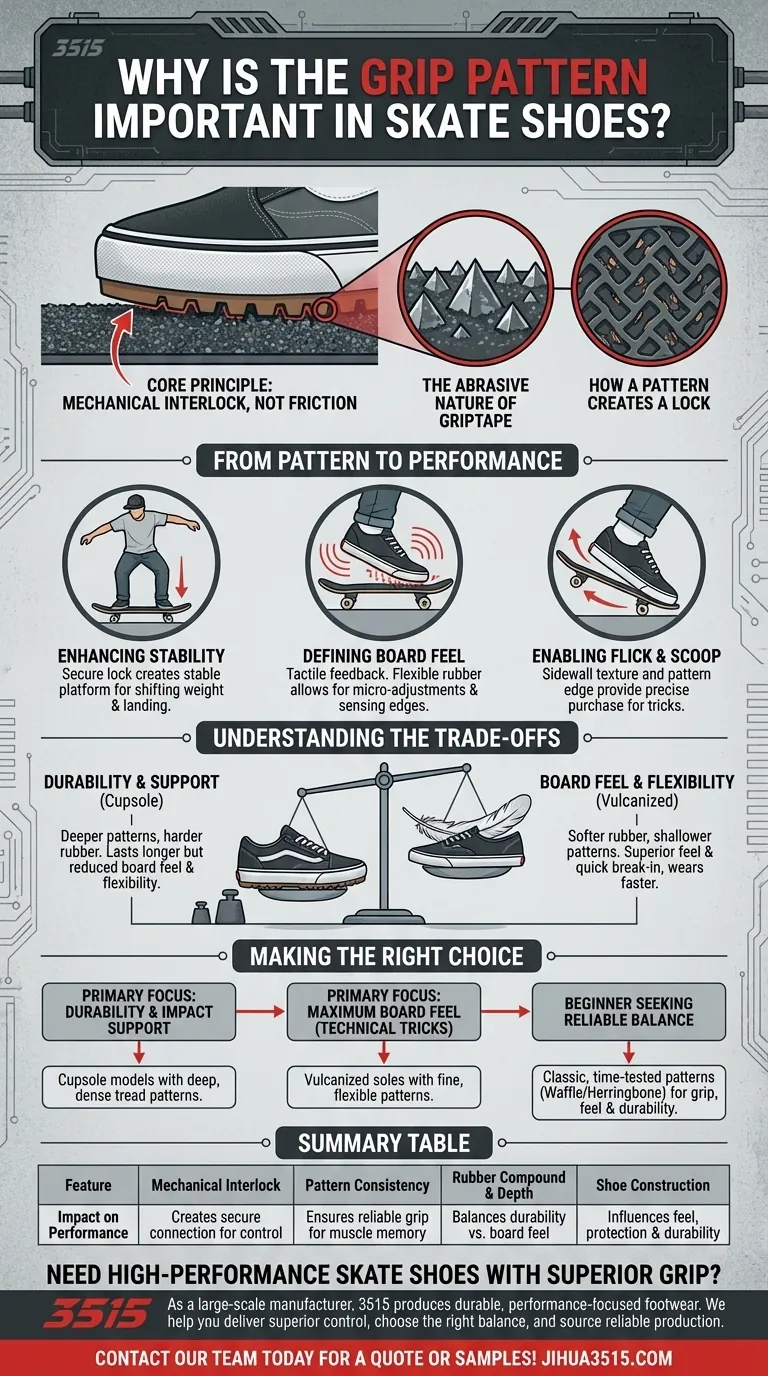
The grip pattern on a skate shoe outsole is engineered for one primary purpose: to create a predictable and consistent mechanical lock with the abrasive griptape on a skateboard deck. This connection is the foundation for virtually every aspect of control, from basic balance to complex technical tricks.
The design of a skate shoe's grip isn't for traction on the ground; it's engineered to interlock with the sharp, crystalline surface of griptape. This provides the crucial stability and board control needed to manipulate the board with your feet.
The Core Principle: Mechanical Interlock, Not Friction
To understand skate shoe grip, you must first understand the surface it interacts with. It’s a system of two interlocking parts.
The Abrasive Nature of Griptape
Griptape is essentially sandpaper for your feet. It's a sheet coated with silicon carbide grit, creating thousands of tiny, sharp points.
This surface isn't smooth; it’s designed to be grabbed. A simple, flat rubber sole would offer poor control and wear out almost instantly.
How a Pattern Creates a Lock
The grooves and channels of an outsole pattern create a series of edges and voids. These voids allow the sharp grit of the griptape to sink in and "bite" the rubber.
This creates a mechanical interlock, which is far more secure than simple friction. It prevents your feet from sliding unintentionally across the deck.
The Importance of a Consistent Design
Unlike running shoes that have varied lugs for different terrains, skate shoes use a uniform and repetitive pattern.
This consistency ensures that no matter where you place your foot on the board, or at what angle, the connection feels the same. This predictability is essential for muscle memory and executing tricks reliably.
From Pattern to Performance: How Grip Translates to Control
A good grip pattern is not just about preventing slips. It directly impacts your ability to perform and feel connected to the board.
Enhancing Stability
A secure lock between shoe and board creates a stable platform. This gives you the confidence to shift your weight for turns, set up for tricks, or absorb the impact of a landing without your feet moving from their intended position.
Defining Board Feel
Board feel is the tactile feedback a skater gets from the board through their shoes. The grip pattern plays a huge role here.
A pattern that is too deep or made of overly hard rubber can feel numb and unresponsive. A well-designed pattern uses flexible rubber and an appropriate depth to let you feel the board's concave and edges, allowing for micro-adjustments.
Enabling Flick and Scoop
Many tricks, like ollies and kickflips, require the skater to drag or "flick" the edge of their shoe against the griptape. The texture of the outsole's sidewall and the edge of the grip pattern provide the precise purchase needed to initiate the board's rotation.
Understanding the Trade-offs
No single grip pattern is perfect for everyone. The design of an outsole always involves balancing competing priorities.
Durability vs. Board Feel
Deeper, more robust patterns made from harder rubber compounds tend to last longer against the constant abrasion of griptape. However, this often comes at the cost of reduced board feel and flexibility.
Conversely, shoes with softer rubber and shallower patterns offer superior board feel and a quicker break-in period, but they will wear down much faster.
Cupsole vs. Vulcanized Construction
The shoe's construction method directly influences how the grip performs. Vulcanized shoes are "cooked" to bond a flexible, flat outsole to the upper, offering excellent board feel from day one.
Cupsole shoes use a more durable, stitched-on sole that is often stiffer and provides more impact protection. Their grip patterns are frequently designed with durability as the primary focus.
Making the Right Choice for Your Goal
Selecting a shoe is about matching its outsole characteristics to your needs as a skater.
- If your primary focus is durability and impact support: Look for shoes with deeper, more densely packed tread patterns, which are often found on cupsole models.
- If your primary focus is maximum board feel for technical tricks: Prioritize shoes with finer, more flexible patterns, which are typically seen on vulcanized soles.
- If you are a beginner seeking a reliable balance: Opt for a classic, time-tested pattern like a waffle or herringbone design that offers a proven blend of grip, feel, and durability.
Ultimately, understanding the grip pattern allows you to select a shoe that acts as a true extension of your feet, translating your intent directly to the board.
Summary Table:
| Feature | Impact on Performance |
|---|---|
| Mechanical Interlock | Creates a secure, predictable connection with griptape for control. |
| Pattern Consistency | Ensures reliable grip at any foot angle, building muscle memory. |
| Rubber Compound & Depth | Balances durability against board feel and flexibility. |
| Shoe Construction (Vulcanized/Cupsole) | Influences overall board feel, impact protection, and durability. |
Need High-Performance Skate Shoes with Superior Grip?
As a large-scale manufacturer, 3515 produces a comprehensive range of durable and performance-focused footwear for distributors, brand owners, and bulk clients. Our production capabilities encompass all types of skate shoes and boots, engineered with the precise grip patterns and construction methods detailed in this article.
We help you:
- Deliver superior board control to your customers with optimally designed outsoles.
- Choose the right balance of durability, board feel, and construction for your target market.
- Source reliable, high-volume production for your skate shoe line.
Let's discuss your specific needs. Contact our team today to get a quote or request samples!
Visual Guide
Related Products
- Wholesale Durable Camouflage Canvas Shoes with High-Traction Cleated Rubber Sole
- Advanced KPU Athletic Safety Shoe with Steel Toe Cap Anti-Slip Rotary Lacing System
- Premium Suede Sport Safety Shoes for Wholesale & Bulk Orders
- Wholesale Durable & Breathable Training Shoes for Custom Brands
- Wholesale Breathable Training Shoes Custom Athletic Footwear Manufacturer
People Also Ask
- Why is the selection of high-strength fabric materials necessary in the production of canvas shoes and training shoes?
- What are the properties of canvas as a shoe material? A Guide to Lightweight Comfort & Style
- Can canvas shoes be worn in rainy conditions? The Truth About Water Resistance
- What are some examples of vulcanized shoes? Discover the Flexibility and Board Feel of Classic Sneakers
- What are the characteristics of canvas as a shoe material? A Guide to Lightweight, Breathable Footwear



















