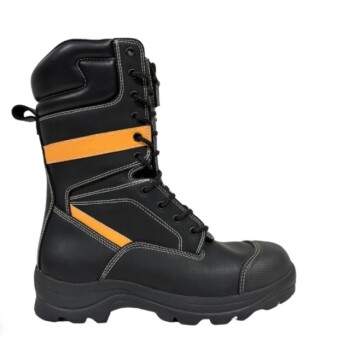
Force-Sensing Resistor (FSR) sensors act as the central nervous system for high-performance smart safety shoes. They are essential because they transform footwear from passive protective gear into active monitoring devices that measure plantar pressure distribution to detect unstable ground, worker fatigue, and improper posture in real-time.
While standard safety shoes protect against external impact, FSR sensors provide predictive capabilities. By analyzing how a worker stands and moves, these sensors identify potential slip, fall, and injury risks before they occur, significantly expanding the functional scope of industrial personal protective equipment (PPE).
From Passive Protection to Active Monitoring
The Limitations of Standard Footwear
Traditional safety shoes are designed solely to mitigate damage after an incident occurs. They protect the toes and soles from crushing or puncture but offer no insight into the conditions leading up to an accident.
The Role of Pressure Distribution
FSR sensors bridge this gap by continuously monitoring plantar pressure distribution.
They create a dynamic map of how weight is applied across the foot. This data allows the system to differentiate between normal walking patterns and the subtle shifts that indicate a loss of balance or stability.
Critical Safety Applications
Identifying Unstable Ground
One of the most immediate risks on a construction site is uneven or shifting terrain.
FSR sensors can detect the sudden, irregular pressure changes that occur when walking on unstable surfaces. This allows the system to issue immediate alerts, warning the worker of slip or fall risks before they lose their footing.
Monitoring Worker Fatigue
Fatigue is a leading cause of workplace accidents, often manifesting in changes to a worker's gait and posture.
As a worker tires, their walking pattern degrades, and their posture often slumps. FSR sensors track these biomechanical changes over time, triggering alerts when fatigue levels reach a threshold that compromises safety.
Managing Load and Musculoskeletal Health
Heavy lifting requires proper form to prevent long-term injury.
By monitoring the total load and how it is distributed through the feet, smart shoes can detect if a worker is carrying excessive weight or lifting with improper mechanics. This helps prevent immediate musculoskeletal injuries and chronic strain.
Understanding the Trade-offs
Durability in Harsh Environments
While FSR sensors add immense value, integrating electronics into footwear introduces durability challenges.
Construction environments are wet, dirty, and abrasive. High-performance smart shoes must ensure the sensors remain calibrated and functional despite constant mechanical stress and exposure to elements.
Data Interpretation Complexity
Raw pressure data is noisy and complex.
For FSR sensors to be effective, they require sophisticated algorithms to distinguish between a stumble and a normal step. Without accurate processing, users may face "alert fatigue" from false alarms, leading them to ignore genuine warnings.
Making the Right Choice for Your Safety Program
The integration of FSR technology represents a shift toward data-driven safety management.
- If your primary focus is immediate accident prevention: Prioritize systems that offer real-time haptic or auditory alerts for unstable ground and slip detection.
- If your primary focus is long-term worker health: Look for solutions that emphasize gait analysis and load monitoring to prevent chronic musculoskeletal issues.
By leveraging FSR technology, you move beyond simply clothing your workforce to actively safeguarding their every step.
Summary Table:
| Feature | Passive Safety Shoes | FSR-Integrated Smart Shoes |
|---|---|---|
| Primary Function | Impact & puncture protection | Active monitoring & predictive safety |
| Risk Detection | Post-incident mitigation | Real-time detection of slips and fatigue |
| Data Monitoring | None | Plantar pressure & gait analysis |
| Worker Health | Protects from external injury | Prevents chronic musculoskeletal strain |
| Terrain Response | Static protection | Alerts for unstable or shifting ground |
Revolutionize Your Workplace Safety with 3515 Smart Footwear Solutions
As a large-scale manufacturer serving distributors and brand owners, 3515 offers comprehensive production capabilities for all footwear types. Our flagship Safety Shoes series is anchored by cutting-edge technology like FSR sensor integration, providing your clients with more than just protection—we provide data-driven safety.
Our extensive portfolio covers work and tactical boots, outdoor shoes, training shoes, sneakers, and Dress & Formal shoes to meet your diverse bulk requirements. Partner with a manufacturer that bridges the gap between traditional craftsmanship and modern innovation.
Ready to elevate your product line with high-performance smart safety shoes?
Contact Us Today to Discuss Your Bulk Requirements
References
- Qin Xiaoxiang, Teik Hua Law. Status, opportunities, and future of smart personal protection equipment in construction site: Patent analysis. DOI: 10.53894/ijirss.v8i2.5533
This article is also based on technical information from 3515 Knowledge Base .
Related Products
- Premium Flame-Retardant Waterproof Safety Boots and Shoes
- Wholesale Durable Safety Boots | Custom Steel Toe & Puncture-Resistant Manufacturing
- Puncture-Resistant Velcro Safety Boots for Wholesale & Custom Manufacturing
- Wholesale Anti-Smash & Puncture-Proof Safety Shoes Custom Manufacturing for Brands
- Athletic Safety Shoes with Dial Closure & Steel Toe for Wholesale & Custom Manufacturing
People Also Ask
- Why are waterproof safety boots recommended for certain work environments? Essential Protection for Wet & Hazardous Jobs
- What materials are commonly used in waterproof boots? The Complete Guide to Durable, Breathable Protection
- How does boot construction affect waterproofing? The Science Behind Truly Dry Feet
- What should you look for to ensure boots are fully waterproof? The Essential 2-Part System
- What is the advantage of one-piece construction in waterproof boots? Unbeatable Seamless Protection