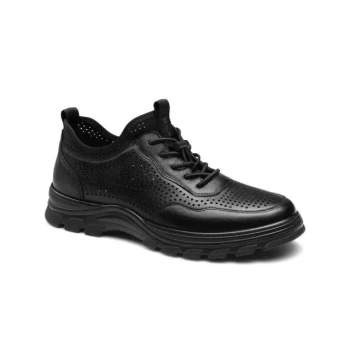
Data integrity relies on rigid sensor fixation. Structural stability in footwear is required to provide a firm physical support point for motion sensors, such as triple-axis accelerometers. Without the rigid structure found in high-quality training shoes or tactical boots, sensors are prone to displacement and vibration, which corrupts the accuracy of the spatial parameters being measured.
Accurate assessment of central nervous system control during dual-task scenarios demands the elimination of motion artifacts. Structural stability in footwear serves as the critical anchor for sensors, ensuring recorded data reflects actual limb movement rather than equipment instability.
The Mechanics of Data Accuracy
The Necessity of Stable Fixation
In dual-task walking tests, measurement accuracy is directly linked to how securely measurement devices are attached to the subject.
Structural stability in footwear creates a reliable interface between the foot and the sensor.
Training shoes and outdoor boots offer a rigid chassis that minimizes relative motion between the shoe surface and the foot.
Eliminating Motion Artifacts
When a subject performs complex tasks, any looseness in footwear can introduce motion artifacts.
These artifacts are false data points caused by the sensor jiggling or shifting, rather than the limb actually moving.
A stable shoe structure dampens these vibrations, ensuring the accelerometer data remains pure and usable.
The Challenge of Dual-Task Interference
Understanding the Testing Environment
Dual-task tests involve performing a physical activity, like walking, simultaneously with a cognitive task, such as mental arithmetic.
This combination creates dual-task interference, placing a heavy load on the subject's cognitive and motor resources.
In this complex environment, the margin for error in data collection is virtually non-existent.
Isolating Central Nervous System Control
The goal of these tests is to evaluate how the central nervous system (CNS) manages motor control under stress.
If the footwear allows for sensor movement, it becomes impossible to distinguish between a lapse in CNS control and a mechanical slip of the equipment.
Stable footwear isolates the variable, ensuring that any detected irregularity involves the subject's motor control, not their gear.
Understanding the Trade-offs
While structural stability is paramount for sensor-based walking tests, it is not the universal solution for all biomechanical assessments.
Proprioception vs. Stability
Heavily structured footwear excels at carrying sensors but may dampen plantar proprioception (the foot's ability to sense the ground).
Supplementary research suggests that for tests focusing on sensory feedback or friction—such as maintaining center of gravity on a textured mat—removing external footwear may be beneficial.
In those specific scenarios, direct tactile feedback can improve the realism of a simulation, whereas in sensor-based walking tests, that feedback is secondary to equipment stability.
Making the Right Choice for Your Goal
Selecting the appropriate footwear protocol depends entirely on the specific variable you intend to measure.
- If your primary focus is motion sensor accuracy: Prioritize footwear with high structural stability, such as tactical boots, to anchor accelerometers and eliminate data noise.
- If your primary focus is proprioceptive feedback: Consider protocols involving textured mats or barefoot conditions to maximize the subject's tactile perception of the physical support.
By matching the footwear characteristics to your data requirements, you ensure the validity of your biomechanical analysis.
Summary Table:
| Feature | Importance in Dual-Task Walking Tests | Benefit to Data Collection |
|---|---|---|
| Rigid Chassis | Provides a firm physical support point for sensors | Minimizes relative motion and sensor displacement |
| Dampening Effect | Reduces mechanical vibrations during movement | Eliminates motion artifacts and false data points |
| Stable Interface | Maintains a consistent link between foot and sensor | Ensures spatial parameters reflect actual limb movement |
| Variable Isolation | Distinguishes equipment slip from CNS lapses | Validates motor control irregularities under stress |
Partner with 3515 for High-Performance Technical Footwear
As a large-scale manufacturer serving global distributors and brand owners, 3515 offers comprehensive production capabilities for all footwear types, anchored by our flagship Safety Shoes series.
Our extensive portfolio covers work and tactical boots, outdoor shoes, training shoes, and sneakers, as well as Dress & Formal shoes designed to meet diverse bulk requirements. Whether you need the structural stability required for biomechanical research or the durability demanded by professional use, our footwear delivers the precision and quality your brand deserves.
Ready to elevate your product line? Contact us today to discuss your bulk manufacturing needs and discover the value of 3515 craftsmanship.
References
- Chi Ieong Lau, Ying-Yi Liao. Can transcranial direct current stimulation combined with interactive computerized cognitive training boost cognition and gait performance in older adults with mild cognitive impairment? a randomized controlled trial. DOI: 10.1186/s12984-024-01313-0
This article is also based on technical information from 3515 Knowledge Base .
Related Products
- Lightweight Breathable Training Shoes for Wholesale & Custom OEM Manufacturing
- Custom OEM Training Shoes Wholesale Manufacturer Durable & Breathable
- Wholesale Breathable & Cushioned Training Shoes Custom Factory Production
- Wholesale Durable & Breathable Training Shoes for Custom Brands
- Wholesale Breathable Training Shoes Custom Athletic Footwear Manufacturer
People Also Ask
- Why are lightweight training shoes often preferred over professional hiking boots in urban walking? Maximize City Comfort
- What is the primary role of specialized training or orthopedic shoes? Enhance Safety in Elderly Balance Training
- Why are professional-grade training shoes essential for physical therapy? Ensure Patient Safety and Gait Stability
- Why are the slip-resistance and stability performance of training shoes critical in gait analysis? Ensure Data Accuracy
- Why is the use of flat-soled or professional training shoes essential for WBV? Maximize Vibration Energy Transfer