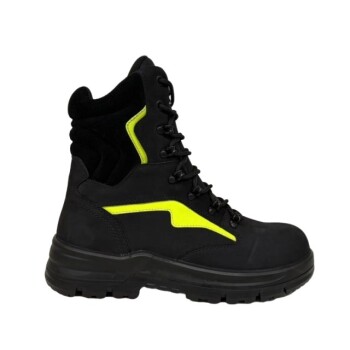
The primary function of an industrial padder is to ensure the uniform impregnation of protective chemical solutions into footwear fabrics. Through a specific "dip-pad" mechanism, the machine uses roller pressure to force the functional sol beyond the surface and deep into the fiber interior, ensuring consistent coverage and precise chemical pickup.
By mechanically driving the coating solution into the fabric structure, the padder controls the weight gain rate and prevents surface irregularities. This step is essential for guaranteeing that protective properties—such as flame retardancy or waterproofing—are distributed evenly to avoid localized failures.
The Mechanics of Uniform Impregnation
Forced Penetration via Roller Pressure
The core mechanism of the industrial padder relies on roller pressure.
Instead of allowing the solution to passively coat the outer layer, the rollers exert force to push the functional sol into the fiber interior.
This ensures that the coating exists not just on the surface, but also within the gaps between fibers.
Precise Control of Weight Gain
The padder operates at a constant speed to maintain consistency.
By regulating both speed and pressure, manufacturers can achieve a precise weight gain rate.
This metric dictates exactly how much chemical solution is retained by the fabric, which is critical for meeting safety specifications.
Ensuring Protective Reliability
Preventing Localized Functional Failure
The ultimate goal of the padding process is to eliminate weak points in the fabric's protection.
Without uniform penetration, the resulting nanofilms (whether hydrophobic, antibacterial, or flame-retardant) would be uneven.
The padder prevents these localized failures, ensuring the safety features function correctly across every millimeter of the material.
Preparing for Chemical Bonding
While the padder handles physical impregnation, it sets the stage for the chemical reactions that follow.
By ensuring the sol surrounds the fibers, the padder maximizes the surface area available for the subsequent curing phase.
This preparation allows functional groups to effectively react with hydroxyl groups on the fiber surface, creating the hydrogen or covalent bonds necessary for durability.
Critical Process Variables
The Risks of Improper Calibration
If the roller pressure is uneven or the speed fluctuates, the functional sol will not penetrate uniformly.
This leads to "surface-only" coatings that may peel off or fail under mechanical wear.
Impact on Long-Term Durability
The padder does not cure the fabric, but it dictates the success of the curing oven's work.
If the padder fails to force the sol into the fiber gaps, the heat treatment cannot form a solid, adherent film.
This results in poor adhesion and reduced durability against repeated washing.
Optimizing the Finishing Process
To ensure the highest quality protective footwear, manufacturers must align the padding parameters with their specific performance goals.
- If your primary focus is Consistency: Prioritize the calibration of roller pressure to ensure the sol penetrates the fiber interior uniformly, preventing "blind spots" in protection.
- If your primary focus is Durability: Ensure the weight gain rate is optimized so that enough sol is present to form strong chemical bonds during the subsequent curing and drying phases.
The industrial padder is the defining variable that transforms a standard textile into a reliable, high-performance safety material.
Summary Table:
| Process Component | Key Function | Benefit for Footwear |
|---|---|---|
| Roller Pressure | Forces sol into fiber interior | Prevents surface-only coating and peeling |
| Dip-Pad Mechanism | Ensures consistent chemical pickup | Eliminates localized functional failures |
| Speed Control | Maintains precise weight gain rate | Guarantees compliance with safety specs |
| Surface Preparation | Maximizes fiber surface area | Enhances chemical bonding for wash durability |
Elevate Your Product Standards with 3515’s Advanced Manufacturing
As a large-scale manufacturer serving global distributors and brand owners, 3515 leverages precision industrial processes to deliver high-performance footwear that exceeds safety requirements. Our flagship Safety Shoes series and tactical boots benefit from rigorous finishing techniques, ensuring every pair offers consistent flame retardancy, waterproofing, and durability.
Whether you need bulk production for work boots, outdoor shoes, or formal dress footwear, our comprehensive capabilities are at your service. Contact us today to discuss your specific requirements and discover how our expertise in protective material finishing can add value to your brand.
References
- Nurul Hidayah, Noreen Farzuhana Mohd Zulkifli. Sol-Gel Finishing for Protective Fabrics. DOI: 10.33263/briac133.283
This article is also based on technical information from 3515 Knowledge Base .
Related Products
- Wholesale Customizable Safety Boots Durable & Protective Footwear Manufacturing
- Durable Steel Toe Safety Boots Wholesale & Custom Manufacturing
- Wholesale Mesh Steel Toe Safety Shoes with Dial Closure Factory Production
- Wholesale Anti-Smash & Puncture-Proof Safety Shoes Custom Manufacturing for Brands
- Wholesale Durable Safety Boots | Custom Steel Toe & Puncture-Resistant Manufacturing
People Also Ask
- Why are industrial safety boots with steel toes necessary for machine operators? Essential Foot Protection for Safety
- What is the history of steel toe work boots? From German Invention to Modern Safety Standard
- What are the different types of steel toe work boots? Choose the Right Boot for Your Job
- What are the pros and cons of steel toe work boots? A Guide to Maximum Protection vs. Comfort
- What common features do safety toe work boots share regardless of style? Essential Protection Explained