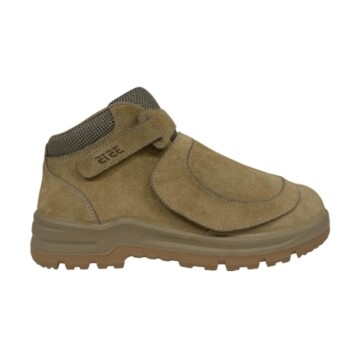
Standard footwear provides a critical tactical advantage by acting as a seamless integration platform: it allows for complete hands-free operation of metal detection systems. By embedding sensors directly into the shoe soles, the system converts the user's natural walking motion into a continuous ground scanning mechanism, removing the physical burden of carrying and maneuvering heavy manual detection equipment.
By shifting detection hardware to the feet, this design transforms a passive activity—walking—into an active security measure. It eliminates upper-body fatigue and frees the hands for other essential tasks, ensuring consistent monitoring without hindering the user's primary movements.
Operational Efficiency and Ergonomics
Leveraging Natural Biomechanics
The core innovation lies in utilizing the user's inherent stride. Rather than requiring a separate, deliberate sweeping motion with a handheld device, the system scans automatically as the user moves. Every step effectively becomes a scan of the immediate path.
Eliminating Manual Burden
Traditional metal detection requires the constant use of arms and hands to operate heavy wands or sensor arrays. Footwear integration completely removes this weight from the upper body. This allows operators to maintain high energy levels and focus, as the physical strain is offloaded to the legs, which are naturally adapted for weight bearing.
Navigating Complex Environments
Enhanced Agility in Difficult Terrain
Carrying handheld equipment can be cumbersome when traversing uneven or dense landscapes. Smart footwear allows the user to navigate complex terrain with full agility. The detection system does not alter the user's center of gravity or impede balance, which is vital for safety in hazardous zones.
Sustaining Long-Duration Operations
Fatigue is a significant risk factor during extended security patrols or demining operations. Because the system requires no manual intervention to function, it significantly improves user comfort over long periods. Operators can maintain a state of readiness for longer durations compared to those burdened by handheld units.
Understanding the Operational Trade-offs
Scan Path Limitations
Because the sensors are embedded in the soles, the detection area is strictly limited to the user's walking path. Unlike a handheld wand, which can be extended to sweep a wide area or check overhead obstacles, footwear systems only scan the ground directly beneath the foot.
Dependence on Walking Motion
The system relies on the "natural walking motion" for continuous scanning. This implies that stationary detection—scanning an area without stepping on it—may be less intuitive or impossible compared to a device that can be waved over a specific spot while standing still.
Strategic Application for Mission Success
To determine if footwear-integrated detection fits your operational needs, consider the specific requirements of the mission:
- If your primary focus is hands-free readiness: This platform is ideal for armed patrols or scenarios where operators must handle other equipment while moving.
- If your primary focus is operator endurance: Select this system for long-duration missions where arm fatigue from handheld detectors would degrade performance over time.
This integration ultimately redefines metal detection from a cumbersome task into an intuitive, background process that protects the user with every step.
Summary Table:
| Feature | Footwear-Integrated Detection | Traditional Handheld Detectors |
|---|---|---|
| Operation | Hands-free (Natural walking) | Manual sweeping required |
| Ergonomics | Low upper-body fatigue | High arm/shoulder strain |
| Mobility | High agility on complex terrain | Equipment can impede balance |
| Detection Path | Strictly limited to walking path | Wide, flexible sweep area |
| Best For | Long-duration patrols & security | Targeted stationary scanning |
Partner with 3515 for Advanced Footwear Solutions
As a large-scale manufacturer serving global distributors and brand owners, 3515 offers comprehensive production capabilities for all footwear types. Whether you are developing smart wearable technology or need rugged tactical gear, our flagship Safety Shoes series provides the perfect foundation for innovation.
Our extensive portfolio covers work and tactical boots, outdoor shoes, training shoes, sneakers, and Dress & Formal shoes to meet your diverse bulk requirements. Let us bring our manufacturing expertise to your next project, ensuring superior quality and durability for your target customers.
Ready to elevate your product line? Contact us today to discuss your manufacturing needs!
References
- Pushpa Kotipalli. Design and Implementation of a Smart Wearable Metal Detection and GPS Tracking System Using Arduino UNO. DOI: 10.22214/ijraset.2025.74546
This article is also based on technical information from 3515 Knowledge Base .
Related Products
- Premium Suede Metatarsal Guard Safety Boots Work Shoes
- Premium Lightweight Safety Shoes for Wholesale & Bulk Orders
- Durable High-Ankle Tactical Boots Wholesale Manufacturer for Custom & Bulk Orders
- Puncture-Resistant Velcro Safety Boots for Wholesale & Custom Manufacturing
- Durable High-Ankle Tactical Boots for Wholesale & Custom Manufacturing
People Also Ask
- How does metatarsal protection in safety footwear work? The Essential Guide to Foot Safety
- What is a metatarsal guard in safety boots? Essential Protection for Your Entire Foot
- How do metatarsal guards enhance work shoe safety? Prevent Crushing Foot Injuries on the Job
- What does the 'MT' in ASTM F2413-18 stand for? Essential Metatarsal Protection Explained
- What is metatarsal protection in safety boots? Essential Defense for Top-of-Foot Hazards