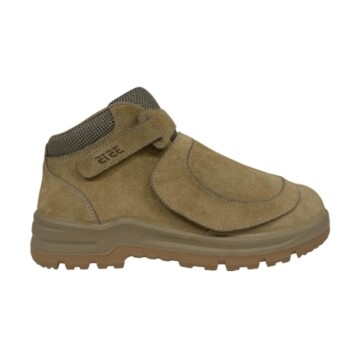
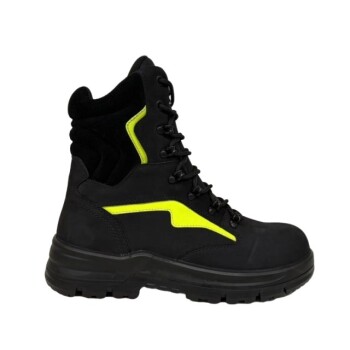
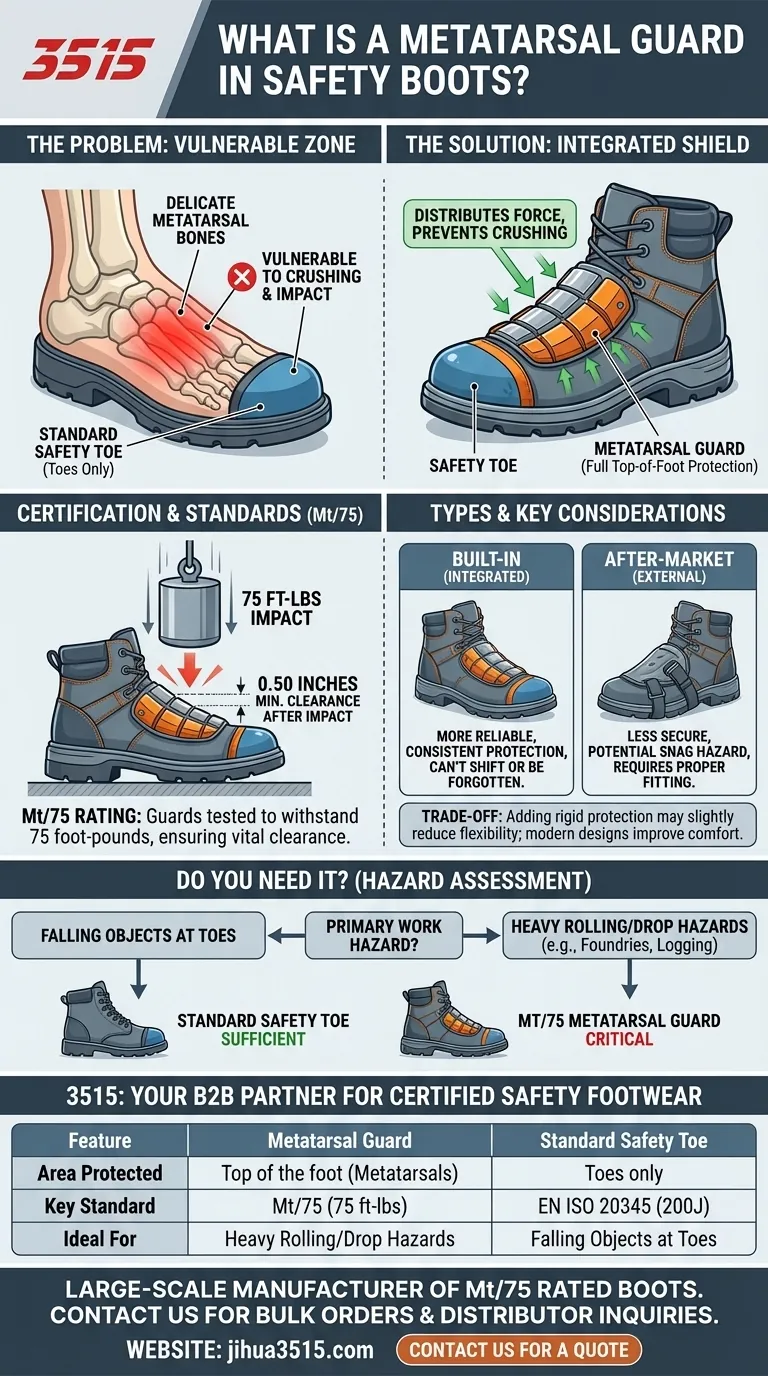
A metatarsal guard is a crucial piece of safety armor built into or added onto a work boot that extends protection beyond the standard safety toe. It is specifically designed to shield the delicate metatarsal bones—the long bones on the top of your foot that connect your toes to your ankle—from severe impact and crushing injuries.
The core difference between a standard safety boot and one with a metatarsal guard is the area of protection. While a safety toe protects your toes, a metatarsal guard shields the entire top of your foot from heavy drop and compression hazards.
Why a Standard Safety Toe Isn't Always Enough
To understand the need for a metatarsal guard, it's important to first recognize the limitations of a standard safety toe cap.
The Role of a Toecap
A safety toecap is a mandatory feature in certified safety footwear, designed to protect the toes from direct impact. According to safety standards like EN ISO 20345, it must be able to withstand a significant impact force (e.g., 200 Joules).
This component is excellent at its job but only covers the very front of the foot.
The Vulnerability of Metatarsal Bones
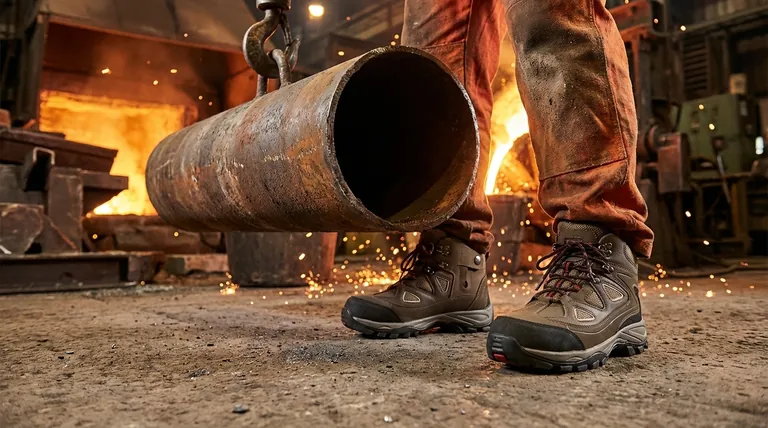
The top of your foot is a complex structure of long, relatively fragile bones called metatarsals. These bones are highly susceptible to fracture from crushing forces, such as a heavy pipe rolling off a truck or a piece of equipment falling flat onto your foot.
A standard toecap offers zero protection against this type of top-down impact.
How a Guard Bridges the Protection Gap
A metatarsal guard acts as a protective shield covering this vulnerable upper foot region. It effectively creates a bridge of armor from the safety toe back towards the ankle, distributing the force of an impact across a wider, more resilient area.
Understanding the Certification and Design
Metatarsal guards are not just extra padding; they are engineered components tested to rigorous standards to ensure they perform under extreme force.
The Mt/75 Standard
A common North American standard is Mt/75. This rating indicates the boot's guard is tested to protect the metatarsal area from an impact of 75 foot-pounds.
This test involves dropping a 50 lb weight from a specified height onto the guard.
The Critical Element of Clearance
During testing, the key measurement is the amount of clearance, or space, remaining under the guard after impact. For a men's boot to pass the Mt/75 standard, it must maintain a minimum of 0.50 inches (½ inch) of clearance.
This ensures the guard itself doesn't collapse and crush the foot it is meant to protect.
Key Considerations and Trade-offs
While offering superior protection, metatarsal guards have practical implications you should consider.
Built-in vs. After-Market
Metatarsal guards can be either internal (built directly into the boot's construction) or external (strapped or laced onto the outside).
Integrated, built-in guards are considered far more reliable and protective. They cannot shift, snag, or be forgotten, ensuring consistent and properly positioned protection when you need it most.
Flexibility and Comfort
Adding a rigid protective layer to the top of the foot can sometimes reduce the boot's overall flexibility. Modern designs using advanced composite materials have greatly improved comfort, but it remains a factor to consider, especially if your job requires frequent squatting or kneeling.
Do You Need a Metatarsal Guard?
Use your primary job hazards to determine the right level of protection for your needs.
- If your primary risk is from falling objects aimed at your toes: A boot with a certified steel or composite toecap is likely sufficient.
- If you work with heavy rolling objects or have significant drop hazards (e.g., foundries, welding, heavy manufacturing, logging): A boot with an integrated Mt/75-rated metatarsal guard is a critical safety requirement.
- If you need maximum flexibility for constant movement: Carefully evaluate if your daily hazard assessment justifies the added protection, as a standard safety toe boot will offer more freedom of movement.
Choosing the right level of protection starts with accurately assessing the specific hazards of your environment.
Summary Table:
| Feature | Metatarsal Guard | Standard Safety Toe |
|---|---|---|
| Area Protected | Top of the foot (metatarsal bones) | Toes only |
| Key Standard | Mt/75 (75 ft-lbs impact) | EN ISO 20345 (200 Joules) |
| Ideal For | Heavy rolling/drop hazards (e.g., manufacturing, logging) | Falling objects aimed at toes |
Need the right safety footwear for your team?
As a large-scale manufacturer, 3515 produces a comprehensive range of certified safety boots and work footwear for distributors, brand owners, and bulk clients. Our production capabilities include boots with integrated Mt/75-rated metatarsal guards, ensuring maximum protection and comfort for your workforce.
Contact us today to discuss your specific safety footwear requirements and get a quote.
Visual Guide
Related Products
- Premium Suede Metatarsal Guard Safety Boots Work Shoes
- Premium Grain Leather Safety Boots for Bulk Supply
- High Performance Fire-Retardant Waterproof Safety Boots
- Premium High-Cut Waterproof Safety Boots Manufacturing & Wholesale Solutions
- Wholesale Durable Safety Boots | Custom Steel Toe & Puncture-Resistant Manufacturing
People Also Ask
- How does metatarsal protection in safety footwear work? The Essential Guide to Foot Safety
- How do metatarsal guards enhance work shoe safety? Prevent Crushing Foot Injuries on the Job
- What does the 'MT' in ASTM F2413-18 stand for? Essential Metatarsal Protection Explained
- What is metatarsal protection in safety boots? Essential Defense for Top-of-Foot Hazards
- What does metatarsal protection in ASTM standards involve? Essential Guide to Instep Safety