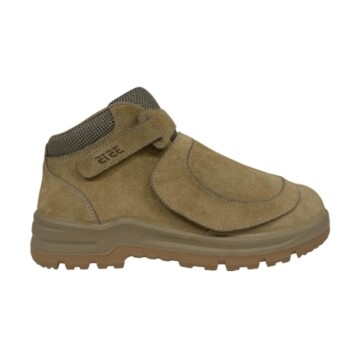
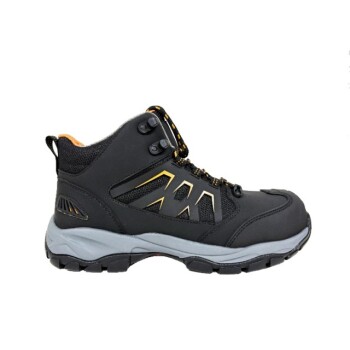
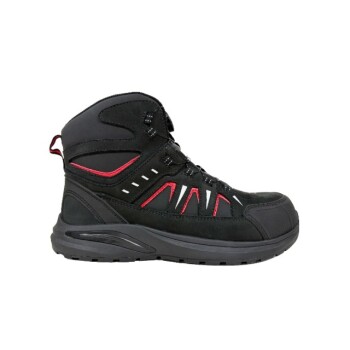
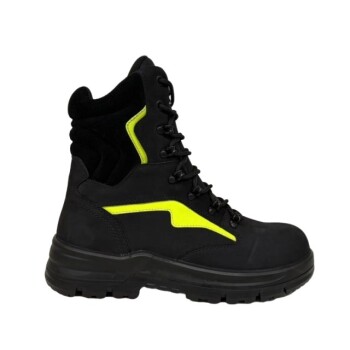
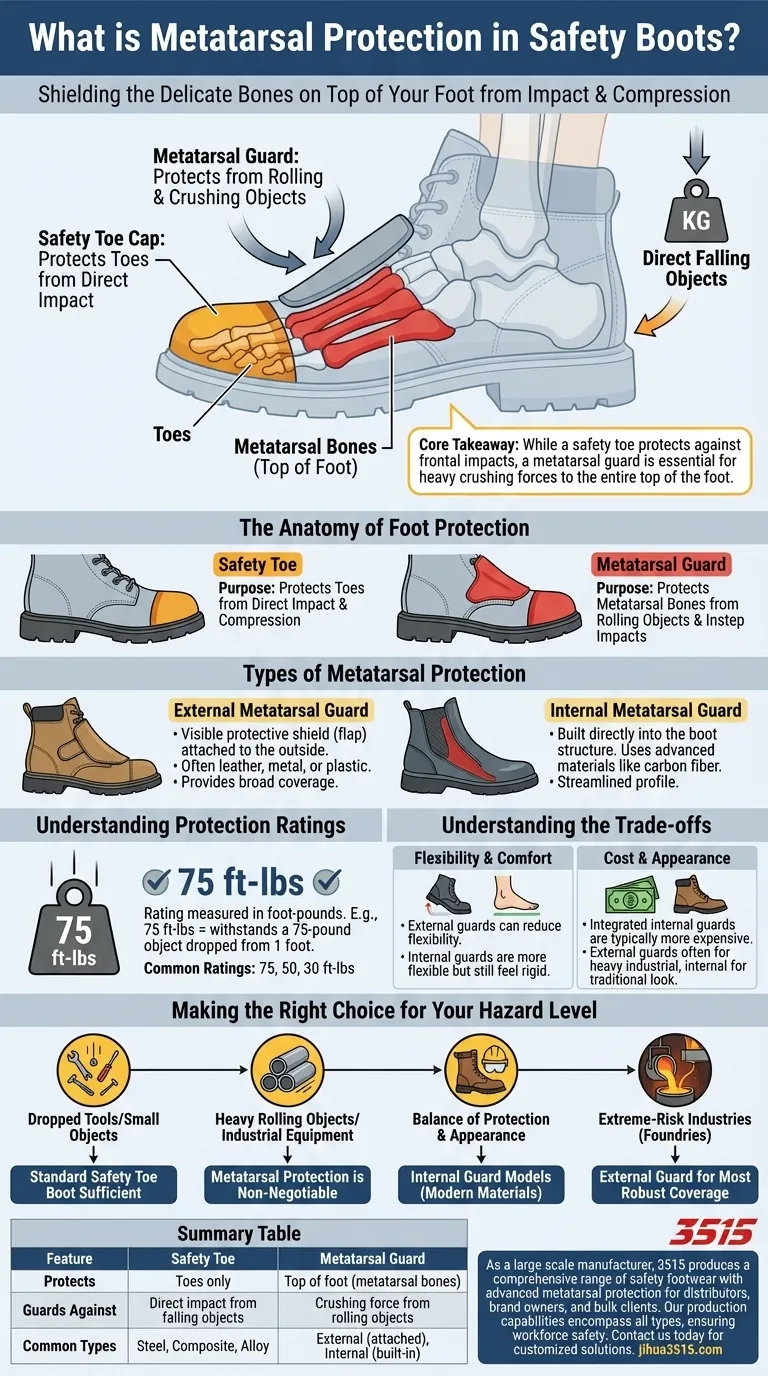
In simple terms, metatarsal protection is a specialized safety feature in work boots designed to shield the long, delicate bones on the top of your foot from impact and compression. Unlike a standard safety toe cap which only protects the toes, a metatarsal guard extends that protection up the instep, defending against crushing injuries from heavy rolling or falling objects.
The core takeaway is that while a safety toe protects you from a direct frontal impact, a metatarsal guard is essential for environments with a high risk of crushing force or impact to the entire top of the foot.
The Anatomy of Foot Protection: Metatarsal vs. Safety Toe
To understand the need for metatarsal protection, it's crucial to distinguish it from the more common safety toe. They serve two different, but complementary, purposes.
The Role of the Safety Toe
The safety toe cap is a mandatory feature in all safety-rated footwear. It is a reinforced box at the very front of the boot.
Its sole purpose is to protect your toes from direct impact and compression, such as from a heavy object falling straight down onto them.
The Role of the Metatarsal Guard
The metatarsal guard protects the five long metatarsal bones that connect your toes to the rest of your foot.
This guard is designed specifically to absorb and deflect the energy from heavy rolling objects (like pipes or cylinders) or impacts that land behind the safety toe.
Types of Metatarsal Protection
Metatarsal protection is not a one-size-fits-all feature. It is typically implemented in one of two ways, each with its own characteristics.
External Metatarsal Guards
As the name implies, an external guard is a visible protective shield attached to the outside of the boot.
It often looks like a hinged flap made of leather, metal, or durable plastic that sits on top of the laces, providing a broad area of protection.
Internal Metatarsal Guards
An internal guard is built directly into the boot's structure, hidden beneath the outer material.
These guards use advanced materials like carbon fiber or specialized composites to provide protection without altering the boot's external appearance, offering a more streamlined profile.
Understanding Protection Ratings
Metatarsal guards are rated for their impact resistance, measured in foot-pounds (ft-lbs).
Common ratings are 75, 50, or 30 ft-lbs. A 75 ft-lb rating, for example, means the guard can withstand a 75-pound object being dropped on it from a height of one foot without causing injury.
Understanding the Trade-offs
Choosing a boot with metatarsal protection involves balancing safety needs with practical considerations.
Flexibility and Comfort
Metatarsal guards, particularly external models, can add weight and reduce the boot's overall flexibility.
While modern internal guards are significantly more flexible than older designs, they still create a more rigid feel across the top of the foot compared to a standard boot.
Cost and Appearance
Boots with integrated metatarsal protection are typically more expensive due to the advanced materials and construction.
External guards are often found on heavy-duty industrial boots where function is prioritized over aesthetics, while internal guards allow for a more traditional work boot appearance.
Making the Right Choice for Your Hazard Level
Selecting the correct boot is a matter of accurately assessing your daily work environment and its specific risks.
- If your primary hazard is from dropped tools or small falling objects: A standard safety toe boot may be sufficient for your needs.
- If you work with heavy rolling objects like pipes, cylinders, or industrial equipment: Metatarsal protection is a non-negotiable safety requirement.
- If you need a balance of high protection and a traditional boot appearance: Seek out models with internal metatarsal guards made from modern composite materials.
- If your work is in extreme-risk industries like foundries or heavy fabrication: An external metatarsal guard will typically offer the most robust and extensive coverage.
Ultimately, choosing the right level of foot protection is about understanding your specific risks and equipping yourself to mitigate them effectively.
Summary Table:
| Feature | Safety Toe | Metatarsal Guard |
|---|---|---|
| Protects | Toes only | Top of foot (metatarsal bones) |
| Guards Against | Direct impact from falling objects | Crushing force from rolling objects |
| Common Types | Steel, Composite, Alloy | External (attached), Internal (built-in) |
As a large-scale manufacturer, 3515 produces a comprehensive range of safety footwear with advanced metatarsal protection for distributors, brand owners, and bulk clients.
Our production capabilities encompass all types of safety shoes and boots, including models with both internal and external metatarsal guards, ensuring your workforce is protected against specific workplace hazards.
Contact us today to discuss your safety footwear needs and get a customized solution.
Visual Guide
Related Products
- Premium Suede Metatarsal Guard Safety Boots Work Shoes
- Wholesale Leather Safety Boots with Customizable Protective Toe
- Premium Wholesale Waterproof Safety Boots High Performance Protection for Industrial Markets
- Wholesale Durable Safety Boots | Custom Steel Toe & Puncture-Resistant Manufacturing
- Premium Grain Leather Safety Boots for Bulk Supply
People Also Ask
- How does metatarsal protection in safety footwear work? The Essential Guide to Foot Safety
- What is a metatarsal guard in safety boots? Essential Protection for Your Entire Foot
- How do metatarsal guards enhance work shoe safety? Prevent Crushing Foot Injuries on the Job
- What does the 'MT' in ASTM F2413-18 stand for? Essential Metatarsal Protection Explained
- What does metatarsal protection in ASTM standards involve? Essential Guide to Instep Safety