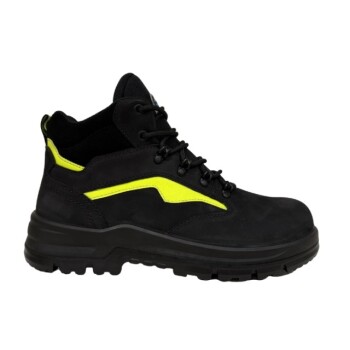
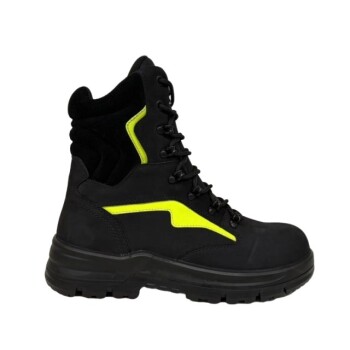
Choosing the right size in PVC work boots is the first and most critical step toward ensuring comfort, safety, and practicality on the job. A boot that is too large or too small is not just uncomfortable—it can become a significant hazard, making it impractical and unsafe to wear in demanding work environments.
The number on the box is only the starting point. True "sizing" involves selecting a boot that provides a proper fit, integrates the right protective features for your specific environment, and supports you through your daily physical activities.
Why a "Proper Fit" Goes Beyond a Number
A proper fit is about more than just matching your shoe size. It's the foundation of all-day comfort and on-the-job safety. An ill-fitting boot is a constant distraction and can lead to serious issues.
The Problem with a Poor Fit
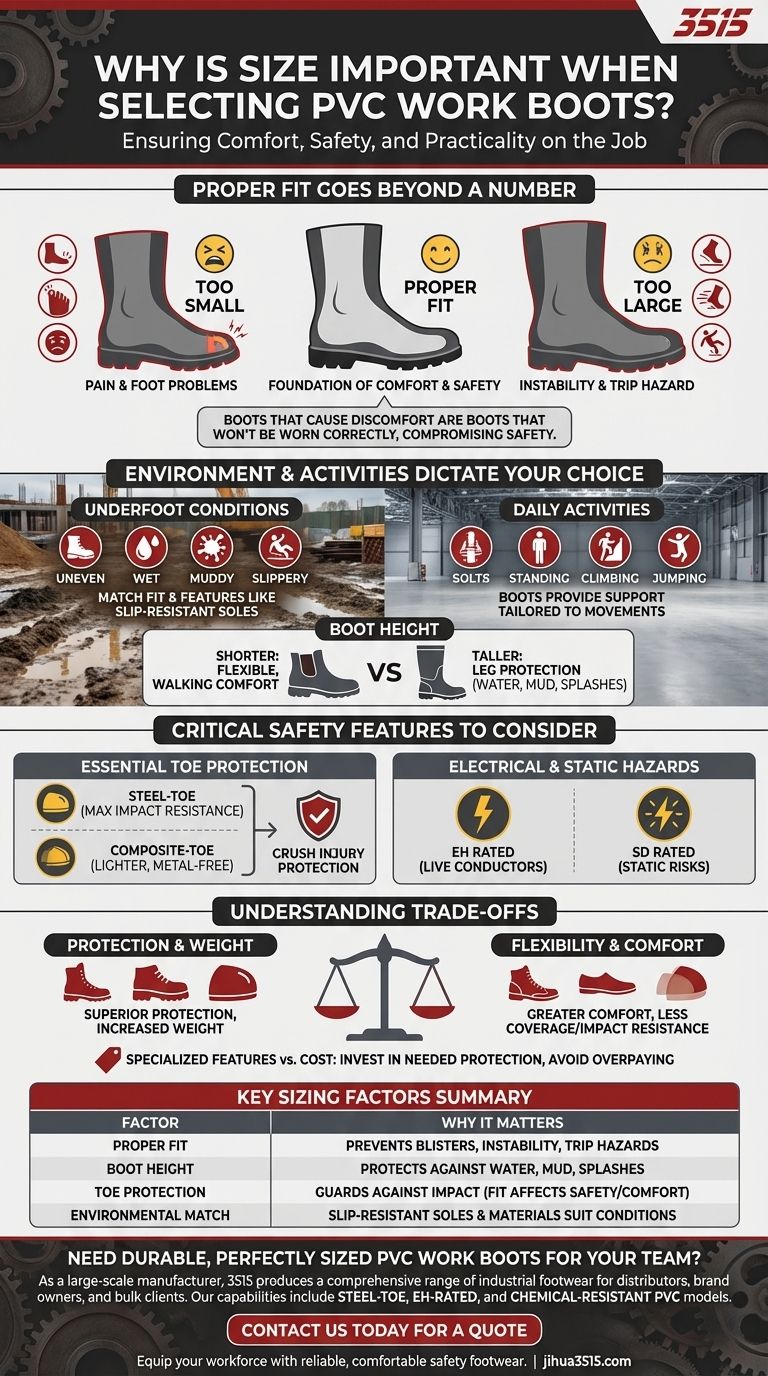
Boots that are too small can cause immediate pain and long-term foot problems. Boots that are too large allow your foot to slide, creating friction, instability, and a serious trip hazard.
The Impact on Practicality
Simply put, boots that cause discomfort are boots that won't be worn correctly, if at all. This can compromise safety compliance and leave you unprotected.
How Your Environment Dictates Your Choice
The ideal boot is an extension of your body, perfectly suited to the environment you work in. You must consider the specific demands of your workplace.
Analyzing Underfoot Conditions
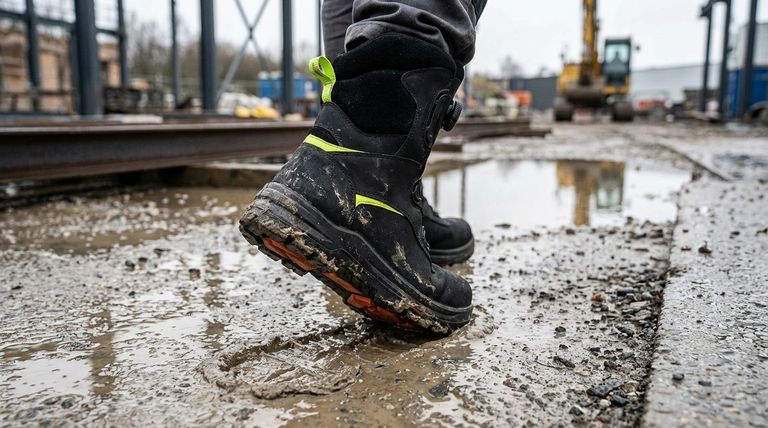
Think about the surfaces you walk on daily. Are they uneven, wet, muddy, or slippery? The boot's fit and features, like slip-resistant soles, must match these conditions.
Matching the Boot to Your Activities
Your daily tasks matter. A person standing on concrete for ten hours has different needs than someone frequently climbing ladders or jumping from a truck. The right boot provides support tailored to these movements.
The Importance of Boot Height
The height of the boot is a crucial factor. Taller boots provide significantly more protection for your feet and lower legs against water, mud, and chemical splashes.
Critical Safety Features to Consider
Once you have a sense of the right fit and environmental needs, you must evaluate the specific safety technologies built into the boot.
Essential Toe Protection
Steel-toe boots offer maximum impact resistance, while composite-toe options provide a lighter, metal-free alternative. Both are designed to protect you from crushing injuries.
Electrical and Static Hazards
If you work near live conductors, Electrical Hazard (EH) rated footwear is essential. For environments where static electricity is a risk, Static Discharge (SD) rated boots are required to prevent sparks.
Material Quality and Durability
Look for high-grade PVC that resists cracking and chemicals. Verifying industry-standard safety certifications ensures the boot has been tested and meets required performance levels.
Understanding the Trade-offs
Selecting the right boot always involves balancing competing priorities. Being aware of these trade-offs allows you to make an informed decision.
Protection vs. Flexibility
Taller, more rigid boots offer superior protection from splashes and impacts but may restrict ankle movement. Shorter, more flexible boots are often more comfortable for walking but offer less coverage.
Weight vs. Durability
Features like steel toes and thick, slip-resistant outsoles add incredible protection but also increase the boot's weight. Lighter composite materials may be more comfortable for long days but might offer different levels of impact resistance.
Specialized Features vs. Cost
Boots with advanced ratings for electrical hazards, static discharge, or chemical resistance are critical for specific jobs but often come at a higher price. It's crucial to invest in the protection you need without overpaying for features your environment doesn't demand.
Making the Right Choice for Your Goal
Your final selection should be guided by your primary need. Use your specific work environment as the ultimate filter for making a decision.
- If your primary focus is safety in hazardous environments: Prioritize boots with certified steel or composite toes, appropriate height for splash protection, and any necessary EH or SD ratings.
- If your primary focus is all-day comfort for long periods of standing: Focus on a precise fit, supportive insoles, and a lighter-weight design, such as one with a composite toe.
- If your primary focus is durability and performance in wet or muddy conditions: Select taller boots made from high-grade, crack-resistant PVC with deep, slip-resistant treads.
Ultimately, the right PVC work boot is the one that allows you to focus on your work, not on your feet.
Summary Table:
| Key Sizing Factor | Why It Matters |
|---|---|
| Proper Fit | Prevents blisters, instability, and trip hazards from loose or tight boots. |
| Boot Height | Taller boots protect against water, mud, and chemical splashes. |
| Toe Protection | Steel or composite toes guard against impact; fit affects safety and comfort. |
| Environmental Match | Slip-resistant soles and materials must suit your workplace conditions. |
Need durable, perfectly sized PVC work boots for your team?
As a large-scale manufacturer, 3515 produces a comprehensive range of industrial footwear for distributors, brand owners, and bulk clients. Our production capabilities encompass all types of safety boots, including steel-toe, EH-rated, and chemical-resistant PVC models, tailored to your specific sizing and safety requirements.
Contact us today for a quote and let us help you equip your workforce with reliable, comfortable safety footwear.
Visual Guide
Related Products
- Wholesale Customizable Safety Boots Durable & Protective Footwear Manufacturing
- Wholesale Heavy-Duty Waterproof Steel Toe Work Boots OEM Manufacturer
- Durable Leather Moc Toe Work Boots for Wholesale & Custom Manufacturing
- Durable Leather Work Boots for Wholesale & Custom Manufacturing
- Durable Leather Work Boots for Wholesale & Custom OEM Manufacturing
People Also Ask
- Why are industrial safety boots with steel toes necessary for machine operators? Essential Foot Protection for Safety
- What is the history of steel toe work boots? From German Invention to Modern Safety Standard
- What are the different types of steel toe work boots? Choose the Right Boot for Your Job
- What are the pros and cons of steel toe work boots? A Guide to Maximum Protection vs. Comfort
- What common features do safety toe work boots share regardless of style? Essential Protection Explained