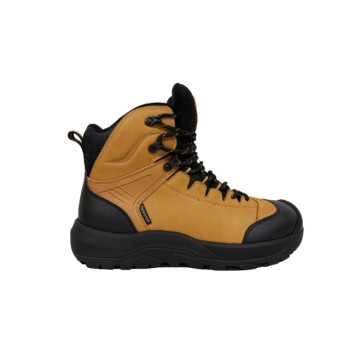
In short, restoration is cost-effective because it allows you to replace the worn-out components of a high-quality work boot, primarily the sole, for a fraction of the cost of buying a new pair. This strategy significantly extends the life of your initial investment, turning a single purchase into a tool that can last for many years.
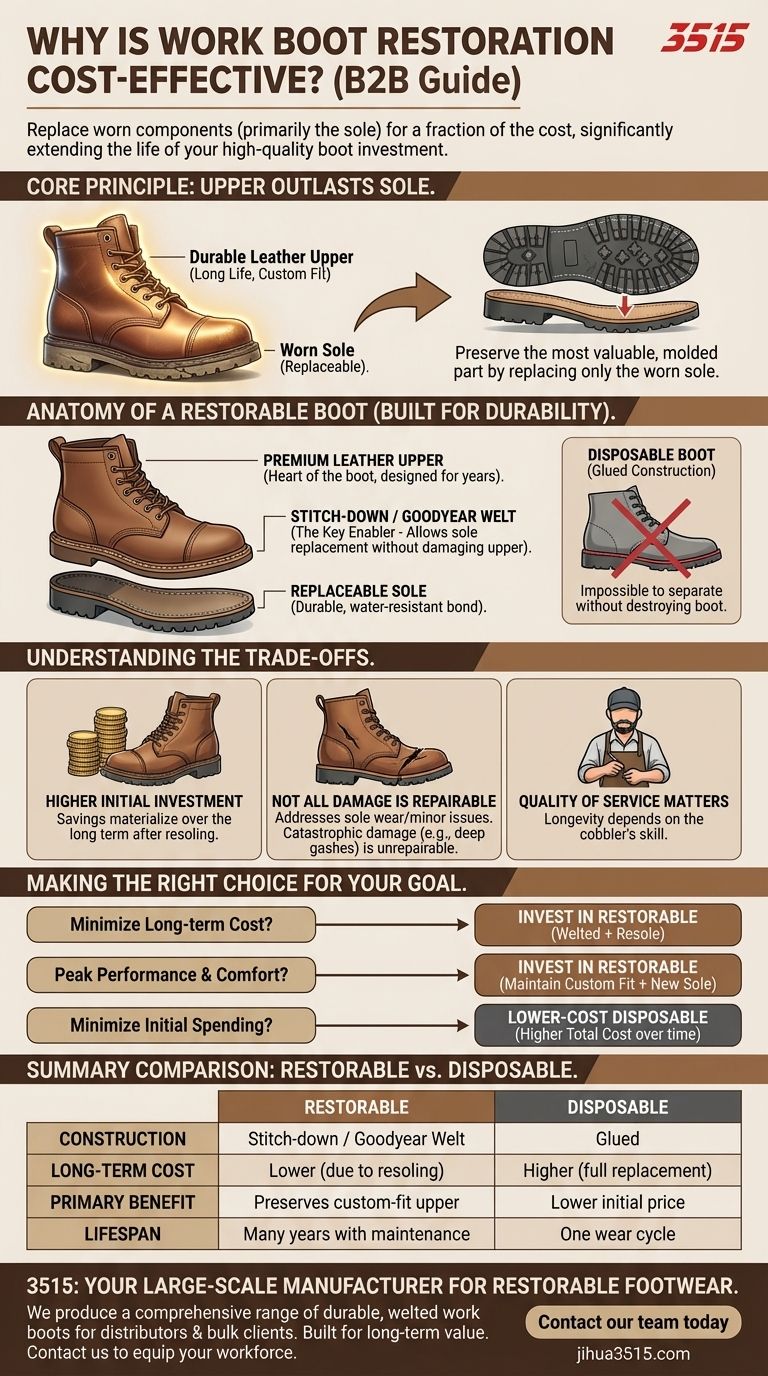
The core principle behind restoration's value is simple: the durable leather upper of a premium work boot is designed to outlast its sole. By replacing the sole, you are preserving the most valuable and comfortable part of the boot—the part that has molded perfectly to your foot.
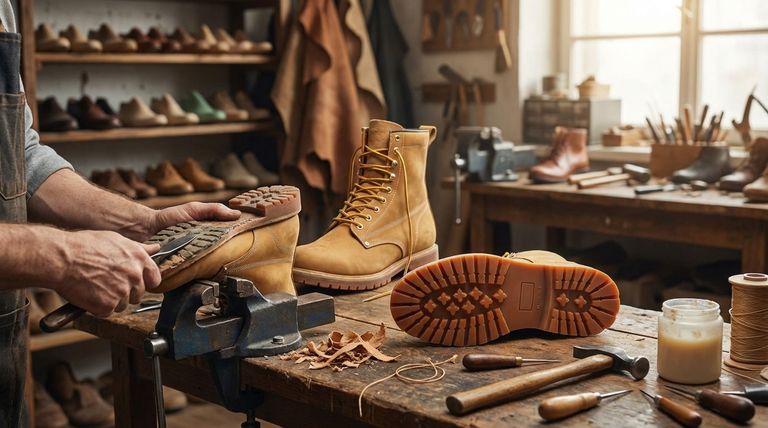
The Anatomy of a Restorable Boot
To understand the cost-effectiveness of restoration, you must first understand why certain boots are built for it while others are disposable. The difference lies entirely in their initial construction and material quality.
Built for Durability, Not Disposal
High-quality work boots are engineered as a long-term system. They use robust construction methods and premium materials with the explicit expectation that certain parts will be replaced over time.
This contrasts sharply with cheaper, disposable boots that are often glued together, making it impossible to separate and replace the sole without destroying the entire boot.
The Foundation: Premium Leather Uppers
The leather upper is the heart of the boot. It provides protection, support, and, once broken in, a custom fit that can't be replicated. This part is designed to endure years of abuse.
The economic logic of restoration hinges on the fact that this valuable upper remains perfectly functional long after the sole has worn down from constant use.
The Key Enabler: Welted Construction
The most critical feature for restorability is a stitch-down or Goodyear welt. This is a method where a strip of leather (the welt) is stitched to both the upper and the sole.
This construction creates a durable, water-resistant bond that also allows a skilled cobbler to easily cut the old stitches, remove the worn sole, and attach a new one without ever compromising the integrity of the boot's upper.
Understanding the Trade-offs
While restoration is a powerful economic tool, it's essential to approach it with a clear understanding of its requirements and limitations.
The Initial Investment is Higher
Boots built with welted construction and premium leather carry a significantly higher upfront cost than their glued-together counterparts. The cost-saving benefits of restoration only materialize over the long term, after the first or second resoling.
Not All Damage is Repairable
Restoration primarily addresses wear and tear on the sole and minor issues with the upper. Catastrophic damage, such as deep gashes through the leather, severe chemical burns, or a rotten insole, can render a boot unrepairable.
The Quality of Service Matters
The longevity of a restored boot is directly dependent on the skill of the cobbler performing the work. A poor resoling job can lead to premature failure or compromise the boot's water resistance and comfort.
Making the Right Choice for Your Goal
Deciding whether to invest in restorable boots depends entirely on your long-term objectives.
- If your primary focus is minimizing long-term cost: Investing in a high-quality, welted boot and resoling it is the most economical strategy over a multi-year period.
- If your primary focus is peak performance and comfort: Restoration allows you to maintain the custom fit of a perfectly broken-in upper while renewing the sole for maximum traction and support.
- If your primary focus is minimizing initial spending: A lower-cost, non-restorable boot will be cheaper upfront but will need to be replaced entirely, leading to higher costs over time.
Ultimately, treating your work boots as a maintainable piece of equipment, rather than a disposable commodity, is the key to unlocking their true economic value.
Summary Table:
| Aspect | Restorable Boot | Disposable Boot |
|---|---|---|
| Construction | Stitch-down / Goodyear Welt | Glued |
| Long-term Cost | Lower (due to resoling) | Higher (full replacement) |
| Primary Benefit | Preserves custom-fit upper | Lower initial price |
| Lifespan | Many years with maintenance | One wear cycle |
As a large-scale manufacturer, 3515 produces a comprehensive range of durable, restorable footwear for distributors, brand owners, and bulk clients. Our production capabilities encompass all types of welted work boots designed for long-term value and cost-effectiveness. Let us help you equip your workforce with boots built to last. Contact our team today to discuss your footwear needs and discover the 3515 advantage.
Visual Guide
Related Products
- Durable Goodyear Welt Leather Work Boots for Wholesale & Private Label
- Wholesale Durable Leather Work Boots | 8-Inch Goodyear Welt Manufacturer
- Wholesale Leather Work Boots with Customizable Wedge Sole for Brands
- Durable Leather Moc Toe Work Boots for Wholesale & Custom Manufacturing
- Durable Moc Toe Wedge Sole Work Boots for Wholesale and Private Label
People Also Ask
- What is the difference between full-grain and top-grain leather? Premium Material Guide for Boot Manufacturers
- What are the advantages of leather as an upper material for work boots? Unmatched Durability & Custom Comfort
- Why is it important to waterproof leather work boots? Protect Your Investment and Performance
- How should new leather work boots be broken in? A Guide to Comfort and Durability
- What are the advantages of leather uppers in work boots? Unmatched Durability & Protection