Puncture resistance is required on job sites primarily to safeguard workers from serious foot injuries caused by sharp objects. These injuries can occur when items like nails, screws, glass shards, or scrap metal penetrate the sole of a worker's footwear. The mandate for puncture-resistant footwear is a direct response to the inherent hazards present in environments where such sharp debris is common.
Puncture-resistant footwear is a non-negotiable safety feature on job sites where sharp objects pose a penetration risk. Its requirement stems directly from the need to prevent debilitating foot injuries and ensure worker well-being against common workplace hazards.
The Critical Need for Puncture Protection
Identifying the Hazard
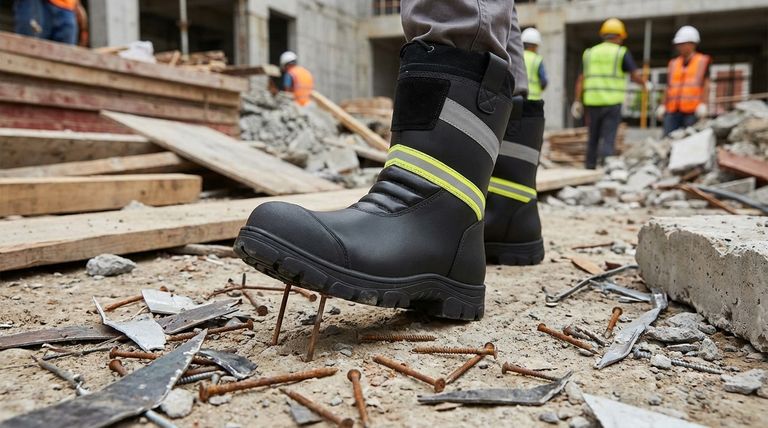
Many industrial and construction environments are rife with sharp debris. This can include stray nails, discarded screws, broken glass, or jagged pieces of scrap metal. These items often lie unnoticed on walking surfaces.
Preventing Serious Injury
When a worker steps on such an object, it can easily pierce through a standard shoe sole. This can lead to deep wounds, infections, and significant downtime for the worker. Puncture-resistant footwear creates a barrier against this specific threat.
How Puncture Protection Works
The Protective Layer
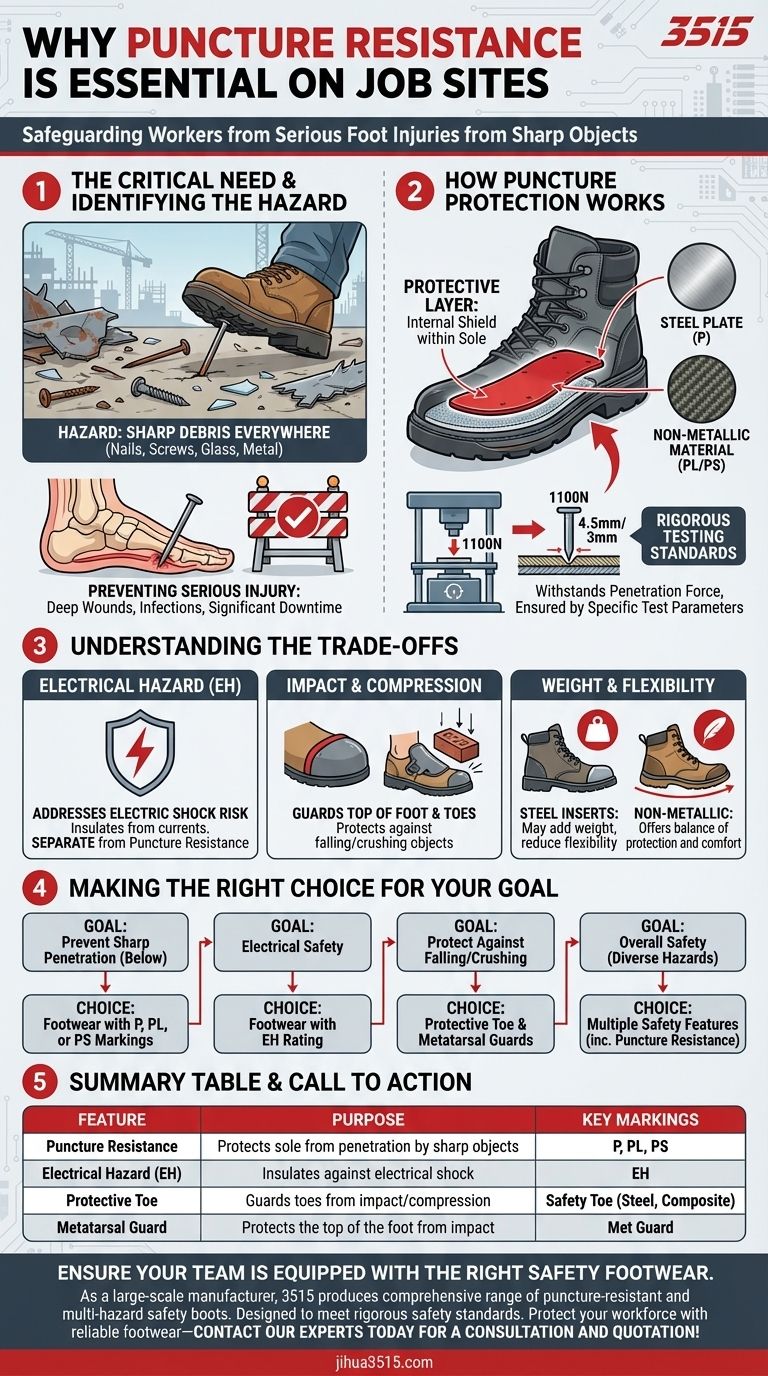
Puncture-resistant footwear incorporates a protective layer within the sole. This layer is typically made from specialized materials designed to withstand penetration. It acts as a shield between the foot and the ground.
Material Composition
Historically, steel plates (marked 'P') were common for puncture resistance. Modern alternatives include non-metallic materials (marked 'PL' or 'PS'). These non-metallic options can offer flexibility while still providing robust protection.
Rigorous Testing Standards
The effectiveness of puncture-resistant materials is ensured through specific test parameters. These tests involve applying a significant force (e.g., 1100N) with a standardized nail (e.g., 4.5mm or 3mm diameter) to ensure the material can resist penetration.
Understanding the Trade-offs
Differentiating Safety Features
Puncture resistance is one of several critical safety features for footwear. It is important to understand its distinct purpose compared to others.
Not for Electrical Hazards
Electrical hazard (EH) protection addresses the risk of electric shock when working with electricity. This is a separate requirement and function from puncture resistance. EH-rated footwear insulates the wearer from electrical currents.
Not for Impact or Compression
Metatarsal protection and protective toe caps (like steel or composite toes) safeguard the top of the foot and toes from impact and compression injuries. These protect against falling objects or crushing forces, which is different from sole penetration.
Weight and Flexibility Considerations
While essential for safety, puncture-resistant plates can add some weight and reduce sole flexibility, especially with steel inserts. Modern non-metallic options often mitigate these aspects, offering a balance of protection and comfort.
Making the Right Choice for Your Goal
If your primary focus is preventing sharp object penetration from below: Prioritize footwear with clear puncture resistance markings (P, PL, or PS). If your primary focus is electrical safety: Ensure your footwear also carries an electrical hazard (EH) rating. If your primary focus is protecting against falling or crushing objects: Select footwear with protective toe caps and metatarsal guards. If your primary focus is overall foot safety in diverse hazardous environments: Choose footwear that combines multiple safety features, including puncture resistance, as dictated by a thorough job site hazard assessment.
Understanding the specific hazards of a job site is paramount to selecting the correct protective footwear and ensuring worker safety.
Summary Table:
| Feature | Purpose | Key Markings |
|---|---|---|
| Puncture Resistance | Protects sole from penetration by sharp objects (nails, glass, metal). | P, PL, PS |
| Electrical Hazard (EH) | Insulates against electrical shock. | EH |
| Protective Toe | Guards toes from impact/compression from falling objects. | Safety Toe (e.g., Steel, Composite) |
| Metatarsal Guard | Protects the top of the foot from impact. | Met Guard |
Ensure your team is equipped with the right safety footwear. As a large-scale manufacturer, 3515 produces a comprehensive range of puncture-resistant and multi-hazard safety boots for distributors, brand owners, and bulk clients. Our production capabilities encompass all types of protective shoes and boots, designed to meet rigorous safety standards. Protect your workforce with reliable footwear—contact our experts today for a consultation and quotation!
Visual Guide
Related Products
- Puncture-Resistant Velcro Safety Boots for Wholesale & Custom Manufacturing
- Wholesale Durable Safety Boots | Custom Steel Toe & Puncture-Resistant Manufacturing
- Wholesale Anti-Smash & Puncture-Proof Safety Shoes Custom Manufacturing for Brands
- Wholesale Durable Breathable Safety Boots Custom OEM Manufacturer
- Premium High-Cut Waterproof Safety Boots Manufacturing & Wholesale Solutions
People Also Ask
- Why are industrial safety boots with steel toes necessary for machine operators? Essential Foot Protection for Safety
- What are the characteristics of steel toe safety boots? Maximum Protection, Key Trade-offs
- Is it true that steel toes can cause toes to get cut off? Debunking the Dangerous Myth
- What are the primary safety functions of safety boots with steel-toe designs? Essential Protection for Industry
- What do the symbols M, F, I, and C represent on safety toe boots? Decode ASTM F2413 for Maximum Protection