
In the manufacturing industry, protective footwear is a non-negotiable requirement because it serves as the primary line of defense against severe, and often permanent, foot injuries. It is specifically designed to counteract common workplace hazards such as crushing impacts from heavy objects, punctures from sharp materials, and exposure to dangerous chemicals or extreme temperatures.
The necessity of protective footwear goes beyond simple impact resistance. The true goal is to match the specific protective features of the footwear—such as impact, puncture, chemical, or thermal resistance—to the precise, identified risks of a given manufacturing role.
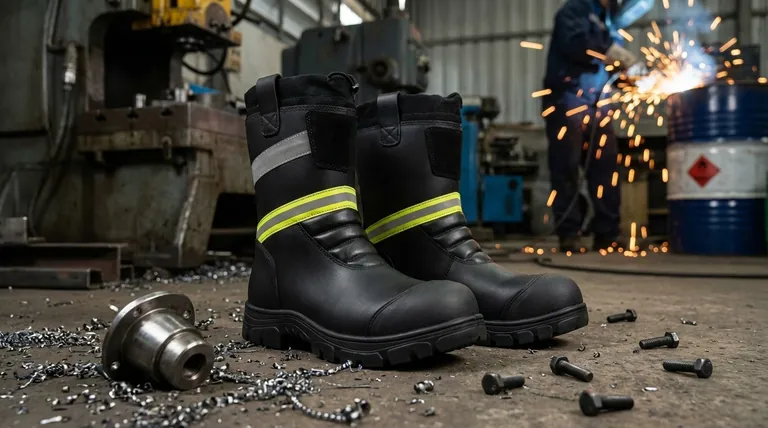
The Core Risks in a Manufacturing Environment
A factory floor presents multiple, often overlapping, hazards to a worker's feet. Understanding these specific dangers clarifies why standard shoes are inadequate and specialized footwear is essential for safety.
Guarding Against Impact and Compression
The most common hazard is falling or rolling objects. A dropped tool, a piece of machinery, or a heavy material can cause severe crushing injuries.
Protective footwear incorporates a reinforced toe cap, often made of steel or composite materials, designed to withstand significant force and protect the toes from being crushed.
Shielding from Punctures
Floors in manufacturing and assembly areas can be littered with sharp objects like nails, screws, metal shavings, or broken materials.
Many safety boots include a puncture-resistant plate embedded in the midsole, which prevents these sharp objects from piercing the sole and injuring the foot.
Resisting Chemical and Thermal Hazards
Specialized manufacturing environments, such as chemical plants, introduce unique dangers that require an even higher level of protection.
Workers in these areas may need flame-resistant (FR) boots to protect against sudden combustion or thermal hazards. Boots made from specific materials can also prevent dangerous chemicals from being absorbed through the footwear and coming into contact with the skin.
Common Pitfalls to Avoid
Simply mandating "safety shoes" is not enough. Choosing the wrong type of footwear or ignoring a proper fit can create new problems and undermine the intended safety benefits.
The Critical Importance of a Proper Fit
An ill-fitting boot is more than just uncomfortable; it's a safety hazard in itself. Footwear that is too loose or too tight can cause blisters, chronic pain, and instability.
This discomfort not only distracts the worker but can also lead to trips and falls. A proper fit is as crucial as the shoe's technical safety ratings.
Mismatching the Boot to the Task
There is no one-size-fits-all safety boot. A heavy-duty, steel-reinforced boot designed for a foundry is unnecessarily cumbersome and fatiguing for a worker in a light assembly role.
Conversely, a lightweight safety shoe will not provide adequate protection in a heavy industrial setting. A thorough risk assessment of the specific job is required to select the appropriate level of protection.
Making the Right Choice for Your Goal
Selecting the correct protective footwear requires you to align its features with the primary risks of your specific role.
- If your primary focus is working in general warehousing or light assembly: Prioritize a certified safety toe for impact protection along with features that ensure all-day comfort and slip resistance.
- If your primary focus is heavy industry or material fabrication: You must select footwear with maximum impact resistance and puncture-proof soles.
- If your primary focus is handling chemicals or working near high heat: Specialized boots with documented chemical and flame-resistant (FR) properties are mandatory.
- If your primary focus is preventing long-term strain and fatigue: Ensure a professional fitting is part of the selection process, as a proper fit is the foundation of both safety and comfort.
Ultimately, viewing protective footwear not as an obligation but as a specialized tool is the key to ensuring a safer and more productive work environment.
Summary Table:
| Risk Category | Key Protective Features | Common Applications |
|---|---|---|
| Impact & Compression | Steel/Composite Toe Cap | Warehousing, Material Handling |
| Punctures | Puncture-Resistant Midsole Plate | Construction, Metal Fabrication |
| Chemical & Thermal Hazards | Chemical/Flame-Resistant (FR) Materials | Chemical Plants, Foundries |
| Fatigue & Discomfort | Ergonomic Design & Proper Fit | All Roles for Long-Term Health |
Need the right protective footwear for your workforce?
As a large-scale manufacturer, 3515 produces a comprehensive range of certified safety footwear for distributors, brand owners, and bulk clients. We offer boots and shoes with features like steel toes, puncture-resistant soles, and chemical/FR protection, tailored to your specific industry hazards.
Contact us today for a consultation to ensure your team's safety and compliance with high-quality, durable footwear solutions.
Visual Guide

Related Products
- Wholesale Customizable Safety Boots Durable & Protective Footwear Manufacturing
- Premium Suede Sport Safety Shoes for Wholesale & Bulk Orders
- Wholesale Anti-Smash & Puncture-Proof Safety Shoes Custom Manufacturing for Brands
- Premium Safety Shoes with Rotating Buckle Safety Sneakers
- Premium Lightweight Safety Shoes for Wholesale & Bulk Orders
People Also Ask
- Why are industrial safety boots with steel toes necessary for machine operators? Essential Foot Protection for Safety
- What is the history of steel toe work boots? From German Invention to Modern Safety Standard
- What are the different types of steel toe work boots? Choose the Right Boot for Your Job
- What are the pros and cons of steel toe work boots? A Guide to Maximum Protection vs. Comfort
- What industries are safety toe work boots best suited for? Protect Your Feet in High-Risk Environments



















