
Proper motorbike boot sizing is a non-negotiable aspect of rider safety, not a matter of simple preference. An incorrect fit directly compromises the boot's ability to protect you in a crash and can severely impair your ability to control the motorcycle. It is the foundation upon which the boot's other safety features are built.
An improperly sized motorcycle boot is more than an inconvenience; it's a critical failure of your safety equipment. The right fit ensures the boot's protective armor stays in place during an impact and allows for the precise control needed to operate your bike safely.
The Critical Link Between Fit and Safety
Many riders focus on a boot's armor and materials, but the most advanced protection is useless if it's not in the right place when you need it. Sizing is what guarantees that placement.
How a Loose Boot Fails
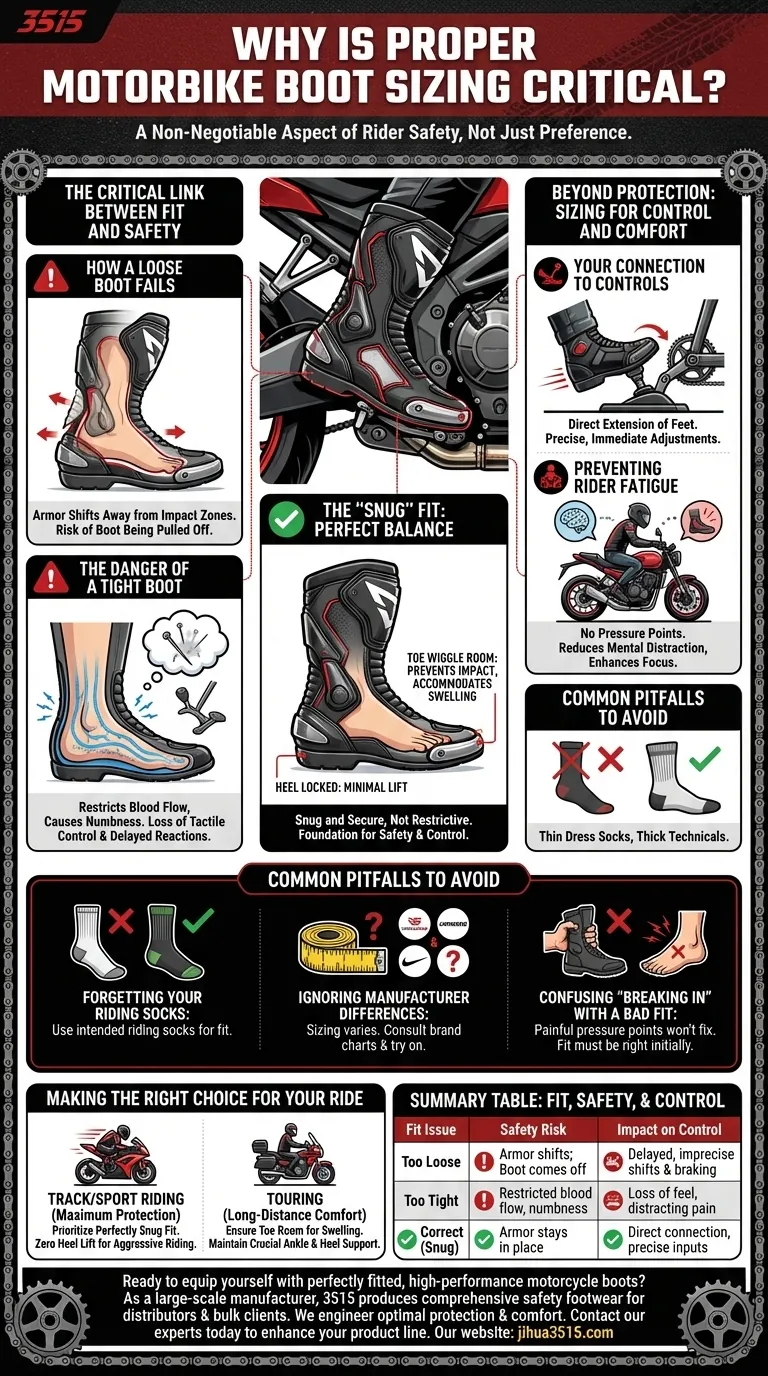
A boot that is too large presents a significant danger. During a slide or tumble, the internal space allows your foot to move, causing the rigid armor over your ankle, heel, and shin to shift away from the areas it's meant to protect.
In a worst-case scenario, a loose boot can be pulled off your foot entirely, leaving you with no protection whatsoever.
The Danger of a Tight Boot
A boot that is too tight is equally hazardous. It restricts blood flow, which can lead to numbness and a distracting "pins and needles" sensation.
This loss of feeling is particularly dangerous as it dulls your tactile connection to the gear shifter and rear brake pedal. This can result in missed shifts or a delayed reaction when you need to brake suddenly.
The "Snug" Fit Explained
The ideal fit is snug and secure, but not restrictive. Your heel should be locked in place with minimal to no lift when you walk.
You should, however, have just enough room to wiggle your toes. This small amount of space prevents your toes from impacting the front of the boot under braking and accommodates natural foot swelling on longer rides.
Beyond Protection: Sizing for Control and Comfort
A correctly sized boot enhances your riding experience by improving your connection to the bike and reducing fatigue.
Your Connection to the Controls
Your boots are the primary interface between you and your bike's lower controls. A sloppy fit introduces a delay between your physical input and the bike's reaction.
Properly fitted boots act as a direct extension of your feet, allowing for precise, immediate, and confident adjustments to the gear shifter and rear brake.
Preventing Rider Fatigue
An ill-fitting boot, whether too loose or too tight, creates pressure points and discomfort. This constant, low-level pain is a significant source of distraction.
Over the course of a ride, this distraction leads to mental fatigue, reducing your focus on the road and your ability to react to changing traffic conditions.
Common Pitfalls to Avoid
Achieving the right fit means being mindful of a few common mistakes that can lead you to purchase the wrong size.
Forgetting Your Riding Socks
Never try on boots with thin dress socks or no socks at all. Always use the specific type of thick, technical sock you intend to wear while riding.
The difference in thickness can easily account for a half-size change in fit, turning a "perfect" fit in the store into a painfully tight one on the road.
Ignoring Manufacturer Differences
Motorcycle boot sizing is not standardized. A size 11 from one brand can fit very differently from a size 11 from another due to variations in their lasts (the foot-shaped molds boots are built on).
Always consult the specific manufacturer's sizing chart and, whenever possible, try the boots on in person.
Confusing "Breaking In" with a Bad Fit
High-quality leather or composite boots will be stiff when new and require a "break-in" period to conform to your foot.
However, this process cannot fix a fundamentally bad fit. If a boot is too short, crushes your toes, or puts sharp pressure on your ankle, it is the wrong size and will never become comfortable.
Making the Right Choice for Your Ride
Your boot sizing priority may shift slightly depending on your primary type of riding.
- If your primary focus is maximum protection (track/sport riding): Prioritize a perfectly snug fit with zero heel lift to ensure all armor remains precisely positioned during aggressive riding.
- If your primary focus is long-distance comfort (touring): Ensure there is enough room in the toe box to accommodate natural foot swelling over many hours, but without sacrificing crucial ankle and heel support.
- If you are buying your first pair of boots: Always try them on in a physical store with your own riding socks, walk around for several minutes, and simulate your riding position to check for pressure points.
Investing the time to find the correct boot size is a direct investment in your safety and enjoyment on every ride.
Summary Table:
| Fit Issue | Safety Risk | Impact on Control |
|---|---|---|
| Too Loose | Armor shifts in a crash; boot may come off | Delayed, imprecise gear shifts and braking |
| Too Tight | Restricted blood flow, numbness | Loss of feel for controls, distracting pain |
| Correct (Snug) | Armor stays in place to protect | Direct connection to bike for precise inputs |
Ready to equip yourself with perfectly fitted, high-performance motorcycle boots?
As a large-scale manufacturer, 3515 produces a comprehensive range of safety footwear for distributors, brand owners, and bulk clients. Our production capabilities encompass all types of motorcycle boots and riding shoes, engineered for optimal protection and comfort.
We can help you find the perfect fit for your customers or your own brand. Contact our experts today to discuss your requirements and discover how we can enhance your product line with reliable, high-quality footwear.
Visual Guide
Related Products
- Wholesale Tactical Boots High-Traction & Reflective for Bulk & Brand Orders
- High Performance Fire-Retardant Waterproof Safety Boots
- Durable Goodyear Welt Leather Work Boots for Wholesale & Private Label
- Wholesale High-Traction Camo Boots - Custom Manufacturer for Brands
- Heavy-Duty Waterproof Nubuck Safety Boots Safety Shoes for Bulk Supply
People Also Ask
- How do tactical boots protect against injuries? Discover the Integrated Safety System
- How do manufacturing processes for electronic textiles balance durability with wearing comfort? Innovation in Footwear
- What materials are used in tactical boot uppers? A Guide to Durability & Performance
- What factors should be considered when choosing tactical boots for different terrains? Match Your Boot to the Mission.
- How is the compatibility of polymer materials demonstrated in smart footwear? Enhancing Tactical & Training Performance



















