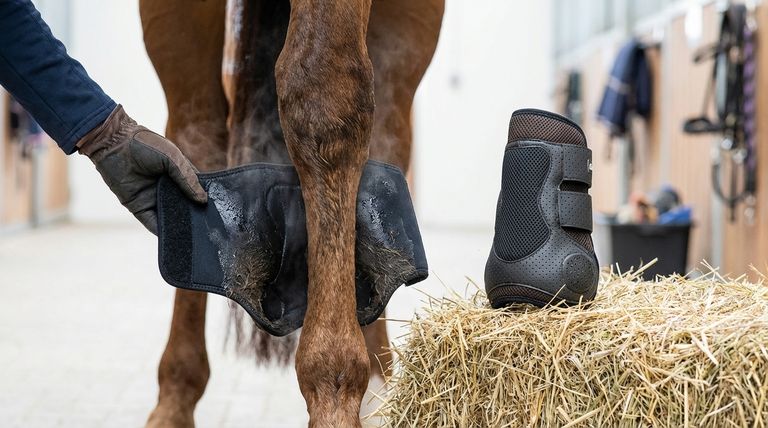
At its core, neoprene is fundamentally unsuitable for horse boots because its primary design function—insulation—works directly against the physiological needs of a horse's leg. Originally engineered to trap heat in wetsuits, neoprene creates a hot, moist environment around the leg that can elevate tendon temperatures to dangerous levels and foster microbial growth.
The central issue with neoprene is that it sacrifices breathability for insulation. This creates a micro-environment that can damage the horse's sensitive, low-circulation tendons through overheating and lead to persistent skin infections.
The Core Problem: Heat Entrapment
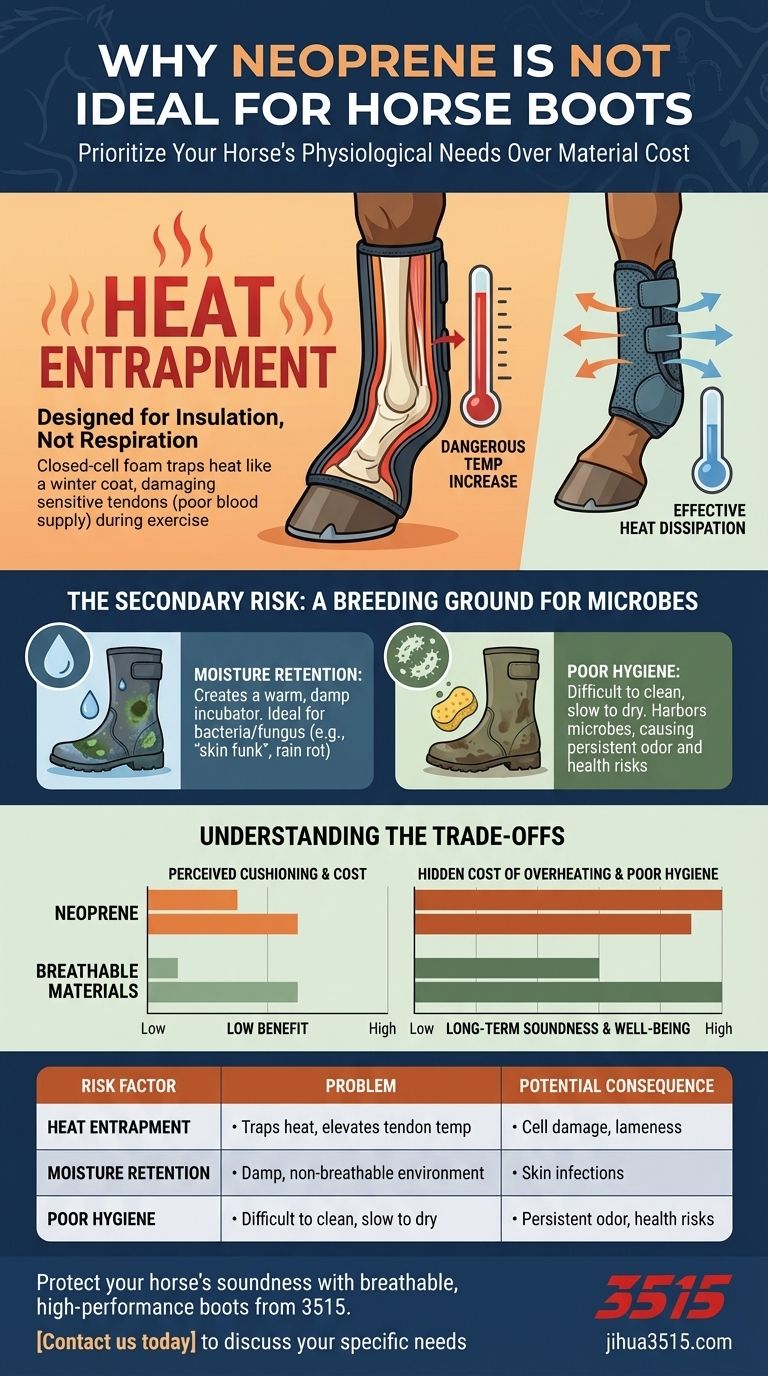
The most significant risk associated with neoprene is its inability to dissipate heat. A horse's leg, particularly the delicate tendon structures, is not designed to function under excessive thermal load.
Designed for Insulation, Not Respiration
Neoprene is a closed-cell foam, meaning its structure is composed of tiny, sealed gas pockets. This is what makes it an excellent insulator for a wetsuit, trapping a layer of body-warmed water against the skin.
When used on a horse's leg during exercise, it does the same thing: it traps heat. This is the equivalent of making an athlete wear a winter coat while running a marathon.
Why Trapped Heat Damages Tendons
Tendons are composed of tissue with very poor blood supply compared to muscle. This means they cannot efficiently cool themselves down when they get hot.
Intense exercise naturally generates heat. When neoprene traps this heat, the internal temperature of the tendons can rise significantly, increasing the risk of cell damage and contributing to long-term soundness issues and lameness.
The Secondary Risk: A Breeding Ground for Microbes
Beyond the danger of overheating, neoprene's non-breathable nature creates a perfect environment for bacteria and fungus to thrive.
Trapping Moisture and Bacteria
As the horse sweats, the moisture has nowhere to go. It becomes trapped between the boot and the skin, creating a warm, damp incubator.
This environment is ideal for the proliferation of bacteria and fungi, which can lead to common skin conditions often referred to as "skin funk," "rain rot," or "scratches."
The Impact on Hygiene
Because neoprene is not easily washed or quick to dry, it can harbor these microbes between uses. This not only creates a persistent odor but also poses a health risk, especially in a communal barn where equipment may be shared or stored closely.
Understanding the Trade-offs: Why Is Neoprene So Common?
Despite these clear disadvantages, neoprene boots remain prevalent in the market. Understanding why helps in making a more informed choice.
The Appeal of Cushioning and Cost
Neoprene offers a soft, cushioned feel that gives horse owners a sense of protection. It is also an inexpensive material to manufacture, which keeps the retail price of the boots relatively low.
The Hidden Cost of Non-Breathability
The perceived benefit of impact protection comes at the high cost of overheating and poor hygiene. While a boot should offer protection, it must not compromise the underlying health of the structures it is meant to safeguard. The immediate cost savings are often negated by the long-term risks.
Making the Right Choice for Your Horse
Selecting the appropriate leg protection requires prioritizing the horse's physiological needs over material cost or perceived cushioning.
- If your primary focus is intense work or exercise: Choose boots made from modern, breathable materials designed specifically to allow heat and moisture to escape.
- If your primary focus is general protection or turnout: Prioritize materials that are durable, easy to clean, and do not retain moisture to maintain skin health.
- If your primary focus is managing a past injury: Consult your veterinarian for recommendations on supportive materials that will not compromise circulation or proper heat regulation.
Ultimately, choosing leg protection that prioritizes breathability is a critical investment in your horse's long-term soundness and well-being.
Summary Table:
| Risk Factor | Why It's a Problem | Potential Consequence |
|---|---|---|
| Heat Entrapment | Traps heat from exercise, elevating tendon temperature | Increased risk of cell damage and long-term lameness |
| Moisture Retention | Creates a damp, non-breathable environment | Ideal conditions for bacteria/fungus, leading to skin infections |
| Poor Hygiene | Material is difficult to clean and slow to dry | Harbors microbes between uses, causing persistent odor and health risks |
Protect your horse's soundness with breathable, high-performance boots from 3515.
As a large-scale manufacturer, we produce a comprehensive range of equine footwear designed with your horse's physiology in mind. Our boots are engineered using advanced, breathable materials that dissipate heat and moisture, preventing the risks associated with neoprene. Whether you are a distributor, brand owner, or bulk client, we offer durable, hygienic, and veterinarian-approved leg protection to ensure your horse's long-term well-being.
Contact us today to discuss your specific needs and discover how our production capabilities can deliver the right protection for your horses.
Visual Guide
Related Products
- Wholesale High-Traction Camo Boots - Custom Manufacturer for Brands
- Wholesale Lightweight Tactical Boots Custom Manufacturer for Desert & Combat Use
- High-Traction Suede Tactical Boots Wholesale & Custom Manufacturing
- Durable Leather Tactical Boots Wholesale & Custom Manufacturing for Brands
- Wholesale Perforated Comfort Dress Shoes | Custom Derby Shoe Manufacturer
People Also Ask
- What are the key features of the new line of camo boots? Built for Extreme Cold & Rugged Terrain
- Are camo boots necessary for hunting success? Prioritize Performance Over Pattern
- How does the Rank Score Test identify the primary causes of premature failure in tactical and work boots? Key Insights
- What is the technical logic behind using closed-eye testing for tactical boots? Unlocking Peak Footwear Stability
- What shoes to wear for a security job? Durable, Protective Footwear for Long Shifts