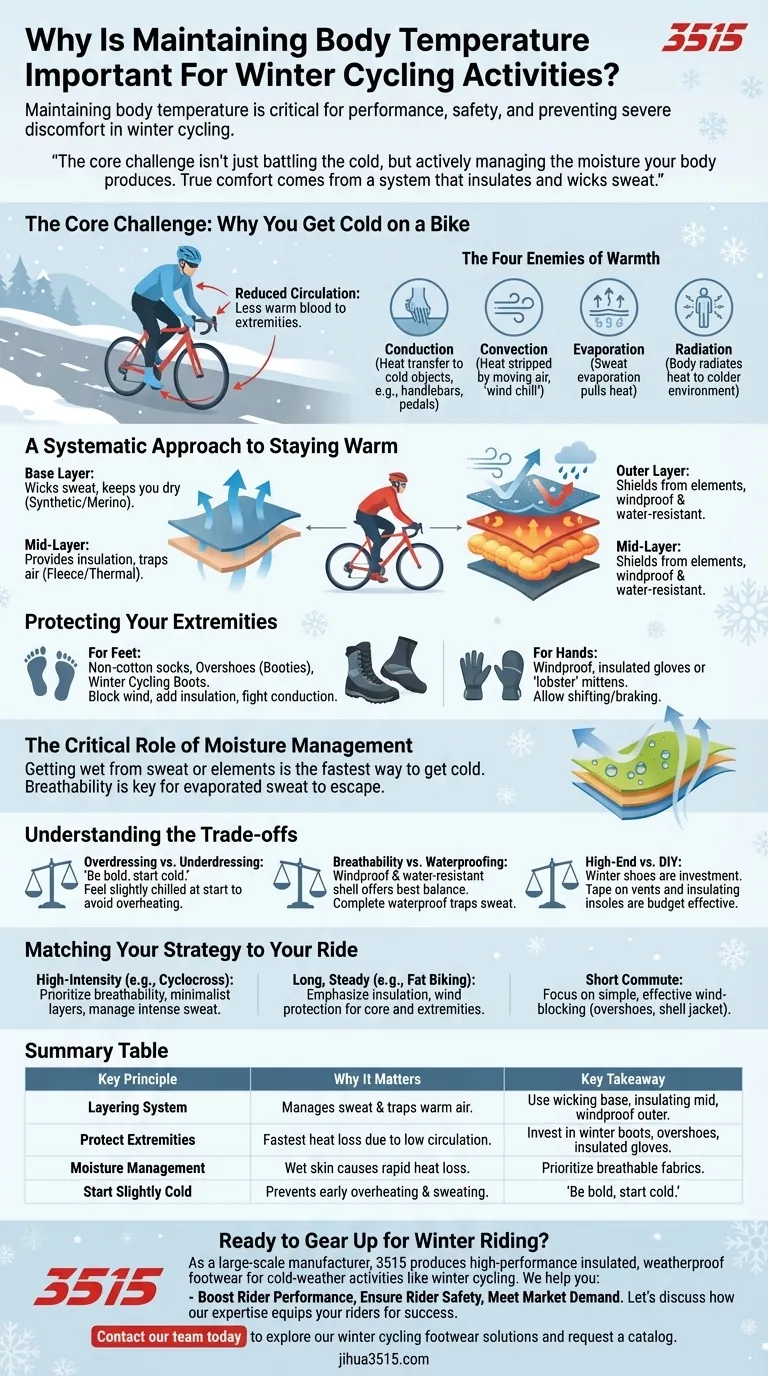
Maintaining your body temperature is the single most critical factor for performance and safety in winter cycling. It is essential for preventing the severe discomfort that can cut a ride short and avoiding the significant drop in physical performance that occurs when your body diverts energy simply to stay warm. Neglecting temperature regulation can quickly turn an enjoyable ride into a miserable and potentially dangerous ordeal.
The core challenge of winter cycling isn't just battling the cold, but actively managing the moisture your body produces. True comfort and performance come from a system that both insulates you from the elements and wicks performance-robbing sweat away from your skin.
The Core Challenge: Why You Get Cold on a Bike
The Circulation Problem
Cycling engages the feet and hands less intensely than an activity like running. This reduced muscular action leads to lower circulation.
With less warm blood flowing to your extremities, they become highly susceptible to the cold, acting as a gateway for heat to leave the body.
The Four Enemies of Warmth
Your body loses heat through four primary mechanisms, all of which are amplified while cycling:
- Conduction: Direct heat transfer to a colder object, like your hands on cold handlebars or your feet on metal pedals.
- Convection: Heat stripped away by moving air. This "wind chill" effect is the most significant factor in cycling.
- Evaporation: Your body's natural cooling system. As sweat evaporates, it pulls heat away from your skin, which can cause a dangerous chill if not managed.
- Radiation: The natural process of your body radiating heat into the colder surrounding environment.
A Systematic Approach to Staying Warm
The Foundation: Layering
The most effective strategy is a three-layer system that you can adjust as your body temperature changes.
- Base Layer: Sits against your skin. Its only job is to pull (wick) sweat away to keep you dry. Look for synthetic materials or merino wool.
- Mid-Layer: Provides insulation. Fleece or thermal jerseys trap air, creating a warm barrier.
- Outer Layer: Shields you from the elements. This shell should be windproof and water-resistant to combat convection and external moisture.
Protecting Your Extremities
Your hands and feet need special attention due to their limited motion and exposure.
- For Feet: Start with non-cotton socks, preferably wool. Use overshoes (or "booties") to block wind and add insulation. For deep cold, dedicated winter cycling boots are the most effective solution.
- For Hands: Windproof, insulated gloves or "lobster" style mittens provide the best protection while allowing for shifting and braking.
The Critical Role of Moisture Management
Getting wet—either from sweat or the elements—is the fastest way to get cold.
Effective layering is designed to move sweat from the inside out. This is why a breathable outer layer is just as important as a windproof one; it allows evaporated sweat to escape.
Understanding the Trade-offs
Overdressing vs. Underdressing
It is a common mistake to dress for the temperature you feel while standing still. This leads to overheating and excessive sweating once you start working hard.
A good rule of thumb is to "be bold, start cold." You should feel slightly chilled for the first 10 minutes of your ride. If you start out perfectly warm, you are overdressed.
Breathability vs. Waterproofing
A completely waterproof jacket will block rain and snow, but it will also trap all your sweat inside, making you wet from within.
For most winter riding that isn't in a downpour, a windproof and water-resistant shell offers the best balance, blocking the convective cooling from wind while allowing moisture vapor to escape.
High-End Gear vs. DIY Solutions
While winter-specific cycling shoes are highly effective, they can be a significant investment.
Budget-friendly solutions can be surprisingly effective. Placing tape over your shoe's ventilation holes blocks airflow, and using insulating insoles can fight conductive heat loss through your cleats.
Matching Your Strategy to Your Ride
Your ideal setup depends on the intensity of your activity. Use these principles as a guide.
- If your primary focus is a high-intensity race (e.g., cyclocross): Prioritize breathability and minimalist layers to manage intense sweat, as overheating is your biggest enemy.
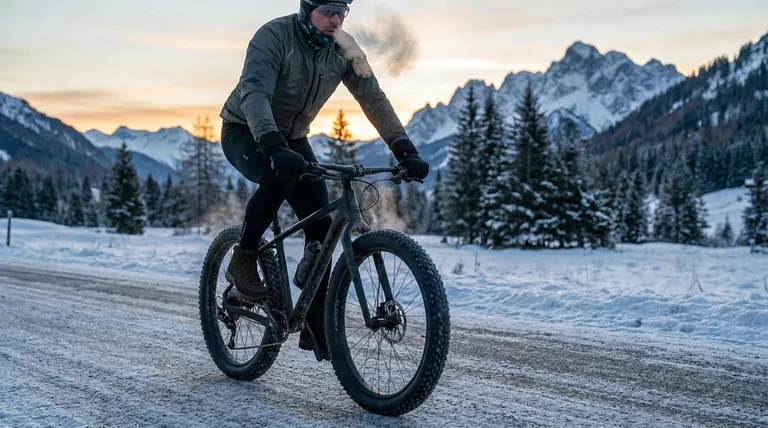
- If your primary focus is a long, steady ride (e.g., fat biking or endurance training): Emphasize insulation and wind protection for your core and extremities, as sustained exposure is the main challenge.
- If your primary focus is a short commute in cool weather: Focus on simple, effective wind-blocking for your hands, feet, and chest with items like overshoes and a good shell jacket.
By understanding how your body loses heat, you can build a smart, adaptable system to conquer the cold and enjoy riding all year long.
Summary Table:
| Key Principle | Why It Matters | Key Takeaway |
|---|---|---|
| Layering System | Manages sweat and traps warm air. | Use a wicking base, insulating mid, and windproof outer layer. |
| Protect Extremities | Hands/feet lose heat fastest due to low circulation. | Invest in winter boots, overshoes, and insulated gloves. |
| Moisture Management | Wet skin from sweat causes rapid heat loss. | Prioritize breathable fabrics to let sweat vapor escape. |
| Start Slightly Cold | Prevents overheating and excessive sweating early on. | "Be bold, start cold" to find the perfect temperature balance. |
Ready to Gear Up for Winter Riding?
As a large-scale manufacturer, 3515 produces a comprehensive range of high-performance footwear for distributors, brand owners, and bulk clients. Our production capabilities encompass all types of insulated, weatherproof shoes and boots designed specifically for cold-weather activities like winter cycling.
We help you:
- Boost Rider Performance: Our winter cycling boots are engineered to combat conductive heat loss through pedals, keeping feet warm and power output high.
- Ensure Rider Safety: Reliable, durable footwear protects against the elements, reducing the risk of cold-related issues on long rides.
- Meet Market Demand: Offer your customers premium, technically advanced footwear that solves the core challenge of winter riding.
Let's discuss how our manufacturing expertise can equip your riders for success.
Contact our team today to explore our winter cycling footwear solutions and request a catalog.
Visual Guide