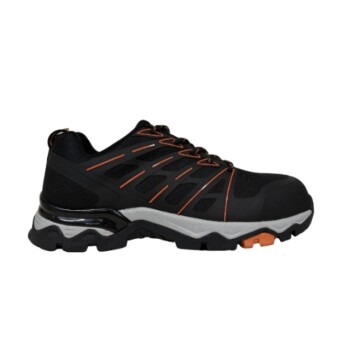
Distinguishing between the friction coefficients of PVC and natural granite is critical because these materials interact with shoe soles through fundamentally different physical mechanisms. While PVC offers elastic deformation that can enhance grip, natural granite is rigid and relies heavily on surface texture, meaning a safety shoe that provides adequate traction on one surface may fail catastrophically on the other.
Core Insight Slip resistance is not solely a property of the shoe; it is the result of a complex interaction between the outsole and the specific floor substrate. Understanding the friction mechanics of elastic materials (PVC) versus rigid materials (granite) allows for the scientific selection of footwear tailored to specific environments, rather than relying on dangerous generalizations.
The Science of Surface Interaction
Micro-Roughness and Texture
Natural granite and PVC flooring possess distinct surface topographies. Granite often relies on the natural, crystalline micro-roughness of the stone to generate friction.
PVC, conversely, is a manufactured material with a uniform surface structure. Because the "peaks and valleys" of these surfaces differ at a microscopic level, a shoe outsole must be designed to interlock specifically with the texture of the target flooring to be effective.
Chemical Compatibility
The chemical composition of the flooring material dictates its behavior when contaminants are introduced.
In wet or oily states, the interaction between the liquid, the shoe sole, and the floor changes based on the floor's chemistry. A rubber compound that cuts through a water film on PVC might hydroplane on the mineral surface of granite due to differences in surface energy and adhesion.
The Elasticity Factor
PVC and Friction Reserves
A key advantage of PVC flooring is its material compliance. PVC generally possesses superior elastic deformation capabilities compared to stone.
When a worker steps on PVC, the floor deforms slightly under the weight. This deformation increases the contact area between the shoe and the floor, providing higher "friction reserves." This acts as a hidden safety buffer that helps maintain grip even when the shoe's tread is less aggressive.
The Rigidity of Granite
Natural granite lacks this elasticity. It is hard and unyielding.
On granite, the shoe outsole must do all the work of conforming to the surface. If the outsole material is too hard or the tread design is poor, it cannot compensate for the floor's rigidity. This makes the friction coefficient on granite much more sensitive to the presence of water or oil.
Understanding the Trade-offs
The Danger of Universal Solutions
There is no such thing as a universally slip-resistant shoe. An outsole optimized for the elastic properties of PVC might be too soft for granite, leading to rapid wear.
Conversely, a hard, durable sole designed for outdoor granite might slide effortlessly across smooth, dry PVC. Failing to distinguish between these surfaces leads to a false sense of security where workers believe they are protected simply because they are wearing "safety shoes."
Environmental Variability
The primary reference highlights the difference between "oily workshops" and "wet outdoor squares."
PVC is common in indoor workshops where oil resistance is key. Granite is often found in outdoor or architectural spaces where water is the primary risk. Testing against the specific material ensures the shoe is prepared for the correct contaminant and the correct substrate.
Making the Right Choice for Your Goal
To maximize safety, you must audit your facility's flooring before selecting PPE.
- If your primary focus is indoor manufacturing (PVC): Prioritize shoes with outsoles designed to complement the floor's elasticity, ensuring stability without excessive sticking or tripping hazards.
- If your primary focus is outdoor or architectural areas (Granite): Select footwear with softer outsole compounds and aggressive tread patterns that can mechanically bond with the hard, rigid micro-roughness of the stone.
True safety is achieved only when the shoe, the contaminant, and the specific floor material are analyzed as a single, interacting system.
Summary Table:
| Feature | PVC Flooring | Natural Granite |
|---|---|---|
| Material Nature | Elastic / Compliant | Hard / Rigid |
| Grip Mechanism | Surface deformation & contact area | Mechanical interlocking with micro-texture |
| Safety Buffer | High friction reserves via elasticity | Low; relies entirely on outsole compliance |
| Primary Risk | Oily workshop contaminants | Wet outdoor or architectural surfaces |
| Outsole Requirement | Consistent uniform contact | Soft compounds & aggressive tread patterns |
Maximize Workplace Safety with 3515 Footwear Expertise
As a large-scale manufacturer serving distributors and brand owners, 3515 offers comprehensive production capabilities for all footwear types. Our flagship Safety Shoes series is engineered to meet the specific friction demands of diverse environments, from oily PVC industrial floors to rigid natural granite surfaces.
Beyond safety, our extensive portfolio covers work and tactical boots, outdoor shoes, training shoes, sneakers, and Dress & Formal shoes to meet your diverse bulk requirements. Don't compromise on traction—partner with 3515 to provide your clients with scientifically tested, high-performance footwear.
Contact us today to discuss your bulk manufacturing needs!
References
- Murat DİKER, Engin Ergül. Determination of The Static Friction Coefficient of Some Materials Used for Anti-slip Safety with ANOVA. DOI: 10.29137/umagd.1182843
This article is also based on technical information from 3515 Knowledge Base .
Related Products
- Premium Suede Sport Safety Shoes for Wholesale & Bulk Orders
- Premium Lightweight Safety Shoes for Wholesale & Bulk Orders
- Wholesale Anti-Smash & Puncture-Proof Safety Shoes Custom Manufacturing for Brands
- Premium KPU Injection Athletic Style Safety Shoes
- Premium Safety Shoes with Rotating Buckle Safety Sneakers
People Also Ask
- What industries have specific OSHA footwear requirements? Ensure Compliance & Protect Your Workforce
- What are the primary functions of professional safety shoes? Maximize Safety in Water Supply Confined Spaces
- What role do specialized safety shoes play in preventing falls? Engineering Stability in Industrial Environments
- Why should ergonomics and comfort be prioritized when selecting safety shoes? Boost Compliance & Worker Health
- What are the main safety features of S1-S5 shoes? The 3 Essential Protections Explained