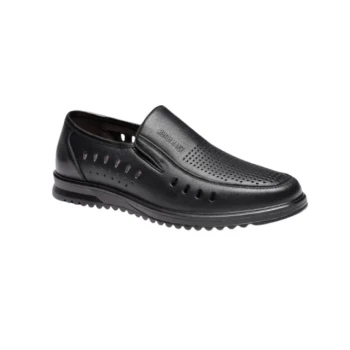
An industrial friction coefficient tester is the definitive diagnostic tool for evaluating footwear safety by measuring the dynamic resistance between a finished outsole and a walking surface. It simulates the mechanical load and velocity of human movement to determine if a shoe provides sufficient grip on slippery materials like ceramic or stone. By generating a quantifiable friction coefficient, it bridges the gap between laboratory chemical formulations and real-world protective performance.
The core role of the friction tester is to provide an objective, repeatable benchmark for slip resistance, ensuring that finished footwear meets specific safety thresholds (such as 0.2 or 0.3 COF) across diverse industrial environments.
Simulating Real-World Biomechanics
The Dynamic Friction Coefficient
The tester focuses on the dynamic friction coefficient, which measures the resistance during active movement rather than at a standstill. This is critical because most slips occur during the transition of weight while walking, not while stationary.
Replicating the Human Gait
The equipment is designed to apply defined loads and speeds that mimic how a human foot interacts with the ground. By simulating these specific pressures, the device provides data that is far more accurate than simple manual dragging tests.
Bridging R&D and Quality Assurance
Validating Material Formulations
While a rubber compound may perform well in a lab "puck" test, the finished outsole design can behave differently. The tester validates how practical applications of these materials perform once they are molded into complex tread patterns.
Establishing Safety Thresholds
Manufacturers use this data to build hazard detection models. These models allow engineers to determine if a shoe reaches specific anti-slip thresholds, such as a 0.2 or 0.3 coefficient, which are often required for professional certifications.
Engineering the Test Environment
Variable Floor Textures
To ensure universal safety, the tester utilizes plates with diverse geometric textures, including grids, semi-cylinders, and triangular blocks. This variety allows footwear to be tested against the specific "trip hazards" found in different industrial sectors.
Shore Hardness and Material Interaction
The tester employs test plates with specific Shore hardness values (typically 80-90). Testing against various hardness levels helps researchers understand how the outsole material deforms and grips across different substrate densities.
Understanding the Trade-offs and Limitations
Simulation vs. Human Variability
While the tester provides high repeatability, it remains a mechanical simulation. It cannot perfectly account for the infinite variations in human stride, balance recovery, or the presence of unpredictable contaminants like specialized industrial oils.
Maintenance of Test Substrates
The accuracy of the results depends heavily on the condition of the test plates. Over time, these plates can wear down or become contaminated, potentially leading to "drift" in data if not calibrated and cleaned with extreme rigor.
How to Apply This to Your Quality Process
Making the Right Choice for Your Goal
To maximize the utility of your friction testing protocol, align your testing parameters with your specific end-use case.
- If your primary focus is Regulatory Compliance: Ensure your tester is calibrated to use the specific stone or ceramic tiles mandated by international safety standards.
- If your primary focus is R&D and Innovation: Utilize a wide library of test plates with varying Shore hardness and textures to stress-test your tread designs against diverse environments.
- If your primary focus is Batch Consistency: Implement standardized "pass/fail" friction thresholds (e.g., 0.3 COF) to ensure every production run of finished footwear maintains safety integrity.
By integrating these objective measurements into your workflow, you transition from subjective claims of "slip resistance" to a scientifically verified standard of safety.
Summary Table:
| Feature | Role & Function in Quality Inspection |
|---|---|
| Measurement Focus | Dynamic friction coefficient during active movement simulation. |
| Biomechanical Simulation | Applies specific loads and speeds to mimic human gait and foot pressure. |
| Substrate Variety | Tests against various textures (grids, blocks) and Shore hardness (80-90). |
| R&D Validation | Verifies how complex tread patterns perform compared to raw material samples. |
| Compliance Goal | Ensures products meet safety thresholds like 0.2 or 0.3 COF for certification. |
Partner with 3515 for Certified Slip-Resistant Footwear Solutions
As a large-scale manufacturer serving distributors and brand owners, 3515 leverages advanced testing protocols to ensure every pair of shoes meets rigorous safety standards. Our flagship Safety Shoes series is engineered for maximum traction, complemented by an extensive portfolio including tactical boots, outdoor shoes, training sneakers, and formal dress shoes.
By choosing 3515, you gain access to:
- Comprehensive Production Capabilities: High-volume manufacturing for all footwear types.
- Scientifically Verified Safety: Rigorous friction coefficient testing for guaranteed anti-slip performance.
- Global Distribution Support: Tailored solutions for bulk requirements and brand owners.
Ready to elevate your product safety and reliability? Contact us today to discuss your bulk manufacturing needs!
References
- Toshiaki Nishi, Kazuo Hokkirigawa. Development of high slip-resistant footwear outsole using rubber surface filled with activated carbon/sodium chloride. DOI: 10.1038/s41598-021-04102-0
This article is also based on technical information from 3515 Knowledge Base .
Related Products
- Durable Leather Moc Toe Work Boots for Wholesale & Custom Manufacturing
- Wholesale Durable Safety Boots Manufacturer Customizable Steel Toe Work Boots
- Lightweight Breathable Sneakers with Wet-Traction Grip for Wholesale & Private Label
- Wholesale Durable & Breathable Training Shoes for Custom Brands
- Durable Leather Work Boots for Wholesale & Custom Manufacturing
People Also Ask
- What are moc toe work boots designed for? Superior Comfort and Mobility for Tradespeople
- What are the key features to look for when purchasing moc toe boots? A Guide to Durability & Fit
- How did moc toe boots originate? A Legacy of Workwear Durability and Style
- What clothing items complement the Outdoorsman/Heritage Look with moc toe boots? Build a Timeless, Rugged Wardrobe
- What types of outfits can moc toe boots be worn with? Versatile Style Guide