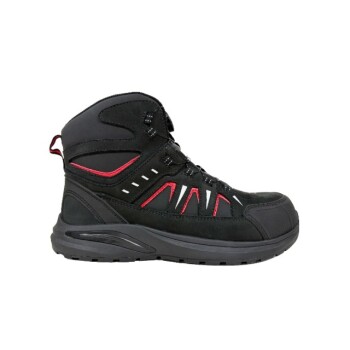
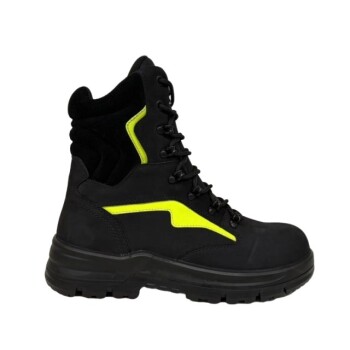
At their core, steel toe work boots are important because they provide the highest available level of protection against impact and compression injuries in hazardous environments. They are the classic, proven safeguard, acting as a sturdy barrier that prevents crushing forces from heavy objects or falling debris from causing severe foot damage.
The true importance of a steel toe boot isn't just its strength, but its role as a non-negotiable piece of safety equipment. It is the established standard for ensuring a worker's feet are shielded from the most severe and common workplace hazards.
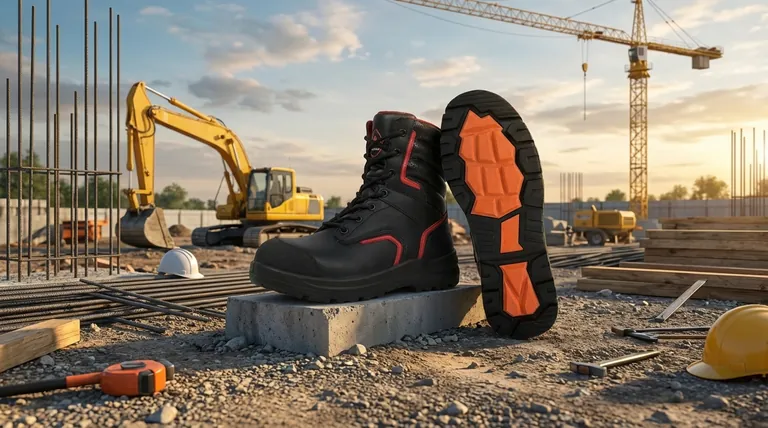
The Core Function: Impact and Compression Resistance
A work boot's primary job is to protect your feet. Steel toes accomplish this with a straightforward, highly effective design that has been trusted for decades.
Shielding Against Impact
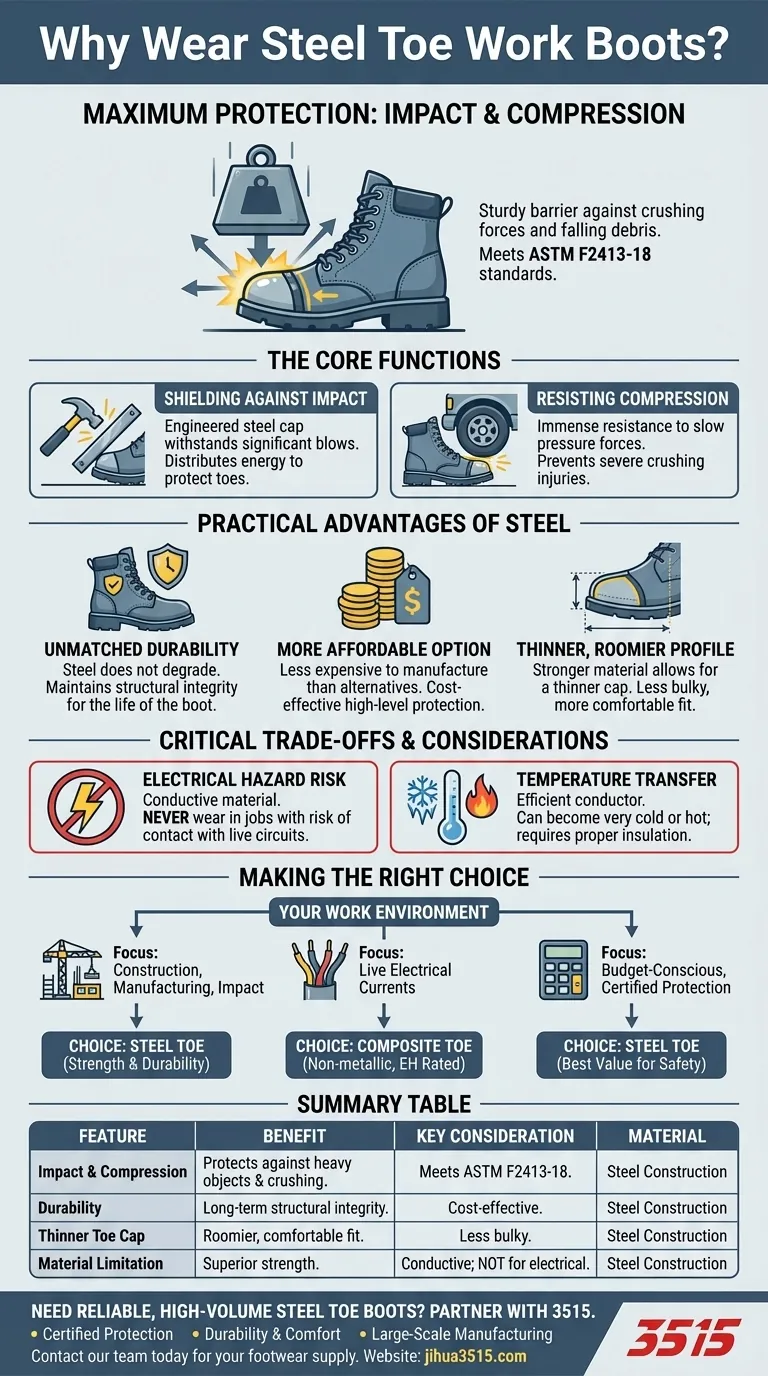
The most obvious danger in many trades is something heavy falling on your foot. A steel toe cap is engineered to withstand significant impact forces, distributing the energy of a blow across its surface to protect your toes from being crushed.
Resisting Compression
Less dramatic but equally dangerous are compression hazards, such as a vehicle tire rolling over a foot or getting a foot pinned by heavy equipment. Steel toes offer immense resistance to these slow-pressure crushing forces, preventing fractures and other severe injuries.
Meeting Official Safety Standards
Reputable steel toe boots are tested to meet specific safety standards, such as ASTM F2413-18. This certification ensures the boot has passed rigorous testing for both impact and compression, providing verifiable proof of its protective capabilities.
Practical Advantages of Steel Construction
Beyond pure strength, choosing steel offers several practical benefits that make it a go-to choice for many workers and employers.
Unmatched Durability
Steel is an incredibly durable material. A steel toe cap will not degrade over time and will maintain its structural integrity for the life of the boot, providing consistent and reliable protection day after day.
A More Affordable Option
Compared to alternatives like composite or alloy toes, steel is generally less expensive to manufacture. This often makes steel toe boots a more cost-effective option without compromising on the highest level of protection.
A Thinner, Roomier Profile
Because steel is so strong, the toe cap can be made thinner than some composite alternatives. This can result in a less bulky boot and often provides a roomier, more comfortable fit in the toe box for the wearer.
Understanding the Critical Trade-offs
While steel toes offer superior protection in many areas, their material properties create specific limitations that are crucial to understand. Objectivity requires acknowledging where they may not be the right tool for the job.
Electrical Hazard Risk
The single most important drawback of steel is its conductive nature. Steel toe boots should never be used in jobs with a risk of contact with live electrical circuits, as they can transfer electricity directly to the wearer.
Temperature Transfer
Steel is also an efficient conductor of temperature. In extremely cold environments, the steel can become very cold, potentially causing discomfort if the boot is not properly insulated.
Making the Right Choice for Your Goal
Selecting the right safety toe depends entirely on the specific hazards of your work environment.
- If your primary focus is maximum impact protection in construction or manufacturing: Steel toe is the classic and often best choice for its raw strength and durability.
- If your primary focus is working around live electrical currents: You must choose a non-metallic, electrical hazard (EH) rated composite toe boot instead.
- If your primary focus is finding the most budget-conscious, certified protection: Steel toe boots typically offer the best value for proven safety.
Ultimately, wearing steel toe boots is a foundational decision for personal safety in any environment with a risk of heavy impact or compression.
Summary Table:
| Feature | Benefit | Key Consideration |
|---|---|---|
| Impact & Compression Resistance | Protects toes from heavy falling objects and crushing forces. | Meets ASTM F2413-18 safety standards. |
| Steel Construction | Offers unmatched durability and long-term structural integrity. | More affordable than composite or alloy alternatives. |
| Thinner Toe Cap | Provides a roomier, more comfortable fit compared to bulkier options. | Excellent for general construction and manufacturing. |
| Material Limitation | Superior strength for physical hazards. | Conductive; not suitable for live electrical work. |
Need Reliable, High-Volume Steel Toe Boots? Partner with 3515.
As a large-scale manufacturer, 3515 produces a comprehensive range of certified safety footwear, including premium steel toe boots designed for durability and comfort. We are the trusted partner for distributors, brand owners, and bulk clients seeking consistent quality and volume.
We provide:
- Certified Protection: Boots that meet rigorous safety standards.
- Durability & Comfort: Engineered for long-lasting performance in tough conditions.
- Large-Scale Manufacturing: Capabilities to fulfill all your footwear needs, from work boots to specialty shoes.
Let's discuss your specific requirements. Contact our team today to secure your supply of high-quality safety footwear.
Visual Guide
Related Products
- Wholesale Durable 6-Inch Work Boots | Custom & Private Label Manufacturer
- Wholesale Durable Safety Boots Manufacturer Customizable Steel Toe Work Boots
- Wholesale Durable Breathable Safety Boots Custom OEM Manufacturer
- Wholesale Heavy-Duty Waterproof Steel Toe Work Boots OEM Manufacturer
- Durable Steel Toe Safety Boots Wholesale & Custom Manufacturing
People Also Ask
- What are the pros and cons of steel toe work boots? A Guide to Maximum Protection vs. Comfort
- What is the history of steel toe work boots? From German Invention to Modern Safety Standard
- What are the different types of steel toe work boots? Choose the Right Boot for Your Job
- How much weight can steel toe work boots withstand? Unpacking the 3,372 lb. Safety Standard
- Is there any truth to the myth about steel toe boots causing toe injuries upon impact? Debunking Common Safety Concerns